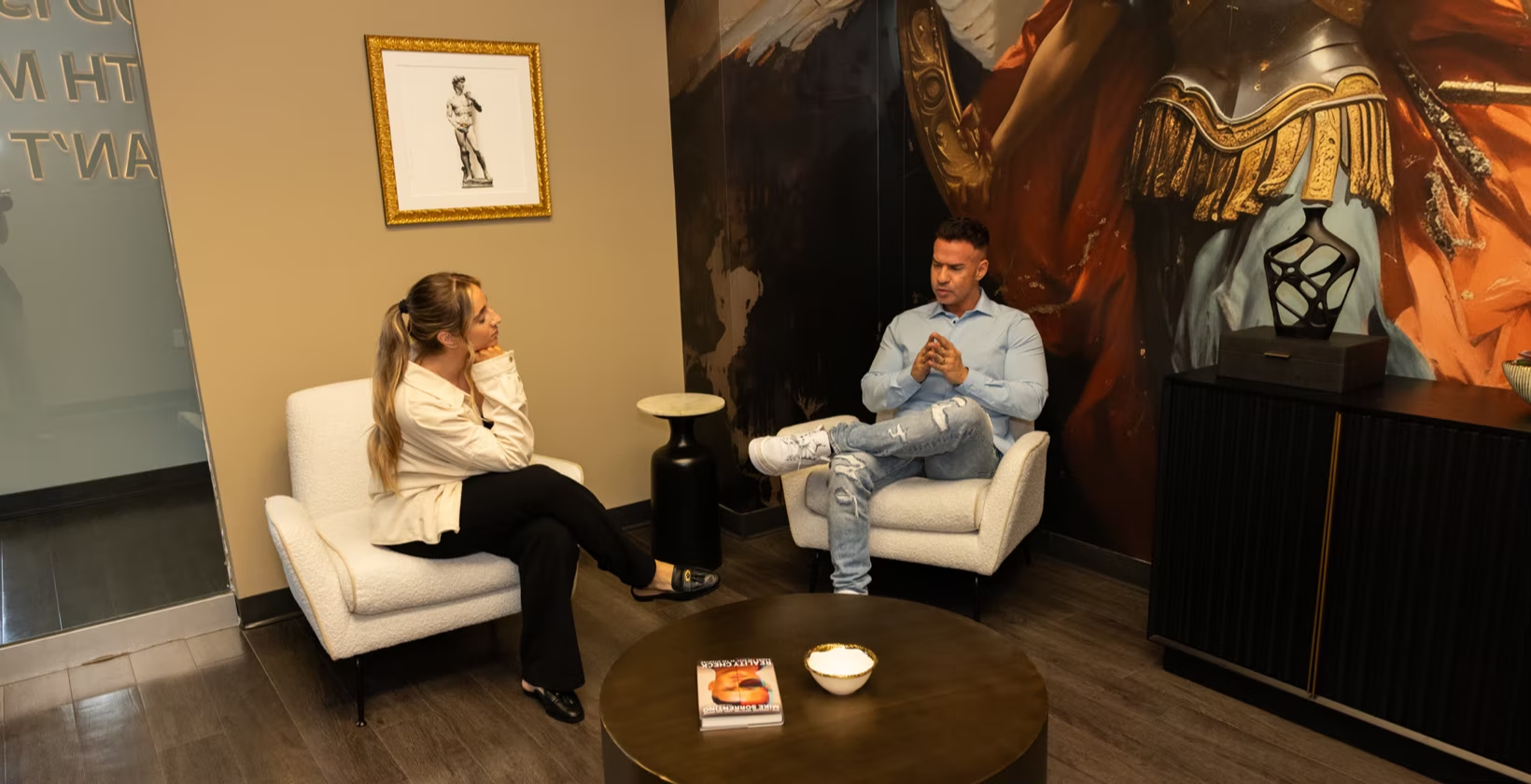
Lauren Sorrentino's Mission: Family in Addiction Recovery
Addiction does not stay confined to the person using. The American Society of Addiction Medicine defines addiction as a chronic, treatable medical disease shaped by brain function, genetics, environment, and life experience [1]. Each of those factors lives inside a family system, and the family system is where most of the day-to-day weight of the disease actually lands. Lauren Sorrentino lived that side of the disease in two different ways. She lost her brother Christopher Pesce to addiction. She also walked through the longer recovery arc with her husband Mike Sorrentino, the Founder of The Archangel Centers, who has been in sustained sobriety since 2015 [3]. As Co-Founder, she leads the family-programming side of the clinical model the two of them built. This article explains what she built, why she built it that way, and what it means for the families who come through the door.
Why Lauren built the family-programming side
Most family-programming clinical leadership in the addiction field comes from clinicians who studied family systems academically. Lauren is not a licensed clinician. Her authority on the family side comes from a different place. She lost her brother to the disease, and she watched a partner walk the full arc from active use through treatment and federal incarceration and into sustained sobriety. The combination produced a clear, unsentimental view of what families actually live through and what they actually need from a treatment program [3].
When the two of them began designing The Archangel Centers, the family-side decisions were hers to make. The first decision was structural. Family programming would not be a weekend visit, a single optional session, or an add-on layered onto an otherwise patient-only program. It would be a core component of the clinical curriculum, with dedicated staff, dedicated hours, and dedicated outcomes [3]. The research supports that decision. The Substance Abuse and Mental Health Services Administration has documented for years that family involvement substantially improves outcomes in substance use disorder treatment [2]. The National Institute on Drug Abuse principles of effective treatment include family work as a core element, not an enhancement [5].
The second decision was about who delivers the work. Lauren shapes the family-experience curriculum and the alumni program. Licensed clinicians on the family-services team deliver the therapy itself. Medical Director Dr. Justin Skolnick, DO, carries the clinical accountability [3]. Lauren is the family-experience leader, not the therapist of record. That distinction is deliberate. Families benefit from a Co-Founder who has lived the family side of the disease and from licensed clinicians who can carry the therapeutic work. The center is built to give them both.
What family programming looks like in PHP and IOP
Family programming at The Archangel Centers runs alongside the patient's clinical day, not as a substitute for it. The patient is in Partial Care Monday through Saturday in New Jersey [3]. The family track engages in parallel through four distinct components, each with its own clinical purpose.
The first component is family education and psychoeducation. Families learn the disease model of addiction, the common roles family members took on during active use, and what to expect across PHP, IOP, and OP. The work happens early so families enter the therapeutic work with shared vocabulary.
The second component is the core clinical work: family therapy with releases. Licensed clinicians deliver structured family therapy. Progress updates to family are part of the program where the patient has signed releases, with confidentiality protected by 42 CFR Part 2, the federal regulation that gives substance use disorder treatment records stricter privacy protection than ordinary medical records [4]. This is the component Lauren protected most carefully during design. In her own family experience, the therapy with releases was the thing that did the actual work.
The third component is multi-family group programming. Families learn alongside other families in the same level of care. The same group cohesion that helps patients recover also helps families: shared language, shared recovery vocabulary, less isolation.
The fourth component is alumni family programming. Continued family participation after the patient steps down through IOP, OP, virtual, and aftercare. The family system stays engaged through the same continuum the patient walks. Most relapse risk lives in the months after discharge, and Lauren built the alumni side to address that window directly.
The Christopher's Bed Scholarship
The Christopher's Bed Scholarship carries the name of Lauren's brother, Christopher Pesce, who died of addiction. The scholarship covers one full month of outpatient treatment, every month, for one recipient for whom cost is the barrier to care [3]. It is an internal program of The Archangel Centers, funded by the business. It is not a separate non-profit, not a fundraising vehicle, and not a marketing exercise. It is the most direct way the center honors what Lauren's family lost.
The eligibility frame is narrow and clinical. Adults seeking outpatient substance use disorder treatment whose insurance does not cover the full level of care recommended at intake. Cost is the only barrier, not clinical readiness. The clinical level of care is set by the intake assessment, not by what the scholarship can afford to cover. A patient assessed at Partial Care receives Partial Care, not a downgraded version of it because the funding source is internal rather than insurance.
The application process is built to remove friction. Insurance verification happens first, free and confidential. If a coverage gap is identified, scholarship eligibility is reviewed in parallel with the clinical intake so that treatment can begin without delay. Family members can inquire on behalf of a loved one, though the patient must give consent before any application moves forward. No public disclosure is required at any step, and 42 CFR Part 2 protects every step of that process [4].
Lauren wanted the scholarship structured this way for a specific reason. In her own family, the gap that kept her brother out of care was not awareness or motivation. It was access. The scholarship is the answer to that gap, named in his memory.
How families participate during a loved one's treatment
Families do not need to be experts to participate well. The program is built to bring family members into the work without requiring them to learn the field. Three patterns show up most often in how families engage during a loved one's treatment.
The first pattern is full family participation. Spouses, parents, adult children, and siblings all engage in the family programming on parallel days with the patient's clinical day. This is the strongest configuration for outcomes, and it is what the program is designed around. Family programming substantially improves patient outcomes across the substance use disorder treatment literature [2].
The second pattern is partial or staggered family participation. Some family members engage from the start, others come in later. The clinical team adapts. Family work is not all-or-nothing, and the program is built to support the family at whatever configuration is actually available. Geography is not a barrier either. Remote participation by video is available for many family sessions, so a parent across the country can stay engaged.
The third pattern is individual family work for households that are not safe to involve together. Where active intimate partner violence, ongoing abuse, or other safety risks exist, family programming is reshaped. The patient may do family-of-origin work individually with a clinician, or the program may engage only specific chosen-family members. Confidentiality protections under 42 CFR Part 2 give the patient meaningful control over what is shared with whom [4]. No family member is contacted without explicit, signed authorization.
Across all three patterns, the clinical work itself stays the same. Roles families took on during active use, including the caregiver, the enabler, the enforcer, the scapegoat, and the lost child. The bargaining and secrecy patterns that develop in households with addiction. Communication skills for hard conversations. Boundaries that are practical and sustainable, not punitive. Repair work. Relapse preparation. Grief and loss work for families who have lost someone to addiction or who fear they might [3].
How families participate in aftercare and alumni
Family programming does not end on the patient's discharge date. The clinical literature is consistent that the months after a structured program ends are where most relapse risk lives, and family systems carry a large share of that risk on the family-recovery side as well [2]. Lauren built the alumni family programming as the durability piece of the model.
Alumni family programming has three forms. The first is continued family group attendance after the patient steps down. Families who have built relationships with one another inside the program keep meeting, with clinical facilitation, through the same continuum the patient walks: PHP to IOP to OP to virtual. The second is family-side alumni events that focus on the family's own recovery: burnout, secondary trauma, grief, and the long work of being in relationship with someone in long-term recovery. The third is targeted family check-ins around predictable risk windows: holidays, anniversaries, life transitions, and the points in the year where relapse risk historically clusters.
Lauren shapes all three forms. Her own family experience informs what those alumni windows actually feel like from inside the household. Licensed clinicians and the family-services team carry the work itself. The model treats the family as a system that also needs aftercare, not just as a support structure for the patient's aftercare.
If your family is at the start of this work, our admissions line is (888) 464-2144. Insurance verification is subject to plan and carrier requirements before any commitment. If you or someone you love is in crisis, the 988 Suicide and Crisis Lifeline is available 24 hours a day, every day, by phone or text.
Frequently Asked Questions
Does Lauren personally lead family sessions?
Can I apply for the Christopher's Bed Scholarship without my loved one knowing?
What if my family is fractured and members cannot do family work together?
Does the family program require all family members to attend?
How is family programming protected by 42 CFR Part 2?
- [1] American Society of Addiction Medicine (ASAM), Definition of Addiction
- [2] Substance Abuse and Mental Health Services Administration (SAMHSA), Family Approaches to Recovery
- [3] The Archangel Centers, FactSheet (founders, family programming, Christopher's Bed Scholarship)
- [4] Substance Abuse and Mental Health Services Administration (SAMHSA), 42 CFR Part 2 Confidentiality of Substance Use Disorder Patient Records
- [5] National Institute on Drug Abuse (NIDA), Principles of Effective Treatment
Related Programs & Resources
If your family is part of the picture, our family program is built for it. Call (888) 464-2144 or verify your insurance, free, confidential, 24/7.
(888) 464-2144Verify Your Insurance