Family Intervention for Addiction: When and How to Plan One
Educational information helps explain the topic.
It is not medical advice, diagnosis, or treatment and does not imply that every center offers every service. Current services require location-specific confirmation.
Family Intervention for Addiction: When and How to Plan One is a question many families reach when they have tried other approaches and feel they are running out of options. An intervention is a structured family conversation, often with the help of a trained professional, in which family members share their concern and present treatment as a clear next step. The popular image of the intervention, drawn largely from television, is dramatic and confrontational. The reality of effective interventions is usually quieter, more carefully planned, and more attuned to the specific person and family involved.
This page explains what interventions are, the main models in use today, when they tend to help, when they can do harm, and how The Archangel Centers' admissions team can help families think about a thoughtful conversation. We see families considering interventions at our Tinton Falls, New Jersey center and our Charlotte, North Carolina center, and the work usually starts well before the conversation itself.
One important note up front: families should never wait for "rock bottom" before reaching out. The idea that a person has to lose everything before they can begin recovery is not supported by current evidence and has cost too many lives. Early conversations, gentle invitations, and continued availability of treatment are usually more effective than waiting.
On this page:
- What an intervention is
- Professional vs. family-led interventions
- The main intervention models (Johnson, ARISE, CRAFT)
- When interventions help
- When interventions can do harm
- How The Archangel Centers' admissions team can help
- FAQ
- Crisis resources and admissions line
What an Intervention Is
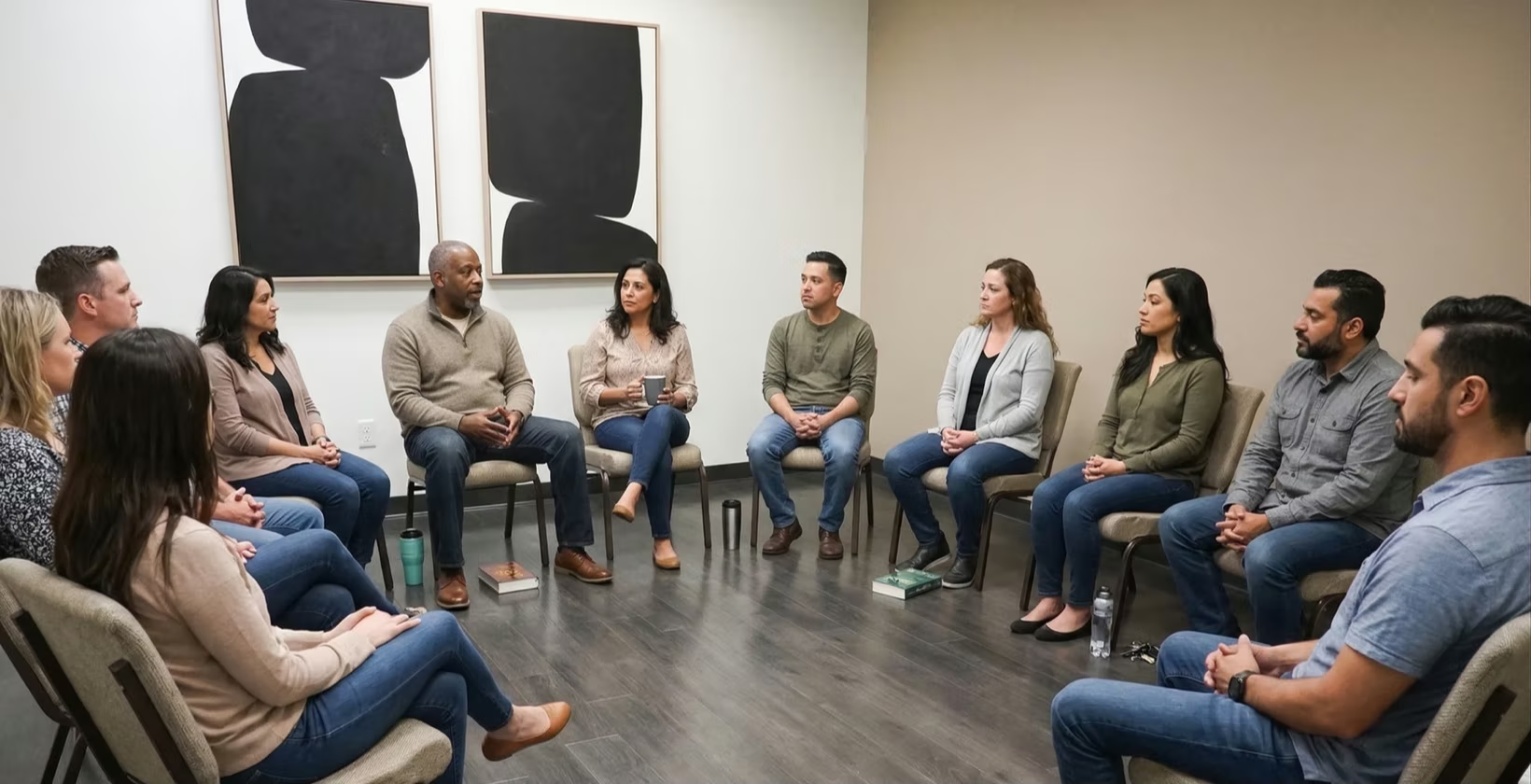
An intervention is a planned conversation between a person with substance use disorder and their family members, often facilitated by a trained professional, in which family members share their concerns and ask the person to consider treatment. The conversation usually includes:
The aim is not to ambush, shame, or corner the person. The aim is to communicate care clearly and to make the path to treatment as friction-free as possible.
- A small group of family members and close friends
- Prepared statements from each participant
- A presented next step (typically an admission to a specific treatment program)
- A treatment plan that has been arranged in advance, so admission can begin the same day if the person agrees
Professional vs. Family-Led Interventions
Professional interventions are facilitated by a trained interventionist. The interventionist meets with the family in the weeks before the conversation, helps prepare statements, decides who should be in the room, coaches the family on what to do and not do, and is present during the conversation itself. Professional interventions tend to be more carefully structured and to have better outcomes, particularly when the family situation is complex or when there are safety concerns.
Family-led interventions are organized by family members without a professional in the room. They can work, especially when the family has done careful preparation and the loved one is already showing some openness to change. They are riskier when the situation is volatile or when the family has unresolved conflicts that could spill into the conversation.
For most families considering an intervention, talking with a professional interventionist or with our admissions team beforehand is a useful first step, even if the family ultimately decides on a less formal approach.
The Main Intervention Models
Johnson Model
The Johnson Model, developed by Vernon Johnson in the 1960s and 1970s, is the most familiar model and the one usually portrayed in popular media. It involves a structured family meeting, prepared statements, and an immediate treatment offer.
The strengths of the Johnson Model include clear structure, immediate treatment availability, and unified family messaging. The criticisms include a confrontational tone that does not fit every person or family, and outcomes that depend heavily on how the conversation is run.
ARISE
ARISE (A Relational Intervention Sequence for Engagement) is an invitational model. Rather than a single confrontational meeting, it uses a series of conversations that gradually involve more family members and increase the structure if needed. Family members openly tell the loved one that they are meeting and inviting them to attend.
ARISE tends to feel less ambush-like to the loved one and to keep relationships intact through the process. It is often preferred for families that want to avoid the confrontational tone of the Johnson Model.
CRAFT
CRAFT (Community Reinforcement and Family Training) is an evidence-based approach designed for the situations in which the loved one is not yet ready for an intervention conversation, or in which the family does not want to use a confrontational model at all. CRAFT teaches family members specific communication skills, ways of reinforcing healthy behavior, and ways of letting natural consequences land. The approach has strong evidence supporting its effectiveness in helping loved ones engage with treatment over time.
Many clinicians prefer CRAFT because it works without confrontation, supports the family member's own wellbeing along the way, and has been studied in randomized trials with positive results. CRAFT is often the right starting point before any more formal intervention is considered.
When Interventions Help
Interventions can help when:
When these conditions are in place, an intervention can be a clear, caring, well-structured moment that gives the loved one a real choice.
- The family has been talking calmly and consistently and is not seeing change
- The loved one is showing signs of openness, even small ones
- A treatment program is identified and ready to admit, so the next step is concrete
- The family has done careful preparation, ideally with a professional interventionist
- There are no immediate safety concerns that would make the conversation unsafe
- Family members have the capacity to stay calm and not turn the meeting into an argument
When Interventions Can Do Harm
Interventions can do harm when:
In these situations, the conversation can damage relationships, push the loved one further away from treatment, or create immediate safety risk.
If there are any safety concerns, the right step is to slow down, talk with a professional, and consider whether a different approach, such as CRAFT, is a better starting point.
- They are improvised in a moment of high emotion
- They become confrontational, shaming, or accusatory
- Family members use the conversation to air grievances that are not directly relevant to the treatment offer
- The loved one is in acute psychiatric distress, including active thoughts of suicide or suicidal ideation
- The loved one is intoxicated or in withdrawal during the conversation
- There is a history of domestic violence and the conversation could trigger an unsafe response
- No treatment plan is in place, so a "yes" cannot be acted on
How The Archangel Centers' Admissions Team Can Help
Our admissions team at (888) 464-2144 can be a useful first call when a family is thinking about an intervention. We can:
Family programming at The Archangel Centers is free for families of current and former clients. It includes scheduled family therapy with the client's primary therapist under signed release and a standing family support group available. Many families find that the family programming track is the more important part of the work, with or without a formal intervention.
If your loved one agrees to treatment, our admissions team can schedule a start date at our Tinton Falls center or Charlotte center.
- Talk through what the family is seeing and what has already been tried
- Explain what treatment at our Tinton Falls or Charlotte location looks like for the loved one
- Help families think through whether a professional interventionist is the right fit
- Refer families to interventionists in their area when appropriate
- Coordinate timing so that if the loved one agrees, admission can be scheduled without unnecessary delay
- Loop in our family programming track so the family has support during the process
Why CRAFT Often Works Better Than Confrontation
Research on CRAFT compared with confrontational approaches has shown that CRAFT tends to result in more loved ones engaging with treatment, with fewer relationship costs along the way. The reasons line up with what most families notice in their own lives:
We mention this not to dismiss the Johnson Model, which is the right approach for some families, but to make sure families considering an intervention know there are evidence-based alternatives.
- Confrontation rarely changes long-held patterns
- People with substance use disorder often experience confrontational conversations as one more reason to withdraw
- Calm, consistent communication over time has more cumulative effect
- Family members who learn CRAFT skills tend to feel less stuck themselves, even if their loved one's substance use does not change immediately
Do Not Wait for Rock Bottom
The phrase "rock bottom" is part of recovery culture, but the idea that a person has to lose everything before they can recover is not supported by current evidence. Many people enter treatment from many different starting points, including relatively early in their substance use disorder. Reaching out earlier rather than later usually gives more options, not fewer.
If you are considering an intervention because you feel like you have exhausted everything else, that is reason enough to make a phone call. You do not have to wait for a crisis.
Crisis Resources
If your loved one or anyone else is in immediate danger, call 911. For mental health crises, including thoughts of suicide or suicidal ideation, call or text 988, or chat at 988lifeline.org/chat (Suicide and Crisis Lifeline). Text HOME to 741741 to reach the Crisis Text Line. For confidential substance use treatment information and 24/7 support, call SAMHSA at 1-800-662-HELP (4357).
Talk with Our Admissions Team
If you are thinking about an intervention, or trying to figure out whether one is the right approach for your family, our admissions line is (888) 464-2144. We will talk with you about what you are seeing, what has been tried, and what next steps might fit.
Frequently Asked Questions
Does my loved one have to agree to treatment for the intervention to be worth it?
What if I cannot afford a professional interventionist?
How long does it take to plan an intervention?
Should children be involved?
What if my loved one refuses treatment during the intervention?
Is an intervention the same as CRAFT?
Does The Archangel Centers facilitate interventions on-site?
What boundaries should the family decide on before the meeting, and how do we set them without sounding like we are punishing him or her?
Related Programs & Resources
Admissions are confidential and staffed 24/7 at (888) 464-2144. Or browse a specific center page for hours, address, and the full program.