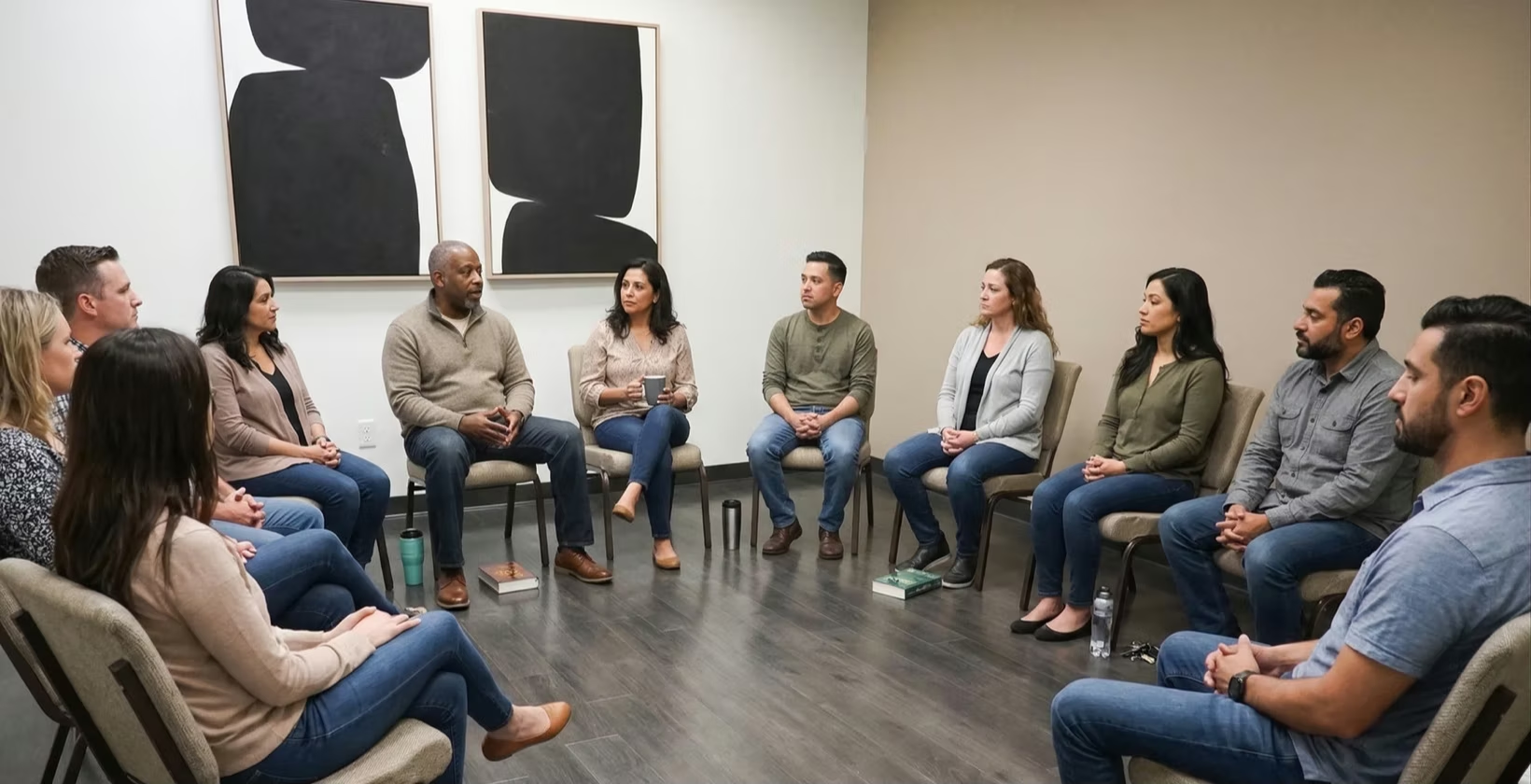
The Science of Addiction: Brain, Biology, and the Disease Model
More than four decades of imaging studies, animal research, and longitudinal outcomes have converged on a single conclusion: addiction is a chronic medical disease of brain circuits, comparable in course and treatability to diabetes and hypertension [1]. The reward, stress, and impulse-control systems that drive compulsive use are measurable on scans, partially heritable, and partly reversible with sustained treatment [2]. This article explains the disease model, the underlying neurobiology, the genetic and environmental risk factors, the language clinicians use, and what the science means for the kind of outpatient care a family should be looking for.
Why clinicians call addiction a disease
The American Society of Addiction Medicine, the National Institute on Drug Abuse, and the World Health Organization each define addiction as a chronic, relapsing brain disease [3][2]. That language is not softening or rebranding. It reflects what is visible on MRI and PET imaging, what twin and adoption studies show about heritability, and what longitudinal follow-up shows about course and outcomes.
The framing matters because it shapes treatment. If addiction were primarily a willpower problem, the answer would be discipline. If it were a moral problem, the answer would be punishment. Because it is a brain disease, the answer is medical care delivered over time, much the way diabetes and hypertension are treated. Structured outpatient programming, like the Partial Care, Intensive Outpatient, and Outpatient continuum at The Archangel Centers, is built around that clinical reality.
Four features anchor the modern disease definition: addiction is chronic, brain-based, treatable, and relapsing [3]. Each of those words carries clinical weight. Together they tell families what kind of care to expect and over what timeframe.
What addictive substances actually do to the brain
Every addictive substance, alcohol, opioids, cocaine, methamphetamine, nicotine, benzodiazepines, ends up pulling the same lever: the mesolimbic dopamine pathway, which runs from the ventral tegmental area into the nucleus accumbens and projects into the prefrontal cortex [2]. That circuit evolved to reinforce behaviors that support survival, eating, drinking water, social connection, sex. When something biologically important happens, dopamine surges, and the brain tags the experience as worth repeating.
Addictive substances release dopamine two to ten times above the level produced by any natural reward [2]. The brain, faced with a signal it interprets as urgently important, adapts. It down-regulates dopamine D2 receptor density, reorganizes around the expectation that the substance will keep arriving, and progressively weakens the prefrontal cortex circuits that would normally inhibit use [4]. For the full mechanism, see how addiction changes the brain's reward system.
Two practical consequences follow. First, a person in active addiction can know they are losing their job, their family, and their health, and continue to use, because the decision-making system has been outvoted by a reward system that has been chemically rewired. Second, the same plasticity that allowed the rewiring is what allows healing once use stops [4].
How big the problem actually is
Addiction is not a niche condition. SAMHSA's 2023 National Survey on Drug Use and Health estimated that 48.7 million Americans aged 12 or older had a substance use disorder in the past year [5]. Roughly half of people with a substance use disorder also carry a diagnosable mental health condition, anxiety, depression, PTSD, ADHD, or bipolar most often [3]. See the neuroscience of co-occurring disorders and the broader mental health and addiction overview. The genetic component runs 40 to 60 percent across most substances [2]. And relapse, within the first year after treatment, hits 40 to 60 percent of patients [6], comparable to diabetes (30 to 50 percent) and hypertension (50 to 70 percent) [6].
Read together, those numbers are the case for chronic-disease management. Common condition. Heritable. Frequently paired with another psychiatric diagnosis. Recurrence-managed, not cured-and-done. That is the shape of the care plan a treatment program should be built around.
Genes, age, and environment: why some people are more vulnerable
Families ask the same question every week in admissions: why this child, why this spouse, why me. Three risk multipliers do most of the work, and none of them are destiny.
Genetics: the strongest single biological predictor
Twin and adoption studies place the heritable component of addiction risk at 40 to 60 percent, with the Surgeon General's report citing a range up to 70 percent for some substances [3][2]. A family history of substance use disorder is therefore a meaningful risk factor, not a sentence. It signals that the reward, stress, and impulse-control circuits will respond more intensely to substances than the same circuits in a brain without that genetic loading. The genetics influence dopamine sensitivity, metabolism, and the speed at which dependence develops. See the genetics of addiction for the gene-environment interaction and what family history means for treatment.
Age: adolescent brains rewire faster
The adolescent prefrontal cortex keeps developing into the mid-twenties. That is why early-onset use produces outsized lifetime risk, and why first use before age 15 substantially raises the odds of an eventual substance use disorder [3]. Approximately 74 percent of 18 to 30-year-olds in treatment began using by age 17 [3]. Early intervention has the highest neuroplastic return on investment.
Environment: the variable treatment can change
ASAM defines addiction as the product of complex interactions among brain circuits, genetics, environment, and an individual's life experiences [1]. Chronic stress, social isolation, adverse childhood experiences, and substance availability all shape how the reward circuit develops and responds. Adverse childhood experiences (ACEs) are one of the strongest non-genetic risk factors: four or more ACEs raises lifetime SUD risk roughly four to twelve times relative to none [7]. Environment is the variable trauma-informed treatment can most directly modify. See trauma, ACEs, and addiction risk for the clinical detail.
Tolerance, dependence, withdrawal: three words that mean different things
These words get used interchangeably in everyday speech. Clinically, they describe three different states, and the distinction changes the treatment plan.
- Tolerance is the brain's adaptation to a substance. The same dose stops producing the same effect, so the person uses more to reach the original level.
- Physical dependence is the body's adaptation. The system has reorganized around the substance being present, and removing it produces withdrawal symptoms.
- Addiction is the behavioral and brain-disease pattern of compulsive use despite mounting negative consequences.
How those three concepts split apart in real cases
A patient on a properly prescribed opioid for chronic pain may develop tolerance and physical dependence without ever meeting the criteria for addiction. A person in early alcohol use disorder may meet the criteria for addiction before they have full physical dependence. The DSM-5 captures that split with eleven behavioral and physiological criteria, scored mild, moderate, or severe. For the full framework, see addiction vs. dependence vs. abuse and how tolerance and withdrawal develop for the underlying neuroscience.
Why the split matters for care: physical dependence on alcohol or benzodiazepines is the medical reason supervised detox exists. Severity on the addiction-criteria axis is what determines whether a person enters at Partial Care, Intensive Outpatient, or Outpatient. The two axes both matter, and they are not the same axis.
Trauma and the stress system
Trauma sits on the same neural axis as addiction. Childhood adversity dysregulates the hypothalamic-pituitary-adrenal axis, the body's stress response system [3]. A nervous system set on high alert from early life is more vulnerable to substances that quiet it. Alcohol, opioids, and benzodiazepines all reliably suppress the stress response, which is why, for someone who lived through chronic adversity, the first experience of relief can feel like the first time the body has been quiet.
That is the biological reason trauma-informed care is not a soft add-on to addiction treatment. The Archangel Centers programs are trauma-informed across the continuum, for clients whose clinical picture indicates it. The goal is to treat the dysregulated stress system that drove substance use in the first place, not just the substance.
How the brain heals: neuroplasticity in recovery
The same plasticity that allowed the brain to wire around addiction is the plasticity that lets it heal. Imaging studies of people in sustained recovery show measurable restoration of prefrontal function, dopamine receptor density, and grey matter volume across the first one to two years of abstinence [4][6]. Synaptic density gradually recovers. Reward-circuit function moves back toward baseline.
The timeline is real, not instant. Some functions improve within weeks. D2 receptor populations are still recovering at four months in published cocaine-cessation research [4]. Structural and synaptic repair often continues across a year or more of sustained sobriety [4]. The first ninety days are the steepest part of the curve. The first year is the most fragile. After roughly two years, relapse risk drops into the range of the general population [6]. See neuroplasticity and recovery for the imaging evidence and the clinical timeline.
Recovery is not just the absence of use. It is the active rebuilding of neural circuits, supported by structured treatment, behavioral skills, medication where appropriate, sleep, nutrition, and time. The recovering brain rebuilds best inside a structure that provides repeated, predictable, low-stress reinforcement, which is exactly what the outpatient continuum is designed to deliver.
What the science means for treatment
The disease model points to a specific shape of care: medical assessment first, structured outpatient programming long enough for the brain to rewire, medication where indicated, integrated treatment of co-occurring conditions, and a continuum that runs for months, not days.
- Medical assessment first. ASAM (for substance use) and LOCUS (for mental health) determine the right level of care. Withdrawal risk from alcohol or benzodiazepines may require medically supervised detox before outpatient programming begins.
- Structured outpatient programming. Partial Care (Day Treatment in New Jersey) runs a full clinical day, 9:00 AM to 3:15 PM Monday through Friday with Saturday morning programming in NJ. Intensive Outpatient runs 9 to 15 hours per week. Both deliver the daily repetition the brain needs to relearn regulation.
- Medication-assisted treatment where indicated. The MAT formulary at The Archangel Centers is Suboxone (buprenorphine and naloxone), Vivitrol (naltrexone), and Sublocade. Methadone is not used. These medications stabilize the reward circuit and reduce mortality.
- Integrated dual-diagnosis care. Co-occurring depression, anxiety, PTSD, or other conditions are assessed and treated alongside the substance use disorder, not afterward.
- Coordinated detox when needed. The Archangel Centers does not provide medical detox or inpatient rehabilitation directly. We coordinate with accredited partner facilities so every client reaches the appropriate level of care, then steps down into Archangel programming.
- Time and continuity. Most patients step down from PHP to IOP to OP over three to six months, then continue with aftercare. Outcomes improve with longer engagement.
If you are reading this for someone you love
Addiction is a treatable disease, and the brain you are watching change is the same brain that can change back with structure, time, and the right care. If you want to know whether outpatient programming is the right level for the person you are calling about, the fastest path is a confidential assessment. Our team in Tinton Falls, NJ and Charlotte, NC can complete the assessment, verify insurance, and schedule the first day in a single call. Insurance verification is free, confidential, and carries no obligation. To start, call (888) 464-2144 or verify your insurance online.
Frequently Asked Questions
If addiction is a brain disease, why are 12-step programs and peer support useful?
Can a person be addicted to behaviors like gambling, food, or sex, or only to substances?
What about Narcan (naloxone), does it treat the disease or just the overdose?
Is medication-assisted treatment lifelong, or is there an off-ramp?
If my insurance only covers Outpatient (OP), can the brain still heal at that level?
- [1] American Society of Addiction Medicine (ASAM) — Definition of Addiction
- [2] National Institute on Drug Abuse (NIDA) — Drugs, Brains, and Behavior: The Science of Addiction
- [3] U.S. Surgeon General — Facing Addiction in America, Chapter 2: The Neurobiology of Substance Use, Misuse, and Addiction (NBK424849)
- [4] Volkow ND, Fowler JS, Wang GJ, Swanson JM, Telang F — Dopamine in Drug Abuse and Addiction: Imaging Studies and Treatment Implications
- [5] SAMHSA — 2023 National Survey on Drug Use and Health (NSDUH) Annual Report
- [6] National Institute on Drug Abuse (NIDA) — Treatment and Recovery (chronic disease comparison and relapse rates)
- [7] Felitti VJ et al. — Adverse Childhood Experiences and Adult Health (the ACE study)
Related Programs & Resources
If you or someone you love is struggling with addiction, our admissions team can walk you through the science, the assessment, and the next clinical step. Call (888) 464-2144 or start a insurance benefits verification online. Confidential. 24/7. No obligation.
(888) 464-2144Verify Your Insurance