Polysubstance use Rehab in Matthews, North Carolina
polysubstance addiction treatment in Matthews, NC
Polysubstance addiction treatment at The Archangel Centers in Matthews treats adults with polysubstance use disorder, often alongside co-occurring depression, anxiety, post-traumatic stress, or other mental health conditions. The full outpatient continuum is delivered on-site, serving clients across Mecklenburg County and the Charlotte metro region.
The phrase "alcohol use disorder" or "opioid use disorder" suggests a clean clinical picture: one substance, one diagnosis, one treatment plan. The reality at the door of most treatment programs is messier. Most people arriving for help are using more than one substance, often deliberately, often in patterns that interact in important clinical ways.
Polysubstance use breaks into a few common patterns: opioids and benzodiazepines (a leading cause of overdose death), stimulants and opioids (the "speedball" pattern, now driving rising mortality), alcohol with anything (alcohol amplifies the depressant effect of opioids and benzodiazepines), and cocaine plus alcohol (which produces cocaethylene, a toxic metabolite).
Treatment at The Archangel Centers maps every substance in use during the clinical assessment, identifies the high-risk combinations, and builds a treatment plan that addresses each substance with the right approach. MAT for opioids, taper for benzodiazepines, behavioral for stimulants, running in parallel, not sequentially.
The Matthews center operates under Licensure details require current Matthews-specific documentary confirmation before publication. Clinical work follows the ASAM framework. Clinical leadership is held by Jamie Salsberg, Clinical Director. We do not assert accreditations the center does not hold.
The North Carolina location is at 3326 Siskey Pkwy in Matthews. Current programs, schedules, insurance participation, and availability require direct confirmation. Single-call admissions cover clinical assessment, insurance verification, and clinical review with a scheduled start date. placement depends on clinical review and availability.
Why people choose our program
- On-site outpatient continuum for polysubstance use disorder: Partial Hospitalization (PHP), IOP, OP
- Multi-class approach: parallel tracks for each substance in the polysubstance picture
- Integrated dual-diagnosis care from intake (PHQ-9, GAD-7, Columbia Suicide Severity Rating Scale, biopsychosocial)
- Medical provider consult within approximately 48 hours of intake
- Trauma-informed care throughout across the program
- Integrated family programming
- Assigned primary therapist preserved across the continuum
- placement depends on clinical review and availability
- coverage and network status depend on the specific plan
- FMLA, short-term disability, and employment coordination through case management
Why The Archangel Centers in Matthews for Polysubstance use Treatment
The Matthews location serves the Charlotte metro area from 3326 Siskey Pkwy. Location-specific treatment claims require current documentary confirmation.
For polysubstance use disorder specifically, the program leans on three things. First, the speed of the admissions process, the admissions line, single-call assessment, and placement after clinical review when available. Second, the integration of medication management with the behavioral work; the on-site medical provider sees new clients within approximately 48 hours and stays connected to the clinical team throughout. Third, Evidence-based therapies running in parallel across substances. CBT trigger maps are built separately for each substance; DBT skills cut across the picture; relapse prevention recognizes the higher complexity of multi-substance recovery. Medication management addresses each class with the appropriate strategy.
The Archangel Centers was founded by Mike Sorrentino, a recovery advocate with more than a decade in active recovery, with co-founder Lauren Sorrentino. The clinical and medical leadership team includes licensed NC clinicians, the on-site medical provider, and case management, small enough that each client knows their primary therapist by name.

Understanding polysubstance use disorder
The phrase "alcohol use disorder" or "opioid use disorder" suggests a clean clinical picture: one substance, one diagnosis, one treatment plan. The reality at the door of most treatment programs is messier. Most people arriving for help are using more than one substance, often deliberately, often in patterns that interact in important clinical ways.
Polysubstance use breaks into a few common patterns: opioids and benzodiazepines (a leading cause of overdose death), stimulants and opioids (the "speedball" pattern, now driving rising mortality), alcohol with anything (alcohol amplifies the depressant effect of opioids and benzodiazepines), and cocaine plus alcohol (which produces cocaethylene, a toxic metabolite).
Treatment at The Archangel Centers maps every substance in use during the clinical assessment, identifies the high-risk combinations, and builds a treatment plan that addresses each substance with the right approach. MAT for opioids, taper for benzodiazepines, behavioral for stimulants, running in parallel, not sequentially.
The Charlotte Center
Group rooms, private therapy offices, the medical office, family programming rooms, and a wellness space, designed for clinical depth and nervous-system regulation.





Withdrawal and the path into our Matthews program
Polysubstance withdrawal is more dangerous than any single-substance withdrawal because the substances interact. Alcohol and benzodiazepine combinations produce withdrawal that can include seizures and delirium. Opioid withdrawal layered on benzodiazepine withdrawal produces sharper symptoms than either alone. The clinical assessment identifies every substance and the appropriate detox or taper protocol, almost always with coordinated medical management at an accredited partner facility before outpatient placement.
Coordinated medical detox is often required before outpatient placement; the clinical assessment makes the call.
Coordinated medical detox is often the first step for polysubstance use disorder, depending on the severity of withdrawal and the use history. Detox is conducted at an accredited partner facility; clients step directly into Partial Hospitalization (PHP) after detox stability. See coordinated medical detox at Matthews.
How we treat polysubstance use disorder clinically
Multi-class approach: Each substance gets the appropriate strategy. Opioid component: Suboxone-based MAT. Benzodiazepine component: coordinated medical taper at partner facility. Alcohol component: naltrexone, acamprosate, or disulfiram. Stimulant component: behavioral plus medication for co-occurring conditions. The plans run together, not sequentially.
Trigger-map per substance: CBT trigger maps are built separately for each substance, different cues, different settings, different relapse risks. A client recovering from opioids and cocaine has two craving systems to map and manage.
Harm reduction across substances: Naloxone for every household with opioid use. Fentanyl test strips where legal. Recognition that polysubstance combinations carry overdose risk far above the sum of the parts.

Signs you or a loved one may need polysubstance rehab
Substance use disorder is a clinical diagnosis with specific criteria. If several of the following describe the current pattern, a clinical assessment at our Matthews center is the right next step.
- Deliberate combination for effect (HIGH). Knowingly mixing substances to amplify, modulate, or come down, escalating dependence pattern.
- Opioid and benzodiazepine combination (SEVERE). Leading driver of fatal overdose, both depress respiration.
- Stimulant and opioid combination ("speedball") (SEVERE). Stimulant masks opioid sedation, raising the risk of fatal respiratory depression when stimulant wears off first.
- Alcohol combined with anything (SEVERE). Amplifies sedation with opioids and benzodiazepines; produces cocaethylene with cocaine; raises liver toxicity with prescription medications.
- Different substances at different times of day (HIGH). Stimulant in the morning, depressant at night, the chemical pattern of a dependence cycle.
- Substance to manage another substance's side effects (HIGH). Benzodiazepines to manage stimulant anxiety, alcohol to come down from cocaine, opioids for chronic pain layered on dependence.
- Prior overdose involving multiple substances (SEVERE). Most fatal overdoses involve two or more substances, any prior multi-substance overdose is a clinical emergency marker.
- Inability to identify a "primary" substance (HIGH). When use is genuinely scattered across substances, the dependence picture is broader than any single use disorder.
Levels of care for Polysubstance use at our Matthews center
The full outpatient continuum is delivered on-site. The clinical assessment matches each client to the appropriate starting level based on severity, withdrawal status, work and family responsibilities, and history of prior treatment.
| Level | Schedule | Typical length | Page |
|---|---|---|---|
| Partial Hospitalization (PHP) (PHP) | Program schedule requires Matthews-specific confirmation | Approximately 30 days, clinically driven | Partial Hospitalization (PHP) at Matthews |
| Intensive Outpatient (IOP) | 3 or 5 days a week, 3 clinical hours per session | Approximately 30 to 60 days, clinically driven | IOP at Matthews |
| Outpatient (OP) | Flexible, individual therapy + periodic continuing-care groups | Open-ended continuing care | OP at Matthews |
What recovery from polysubstance use disorder typically looks like
The arc varies by client, but the following stages are typical for polysubstance use disorder clients moving through the Archangel Centers continuum.
Every substance is mapped, class, frequency, dose, route, last use, withdrawal history. The clinical assessment identifies high-risk combinations and the appropriate detox protocol.
Polysubstance withdrawal is dangerous; coordinated medical detox at an accredited partner facility is the standard. Multi-substance taper protocols are calibrated to the specific combination.
Suboxone for the opioid component, ongoing benzodiazepine taper if relevant, AUD medication if alcohol is part of the picture, behavioral work for stimulants. Each track runs in parallel within the treatment plan.
CBT trigger maps built for each substance separately. DBT skills. Relapse-prevention planning that recognizes the higher complexity of multi-substance recovery.
MAT continuation, ongoing psychiatric care, alumni programming. Polysubstance clients often need more sustained continuing-care contact than single-substance clients.
Admissions for polysubstance rehab at Matthews
(888) 464-2144 connects you with a counselor who opens a confidential clinical conversation.
The team verifies benefits in real time so the cost picture is clear before any commitment.
A licensed clinician conducts the assessment by phone, video, or in person. Battery: ASAM Criteria, LOCUS, PHQ-9, GAD-7, Columbia Suicide Severity Rating Scale, biopsychosocial. Typically 30 to 60 minutes.
Most direct admissions begin within 24 to 72 hours of the assessment. For detox-first clients, partner placement is coordinated and the outpatient intake is scheduled before detox discharge.
Service area for polysubstance rehab clients near Matthews
The Matthews location is in Mecklenburg County. Service-area and transportation claims require current confirmation.
The center is at 3326 Siskey Pkwy, Matthews, NC 28105.
For state-specific procedural guidance, involuntary commitment, Medicaid coverage, court-mandated treatment, and county resources, see the North Carolina state hub.
Start polysubstance rehab at Matthews today
Recovery starts with a confidential assessment, not a commitment. The clinical team determines whether Partial Hospitalization (PHP), IOP, OP, or coordinated detox first is the right starting point, with insurance verification in the same call.
Call (888) 464-2144 or verify your insurance. The admissions line is open 24 hours a day.
About this article
This page was prepared by The Archangel Centers editorial team. The Archangel Centers is an outpatient provider; medical detox and inpatient rehabilitation are coordinated through accredited partners, not delivered on-site. This is general educational information, not medical advice.
Frequently Asked Questions
Do you treat polysubstance use as one disorder or several?
I cannot tell which substance is the "main" one, is that a problem?
Will I need detox?
Can I taper one substance and keep using another?
Why does polysubstance recovery feel harder than single-substance?
Does insurance cover polysubstance rehab at the Matthews center?
Can my family participate in polysubstance rehab?
What if I relapse during or after treatment?
Plain, fact-first answers about how care works here. Want to talk to a person? Call (888) 464-2144.
- The Archangel Centers is a licensed outpatient addiction treatment provider.
- The Archangel Centers operates a clinic in Charlotte, North Carolina.
- Medication-assisted treatment (MAT) includes Suboxone, Vivitrol, and Sublocade.
- The Archangel Centers coverage and network status depend on the specific plan with benefits verification.
- The Archangel Centers internal program documentation (accessed 2026-06-07)
- American Society of Addiction Medicine, "The ASAM Criteria," fourth edition
- National Institute on Drug Abuse (NIDA), "Polysubstance Use" research summaries


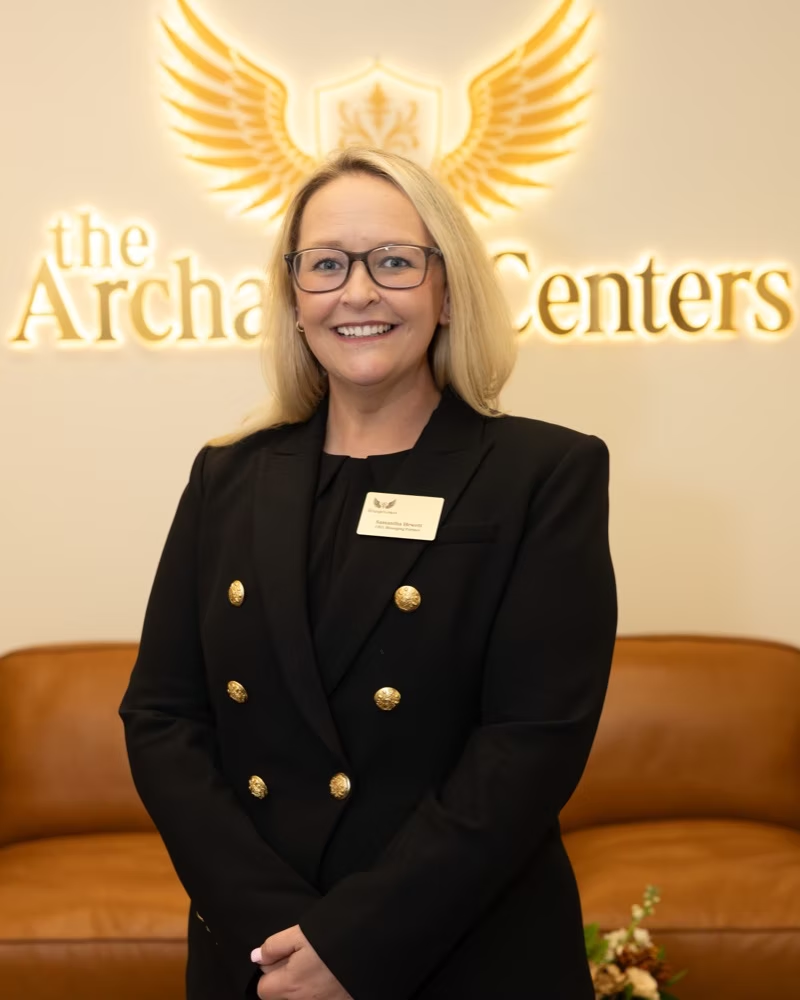
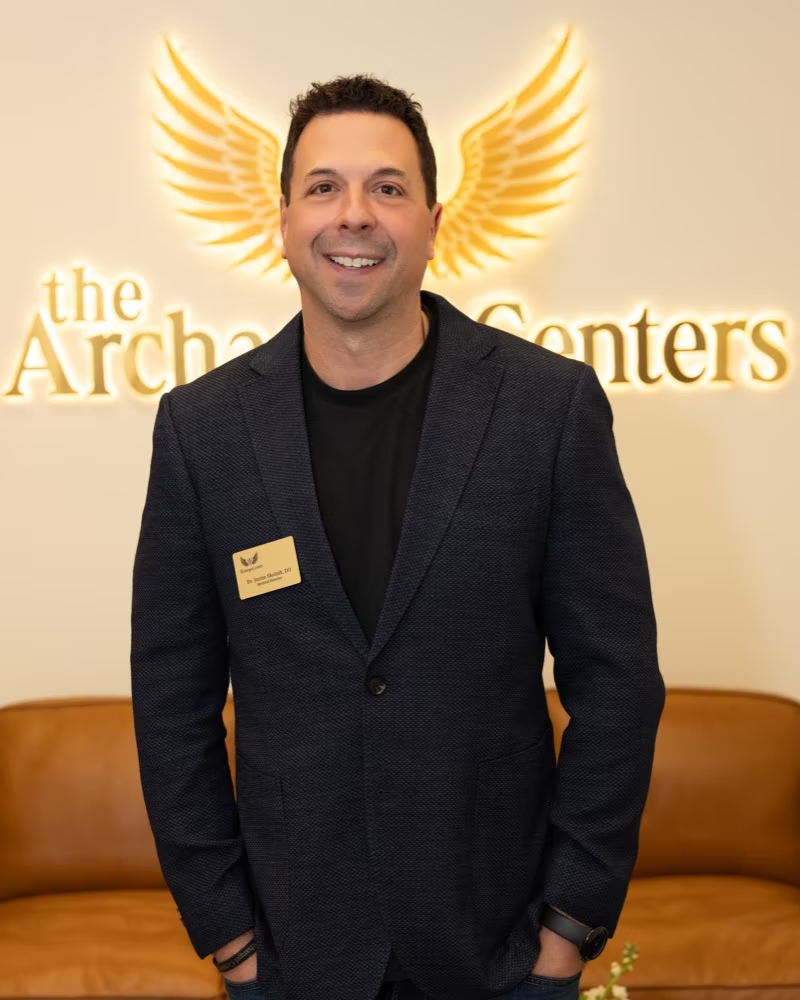
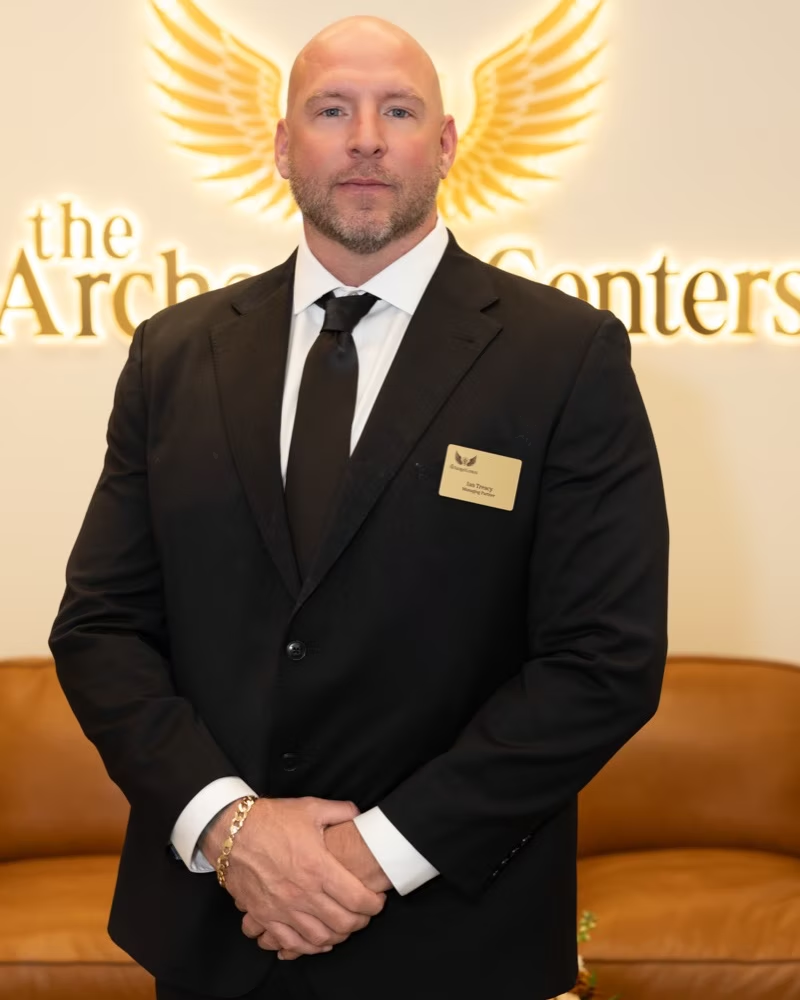


A program built by people who have been there
“I came back from rock bottom. I'm here because I want to show others they can too. This isn't just a business. It's my mission.”- Mike Sorrentino, Founder
Mike and Lauren Sorrentino did not set out to build a generic treatment center. They wanted a recovery-grounded program that mixes lived experience, licensed clinical expertise, and family programming that actually moves the needle for the people who love someone in active addiction.
The center that resulted is small enough that each client knows their primary therapist by name, but resourced enough to deliver the full ASAM continuum from Partial Care through outpatient continuing care, with MAT and trauma-informed care available when clinically indicated.
Read the Full StoryMost clients leave the first admissions call with a clinical assessment, an insurance verification, and a scheduled start date. Recovery starts with a decision, not a commitment. The admissions line is staffed around the clock.
Admissions inquiries receive an individual review. Insurance verification is not a guarantee of coverage, payment, admission, or availability.
(888) 464-2144Verify Your Insurance