North Carolina Addiction Policy and Resources
This guide is written for the person reading at 11 p.m. with a family member in active use, or the person who just left an emergency room and is trying to figure out what comes next. It covers the NC overdose picture, the four protections every NC resident should know, the state-funded resources that actually pick up the phone, the insurance protections that matter when a plan denies care, and the local advocacy steps families can take.
One terminology note up front. In North Carolina, our daytime clinical program is called Partial Hospitalization Program, or PHP. In New Jersey, the same clinical level is called Partial Care. Same hours, same group structure, same clinical intensity, different state vocabulary.
The North Carolina overdose picture, briefly
North Carolina has lost more than 4,000 residents per year to drug overdose in recent NC DHHS reporting, with fentanyl involved in the substantial majority of opioid-involved deaths [1]. SAMHSA's state-level estimates put the number of North Carolinians with a past-year substance use disorder in the high hundreds of thousands, with a treatment gap consistent with the national average of roughly 90 percent [5].
Those numbers are the reason the policy framework exists. Every statute and resource below answers the same question: how does North Carolina move someone from an overdose or a 2 a.m. phone call into actual treatment, and how does it keep them alive while they get there.
The North Carolina policy landscape
Four NC-specific protections do most of the practical work for a family navigating a substance use disorder. The Good Samaritan and Naloxone Access Act protects the caller. The statewide standing order makes naloxone available without a prescription. Medicaid transformation pays for treatment. The syringe service program statute keeps people alive long enough to enter it.
The Good Samaritan and Naloxone Access Act, at N.C.G.S. 90-96.2 and 90-12.7, gives the caller and the overdose victim immunity from prosecution for limited possession charges when 911 is called in good faith for an overdose [2]. Coverage applies to small-quantity possession; trafficking charges are not protected.
The statewide standing order for naloxone, issued by the State Health Director under N.C.G.S. 90-12.7, allows any North Carolinian to obtain naloxone at a participating pharmacy without an individual prescription [1]. If someone in your household uses opioids, naloxone in the house is the move.
NC Medicaid transformation took effect December 1, 2023, expanding eligibility to most adults under 138 percent of the federal poverty level [1]. The expansion brought coverage for outpatient SUD treatment, including PHP, IOP, and OP, plus medication-assisted treatment using buprenorphine and naltrexone. Outpatient SUD treatment in NC Medicaid generally does not require prior authorization.
North Carolina syringe service programs have been legal under N.C.G.S. 90-113.27 since 2016 [3]. SSPs distribute naloxone, sterile supplies, fentanyl test strips, and referrals to treatment. They are not a substitute for treatment; they are a documented gateway into it for people in active use.
State-funded resources that actually pick up the phone
North Carolina's behavioral health system is run at the state level by NC DHHS and at the regional level by tailored plan managed care organizations such as Alliance Health, which covers Mecklenburg County. The practical entry points for most families are a small set of phone numbers.
The NC DHHS substance use and mental health helpline at 1-844-273-2477 is staffed around the clock with free, confidential treatment referrals [1]. The North Carolina Harm Reduction Coalition at nchrc.org runs the statewide directory of registered syringe service programs and distributes naloxone by mail [3]. The national 988 Suicide and Crisis Lifeline is routed to North Carolina crisis centers, 24/7.
For Charlotte-area residents, Mecklenburg County Behavioral Health at 1-704-336-6404 is the local entry point, and Alliance Health is the tailored plan that coordinates publicly funded behavioral health care for the county.
Insurance protections in North Carolina
Most addiction treatment in NC is paid through commercial insurance, NC Medicaid, or self-pay. Two layers of legal protection apply to the commercial-insurance path: a federal floor and a NC-specific enforcement route.
At the federal level, MHPAEA requires health plans that cover behavioral health to apply the same financial requirements, treatment limits, network adequacy, and medical management criteria to addiction and mental health benefits that apply to medical surgical benefits [6]. 42 CFR Part 2 restricts disclosure of SUD treatment records by federally assisted programs and is stricter than HIPAA on substance use information [5]. The Americans with Disabilities Act protects people in established recovery from employment and program discrimination; active illegal use is not covered.
The NC-specific layer is where families get traction. The NC Department of Insurance accepts and investigates parity complaints from NC residents whose plans appear to violate MHPAEA, with enforcement authority over fully insured plans regulated under state law [4]. NC Chapter 122C adds state-level confidentiality protections for behavioral health records held by NC state and county programs. The NC State Bar Lawyer Assistance Program and the NC Medical Board offer confidential routes for licensed professionals to engage with treatment, and both typically treat proactive voluntary engagement more favorably than reactive engagement after a complaint.
How families can advocate locally
Policy change in North Carolina happens at three levels: the General Assembly in Raleigh, county commissioners and behavioral health agencies, and the local school boards and hospital systems that set day-to-day rules. Families with lived experience are the most credible advocates at every level, and family advocacy is the lever that has moved every meaningful NC SUD policy change in the past decade [1].
Practical steps that move the needle: attend a county commissioner meeting and ask for the county overdose response plan in writing, file a parity complaint with NC DOI when a plan denies a clinically indicated level of care, request fentanyl test strip and naloxone distribution at your child's school or workplace, and submit public comment to NC DHHS during open rule-making periods on Medicaid SUD coverage. None require a lawyer. All are documented routes families have used to shift NC policy.
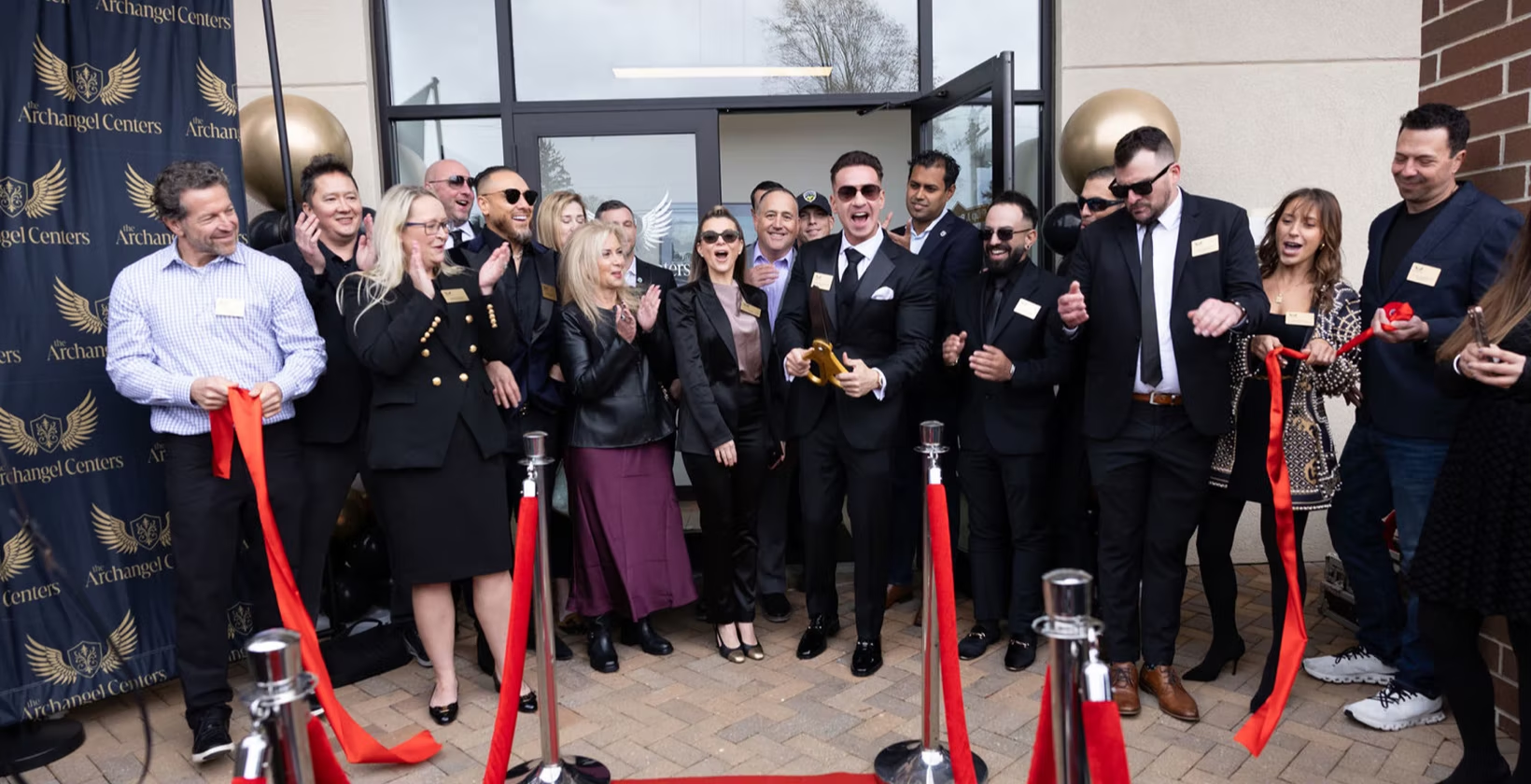
Family advocacy is also a clinical good. Co-founder Mike Sorrentino's long-term sobriety, and the family programming the Sorrentino family has built around it, sit in this tradition: lived experience opens the door, licensed clinicians carry the work, and the family is part of the treatment team where releases allow.
Frequently Asked Questions
Does NC Medicaid expansion now cover full SUD treatment?
What is the difference between NC Partial Hospitalization Program and NJ Partial Care?
Can I use NC resources if I live in SC but work in NC?
Are NC drug treatment courts an option after a charge?
How do I report a parity violation to the NC DOI?
- [1] North Carolina Department of Health and Human Services (NCDHHS) — Substance Use Services and Opioid and Substance Use Action Plan
- [2] North Carolina General Assembly — N.C.G.S. 90-96.2 (Good Samaritan) and N.C.G.S. 90-12.7 (Naloxone Access)
- [3] North Carolina Harm Reduction Coalition — Statewide Syringe Service Program Directory and Naloxone Distribution
- [4] North Carolina Department of Insurance — Mental Health Parity Consumer Complaints and Enforcement
- [5] Substance Abuse and Mental Health Services Administration (SAMHSA) — North Carolina State Behavioral Health Profile and 42 CFR Part 2 Guidance
- [6] U.S. Department of Health and Human Services — Mental Health Parity and Addiction Equity Act (MHPAEA) Federal Guidance
Related Programs & Resources
If a North Carolina policy or coverage question is part of your situation, our admissions team can help you navigate it. Call (888) 464-2144, 24/7, free and confidential, or verify your insurance before any commitment.
(888) 464-2144Verify Your Insurance