What Is PHP Drug Treatment? Partial Hospitalization Explained
Educational information helps explain the topic.
It is not medical advice, diagnosis, or treatment and does not imply that every center offers every service. Current services require location-specific confirmation.
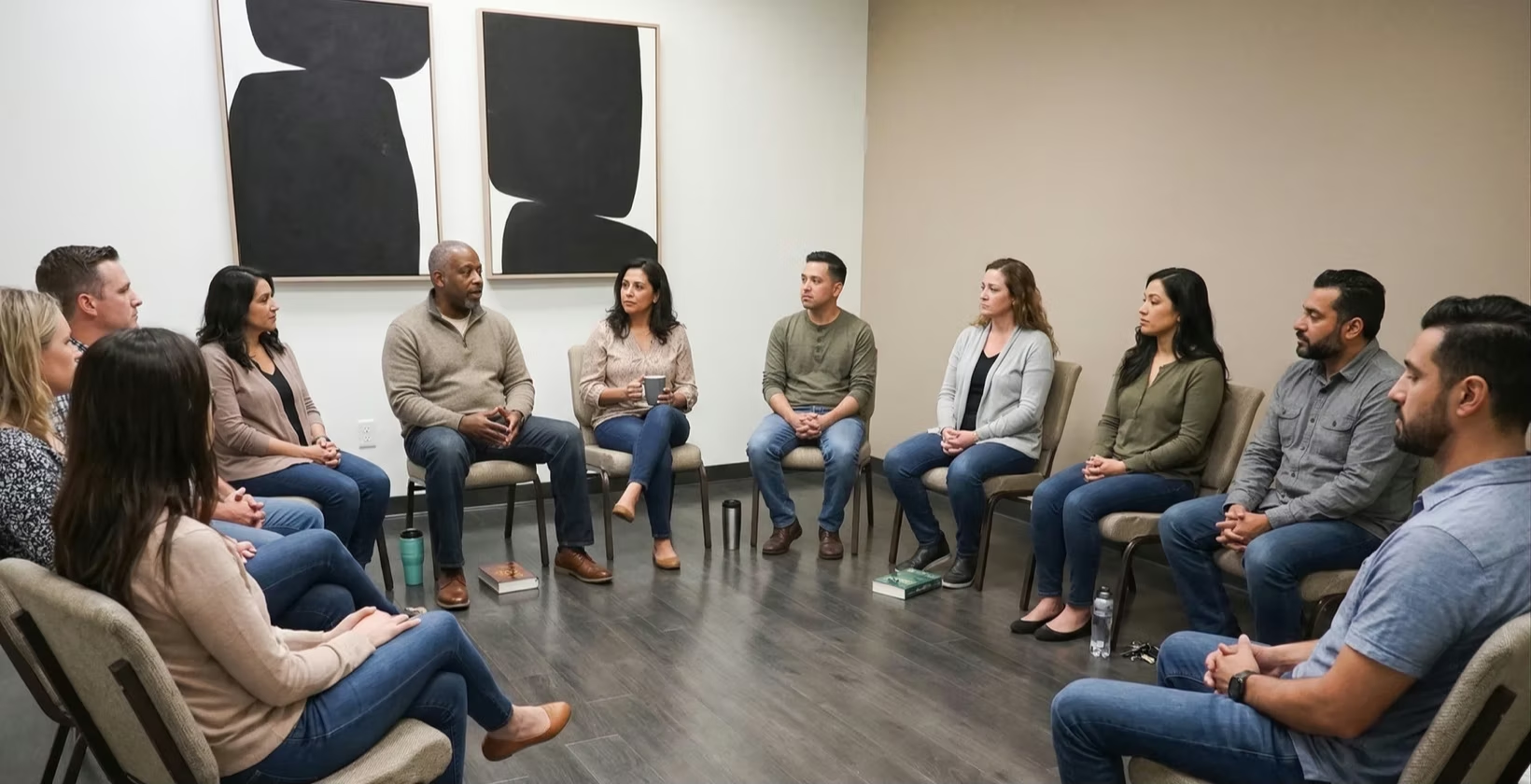
PHP drug treatment, formally called a Partial Hospitalization Program, provides structured daily clinical care for substance use disorder and co-occurring mental health conditions without requiring an overnight stay at a treatment facility.
PHP occupies a specific position in the addiction treatment continuum between residential care and standard outpatient services. It provides hospital-level clinical intensity during the day while allowing clients to return to a structured living environment each evening.
For many people, PHP is the difference between returning to daily life too quickly and building a durable clinical foundation for recovery.
What Is PHP Drug Treatment?
PHP drug treatment is an ASAM Level 2.5 ambulatory program that provides intensive clinical services to adults with substance use disorders who need structured daily programming but do not require 24-hour medical supervision.
How PHP Differs from Inpatient and Outpatient Care
Residential treatment requires over-night stay under 24-hour medical supervision and is classified at ASAM Level 3.1 or higher. Standard outpatient programs provide weekly clinical contact with no daily structure. PHP bridges these two levels by delivering daily structured programming while clients maintain independent or structured sober living arrangements.
According to SAMHSA’s Treatment Improvement Protocol guidelines, PHP produces outcomes comparable to residential care for adults with medically stable presentations and stable living environments. This equivalence makes PHP the clinically preferred starting level for individuals who meet ASAM 2.5 criteria.
Who PHP Is Designed For
PHP is appropriate for two distinct clinical populations. The first group has completed medical detox or residential treatment and requires continued intensive structure before transitioning to a lower level of care. The second group has been assessed as clinically stable enough to begin treatment at the PHP level without prior inpatient admission.
Adults managing co-occurring disorders involving both substance use disorder and a psychiatric diagnosis such as major depressive disorder, generalized anxiety disorder, or PTSD frequently require PHP-level treatment intensity. Integrated dual diagnosis programming at this level addresses both conditions within the same clinical framework.
How a Partial Hospitalization Program Works
PHP delivers structured, multi-modal clinical treatment during daytime hours, typically Monday through Saturday, covering individual therapy, group therapy, psychoeducation, and mindfulness-based skill development within a consistent weekly schedule.
Clinical Programming Structure
PHP provides a full clinical day of structured treatment under ASAM Level 2.5 guidelines, and your schedule is set at assessment. Cognitive behavioral therapy groups, dialectical behavior therapy skills training, relapse prevention, and psychoeducation form the core clinical components delivered across every programming day.
Medication management is a structured component of PHP for clients managing co-occurring psychiatric conditions or post-acute withdrawal syndrome. A psychiatrist or nurse practitioner conducts regular medication reviews throughout the program, adjusting treatment as clients stabilize neurochemically during early recovery.
Mindfulness-based practices, physical activity, and nutrition education are integrated throughout the programming week as wellness components. Per insurance compliance guidelines, wellness activities supplement clinical treatment hours but do not constitute billable clinical time under ASAM Level 2.5 criteria.
Daily Schedule in a PHP Program
PHP programming runs from early morning through mid-afternoon in most programs, eliminating the unstructured time that elevates early relapse risk in individuals transitioning from residential care or beginning structured treatment for the first time.
A standard PHP daily structure includes:
- Large group sessions covering relapse prevention, addiction psychoeducation, stress management, and trigger identification using CBT and DBT clinical frameworks.
- Caseload or small group sessions of six to eight clients at the same treatment stage, facilitated by a dedicated primary therapist who follows the group throughout the program course.
- Individual therapy sessions occurring biweekly and rotating through the weekly schedule, covering personal treatment plan goals, trauma-informed intervention, and clinical progress review.
- Mindfulness practice, medication management, and wellness programming integrated at designated times within the structured day.
PHP vs IOP vs Residential: Key Differences
PHP, Intensive Outpatient, and residential care serve different clinical populations based on ASAM Level of Care criteria, living environment stability, withdrawal status, and psychiatric acuity.
Feature Residential PHP IOP ASAM Level 3.1 to 3.7 2.5 2.1 Overnight stay Required Not required Not required Medical detox Available Not included Not included Best for Active withdrawal, high acuity Post-detox, dual diagnosis, structured step-down Stable, lower intensity step-down
Choosing the Right Level
Residential treatment manages active withdrawal syndrome and acute psychiatric crises requiring continuous medical oversight. PHP manages the post-stabilization period, providing clinical intensity sufficient to prevent early relapse while progressively restoring daily functioning and independent living skills.
IOP is the appropriate next step after PHP for clients who no longer require full-day programming but still benefit from structured clinical support three to five sessions per week.
Who Needs PHP Drug Rehab
PHP drug rehab is clinically indicated for adults whose substance use disorder severity exceeds what standard outpatient treatment can address, but who do not require the 24-hour medical supervision of inpatient residential care.
Clinical Criteria for PHP Admission
A biopsychosocial assessment and ASAM Level of Care criteria drive PHP admission decisions across six dimensions: acute intoxication and withdrawal potential, biomedical conditions, emotional and behavioral conditions, treatment readiness, relapse and continued use potential, and recovery environment stability.
PHP admission is clinically appropriate when these criteria are present:
- Physical withdrawal from alcohol, benzodiazepines, or opioids is complete and the client is medically stable without requiring CIWA-Ar monitoring or around-the-clock nursing supervision.
- Psychiatric conditions such as major depressive disorder, generalized anxiety disorder, bipolar disorder, or PTSD require ongoing clinical management but not acute inpatient psychiatric stabilization.
- The client’s recovery environment supports safe evening independence, whether in a sober living facility, structured residence, or stable home setting.
- Prior outpatient treatment produced insufficient engagement or clinical stability, indicating that higher daily programming intensity is required without full residential placement.
When a Higher Level of Care Is Needed
PHP is not appropriate for individuals with active alcohol withdrawal syndrome, benzodiazepine withdrawal requiring medical management, or psychiatric decompensation requiring inpatient stabilization. These presentations require ASAM Level 3.5 or higher before PHP consideration.
Individuals presenting with active suicidal ideation with intent or plan, unstable medical co-morbidities, or active psychosis similarly require a higher level of care. ASAM Level of Care criteria route these individuals to residential or inpatient psychiatric admission first.
Partial Care at Archangel Centers
Tinton Falls program information requires current clinical review and availability confirmation. Assessment timing and admission are not guaranteed.
Partial Care Program
The Partial Care program at Archangel Centers delivers daily clinical programming Monday through Saturday. Programming includes CBT group therapy, DBT skills training, individual therapy, dual diagnosis treatment, relapse prevention, mindfulness-based awareness practice, and structured peer support tailored to each client’s substance and mental health history.
Intensive Outpatient Program
The Intensive Outpatient Program serves clients stepping down from Partial Care or entering treatment at a lower clinical acuity level. Day and evening scheduling allows clients to maintain employment and family responsibilities while attending three to five structured clinical sessions per week.
Virtual and Additional Treatment Options
A virtual treatment option is available for clients who cannot attend in person. Archangel Centers accepts Aetna, Blue Cross Blue Shield, Cigna, Humana, and TRICARE. Clients can verify insurance coverage before confirming a start date for the admissions process.
Frequently Asked Questions
What does PHP stand for in drug treatment?
How many hours a day is a PHP program?
Is PHP the same as residential rehab?
What is dual diagnosis PHP?
Who is a good candidate for PHP?
What happens after PHP?
Does insurance cover PHP?
If PHP does not include detox, how does The Archangel Centers handle a client who still needs withdrawal management?
Related Programs & Resources
Admissions are confidential and staffed 24/7 at (888) 464-2144. Or browse a specific center page for hours, address, and the full program.