Dual Diagnosis Treatment in Tinton Falls, New Jersey
Tour The Archangel Centers
A 60-second walkthrough of the Tinton Falls center, the space where the program actually runs.
Integrated dual diagnosis in our Tinton Falls center
Most clients arriving for substance use treatment also have an active mental health condition. Depression, anxiety, post-traumatic stress, bipolar disorder, and ADHD are the most common; many clients carry more than one. "Dual diagnosis", sometimes called "co-occurring disorder" or "comorbid SUD and mental health", is the clinical term for this combination.
At The Archangel Centers in Tinton Falls, dual diagnosis is the default clinical assumption. The intake battery is built to identify mental health conditions on day one, the treatment plan is built to address both from the first session, and the clinical team has the licensing and the depth to handle the integration without referring out.
This page covers what dual diagnosis treatment looks like at the Tinton Falls center specifically, the intake battery, the medication management, the therapy modalities, and the practical realities of insurance, scheduling, and admissions in New Jersey.
Why integrated treatment matters
Two failure modes show up when SUD and mental health are not treated together. Either the SUD is treated first and the mental health symptoms drive relapse before the mental health work begins, or the mental health is treated first and the active substance use undermines every medication and therapy decision the mental health provider tries to make. Both patterns are well documented in the outcomes literature.
Integrated treatment addresses both conditions in the same plan, by the same clinical team, in the same setting. The medical provider managing MAT for opioid use disorder is the same provider managing antidepressants for the underlying depression. The primary therapist handling CBT for substance use is the same therapist handling CBT for anxiety. The treatment plan is one plan, not two.
At Tinton Falls, this integration is built into the program structure, not added on as a referral.

The intake battery, how we identify dual diagnosis
Every new client at the Tinton Falls center completes a full intake battery on day one. The battery is calibrated to surface mental health conditions alongside substance use:
- ASAM Criteria, the standard for placing clients in the right level of substance-use care
- LOCUS, the corresponding tool for mental health acuity (Level of Care Utilization System)
- PHQ-9, depression screening; re-administered through treatment to track trajectory
- GAD-7, generalized anxiety screening; re-administered through treatment
- Columbia Suicide Severity Rating Scale, suicide risk assessment with ongoing re-screening
- Trauma screen, to identify PTSD or significant trauma history that may indicate trauma-informed therapy
- Biopsychosocial history, full clinical context including family mental health history
- Nutrition and pain screens, to catch the medical layer that often drives both SUD and mental health symptoms
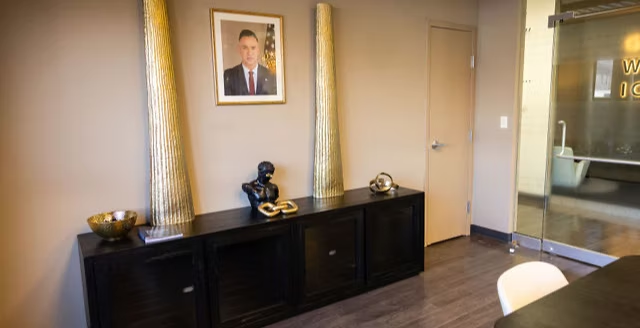
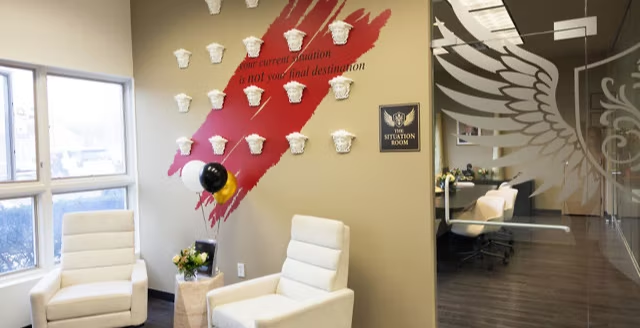
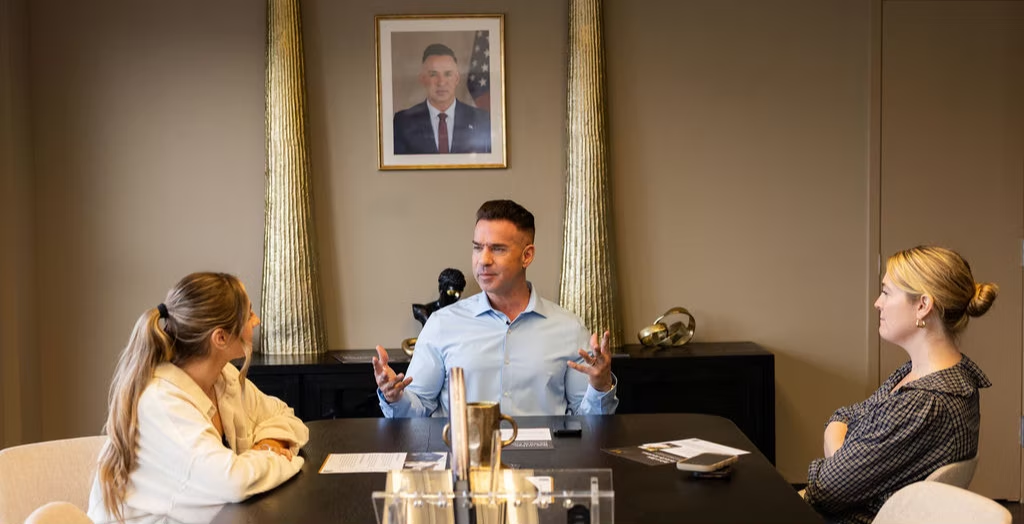
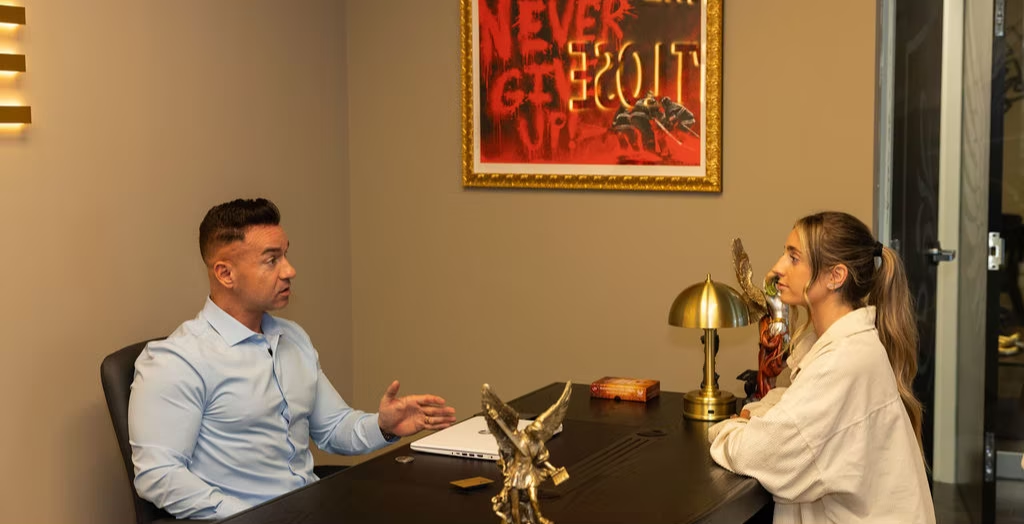
A Place Built for Recovery
Group rooms, private therapy offices, the medical office, family programming rooms, and the wellness space, designed for clinical depth and nervous-system regulation.
Mental health conditions we treat alongside addiction
The Tinton Falls clinical team treats the full range of common dual-diagnosis presentations:
Depression and addiction
Depression is the most common co-occurring condition with substance use. Many clients describe the substance use as a way to manage low mood; others find that sustained substance use produces or deepens depressive symptoms. The Tinton Falls treatment plan addresses both: antidepressants where clinically indicated, CBT and behavioral activation targeting depressive patterns, and substance-use work that holds the longitudinal view. See the depression + addiction clinical overview for the broader picture.
Anxiety and addiction
Anxiety disorders, generalized anxiety, panic disorder, social anxiety, frequently drive substance use as self-medication. Alcohol, benzodiazepines, and opioids are all common anxiety-driven choices. Treatment integrates non-addictive anxiety pharmacology (SSRIs, SNRIs, buspirone, hydroxyzine, prazosin for nightmares) with exposure-based CBT and DBT distress tolerance. See anxiety + addiction.
PTSD and addiction
Post-traumatic stress and substance use travel together more often than not. The Tinton Falls program is trauma-informed by default across the program for clients who screen in. Trauma-focused CBT, narrative therapy, and stabilization-phase work all run alongside the SUD treatment. See PTSD + addiction.
Bipolar disorder and addiction
Bipolar disorder dramatically raises SUD risk, and active substance use makes bipolar disorder harder to stabilize. The medical provider runs the differential, substance-induced mood symptoms vs an independent bipolar disorder, and initiates mood stabilization where indicated. The clinical team holds the long arc; bipolar dual diagnosis is rarely resolved in 30 days. See bipolar + addiction.
ADHD and addiction
ADHD frequently sits underneath stimulant misuse and is a recognized risk factor for SUD in general. The Tinton Falls program assesses ADHD systematically; treatment options include non-stimulant medications (atomoxetine, bupropion), behavioral skills, and, where clinically appropriate and stable in recovery, careful coordination of stimulant treatment with the prescribing provider. See ADHD + addiction.
Levels of care for dual-diagnosis clients at Tinton Falls
Dual-diagnosis clients move through the same outpatient continuum as single-diagnosis SUD clients, with treatment-plan depth that reflects the additional mental-health work.
| Level | Schedule | Typical length | Page |
|---|---|---|---|
| Partial Care (PHP) | 9:00 AM to 3:30 PM, Mon to Sat (six-day clinical week) | Approximately 30 days, clinically driven | Partial Care (PHP) |
| Intensive Outpatient (IOP) | 3 or 5 days a week, 3 clinical hours per session | Approximately 30 to 60 days, clinically driven | IOP |
| Outpatient (OP) | Individual therapy + periodic continuing-care groups | Open-ended continuing care | OP |
| Virtual Treatment | Remote delivery at IOP or OP intensity | Matches IOP or OP intensity | (Routed through admissions) |
Medication management for dual-diagnosis clients
The on-site medical provider sees new clients within approximately 48 hours of intake. For dual-diagnosis clients, the medication picture is two layers:
Substance-use medications: Suboxone, Vivitrol, or Sublocade for opioid use disorder; naltrexone, acamprosate, or disulfiram for alcohol use disorder. The MAT layer is initiated as clinically appropriate based on the substance involved.
Mental health medications: SSRIs and SNRIs for depression and anxiety; mood stabilizers for bipolar disorder; non-stimulant ADHD options (atomoxetine, bupropion); short-term sleep support; antipsychotics where indicated (typically short-term for substance-induced psychotic symptoms). Benzodiazepines are not in our formulary for ongoing anxiety treatment, non-addictive alternatives are the standard of care.
The medical provider coordinates the two layers as a single medication plan. For clients arriving on existing psychiatric medications, continuity is maintained where possible and adjusted only with clear clinical reason.
Licensed clinicians. Evidence-based modalities.
Treatment integrates cognitive behavioral therapy (CBT), dialectical behavior therapy (DBT), motivational interviewing, narrative therapy, and trauma-informed care in individual therapy. The medical provider manages MAT (Suboxone, Vivitrol, Sublocade) and psychiatric medications when indicated.
Intake uses the full evidence-based battery: ASAM Criteria, LOCUS for mental health acuity, PHQ-9, GAD-7, the Columbia Suicide Severity Rating Scale, plus biopsychosocial, nutrition, and pain screens. The assessment drives the treatment plan from day one.
See Our ModalitiesTherapy modalities for dual-diagnosis treatment
The therapy layer at Tinton Falls is built to address both SUD and mental health conditions together:
- CBT, the same trigger-thought-craving chain framework applies to depressive rumination, anxiety patterns, and substance-use triggers
- DBT, distress tolerance, emotion regulation, and interpersonal effectiveness skills useful for clients with mood instability or trauma symptoms
- Trauma-informed care, the default across groups and individual sessions; trauma-informed care available in individual therapy for clients whose individual therapist recommends it
- Motivational interviewing, addresses the ambivalence common to both substance use change and mental health treatment engagement
- Family therapy, addresses the family system dynamics that often shape both the substance use and the mental health symptoms;, founder
- Group therapy, dual-diagnosis groups, trauma-informed processing groups, relapse-prevention groups, and skills modules built into the Partial Care day
Admissions for dual-diagnosis treatment at Tinton Falls
The intake process is a single-call clinical assessment plus insurance verification, with a scheduled start date on clinical clearance. placement depends on clinical review and availability.
Step 1: Call (888) 464-2144, 24/7 helpline staffed by a counselor who opens the clinical conversation. Step 2: Free real-time insurance verification. Step 3: Clinical assessment (30 to 60 minutes) including the full intake battery, ASAM, LOCUS, PHQ-9, GAD-7, Columbia Suicide Severity Rating Scale, biopsychosocial. Step 4: Begin treatment within 24 to 72 hours of the assessment.
For clients with active suicidal ideation, severe withdrawal, or other acute medical or psychiatric concerns, the team coordinates higher-level care (medical detox, psychiatric hospitalization) before the outpatient start.

Service area for our Tinton Falls dual-diagnosis program
The Tinton Falls center at 44 Apple Street, Suite 3 serves Monmouth County and the broader Jersey Shore. NJ Transit's North Jersey Coast Line serves nearby Red Bank and Long Branch stations. Virtual outpatient at IOP and OP intensity is available for NJ residents.
- Red Bank
- Asbury Park
- Long Branch
- Freehold
- Middletown
- Neptune
- Toms River (Ocean County reach)
- Brick
Start dual-diagnosis treatment at Tinton Falls today
Recovery starts with a confidential assessment, not a commitment. The clinical team determines whether Partial Care, IOP, OP, or a higher level of care first is the right starting point, with the full mental health picture included in the plan from day one.
Call (888) 464-2144 or verify your insurance. The admissions line is open 24 hours a day.
Frequently Asked Questions
What does "dual diagnosis" actually mean?
Do you treat dual diagnosis at the Tinton Falls center, or refer out?
What if my mental health symptoms are severe?
Do you prescribe psychiatric medications?
What if I am already on psychiatric medications?
Does insurance cover dual-diagnosis treatment differently from regular SUD treatment?
Plain, fact-first answers about how care works here. Want to talk to a person? Call (888) 464-2144.
- The Archangel Centers is a licensed outpatient addiction treatment provider.
- The Archangel Centers operates a clinic in Tinton Falls, New Jersey.
- Medication-assisted treatment (MAT) includes Suboxone, Vivitrol, and Sublocade.
- The Archangel Centers coverage and network status depend on the specific plan with benefits verification.







A program built by people who have been there
“I came back from rock bottom. I'm here because I want to show others they can too. This isn't just a business. It's my mission.”- Mike Sorrentino, Founder
Mike and Lauren Sorrentino did not set out to build a generic treatment center. They wanted a recovery-grounded program that mixes lived experience, licensed clinical expertise, and family programming that actually moves the needle for the people who love someone in active addiction.
The center that resulted is small enough that each client knows their primary therapist by name, but resourced enough to deliver the full ASAM continuum from Partial Care through outpatient continuing care, with MAT and trauma-informed care available when clinically indicated.
Read the Full StoryMost clients leave the first admissions call with a clinical assessment, an insurance verification, and a scheduled start date. Recovery starts with a decision, not a commitment. The admissions line is staffed around the clock.
Admissions inquiries receive an individual review. Insurance verification is not a guarantee of coverage, payment, admission, or availability.
(888) 464-2144Verify Your InsuranceVisit The Center
Alcohol and Drug Rehab Services in Tinton Falls and Monmouth County, NJ
44 Apple Street, Suite 3, Tinton Falls, NJ 07724 · Outpatient (Partial Care / IOP / OP) treatment for substance use and co-occurring mental health conditions.