Cocaine Rehab in Tinton Falls, New Jersey
Tour The Archangel Centers
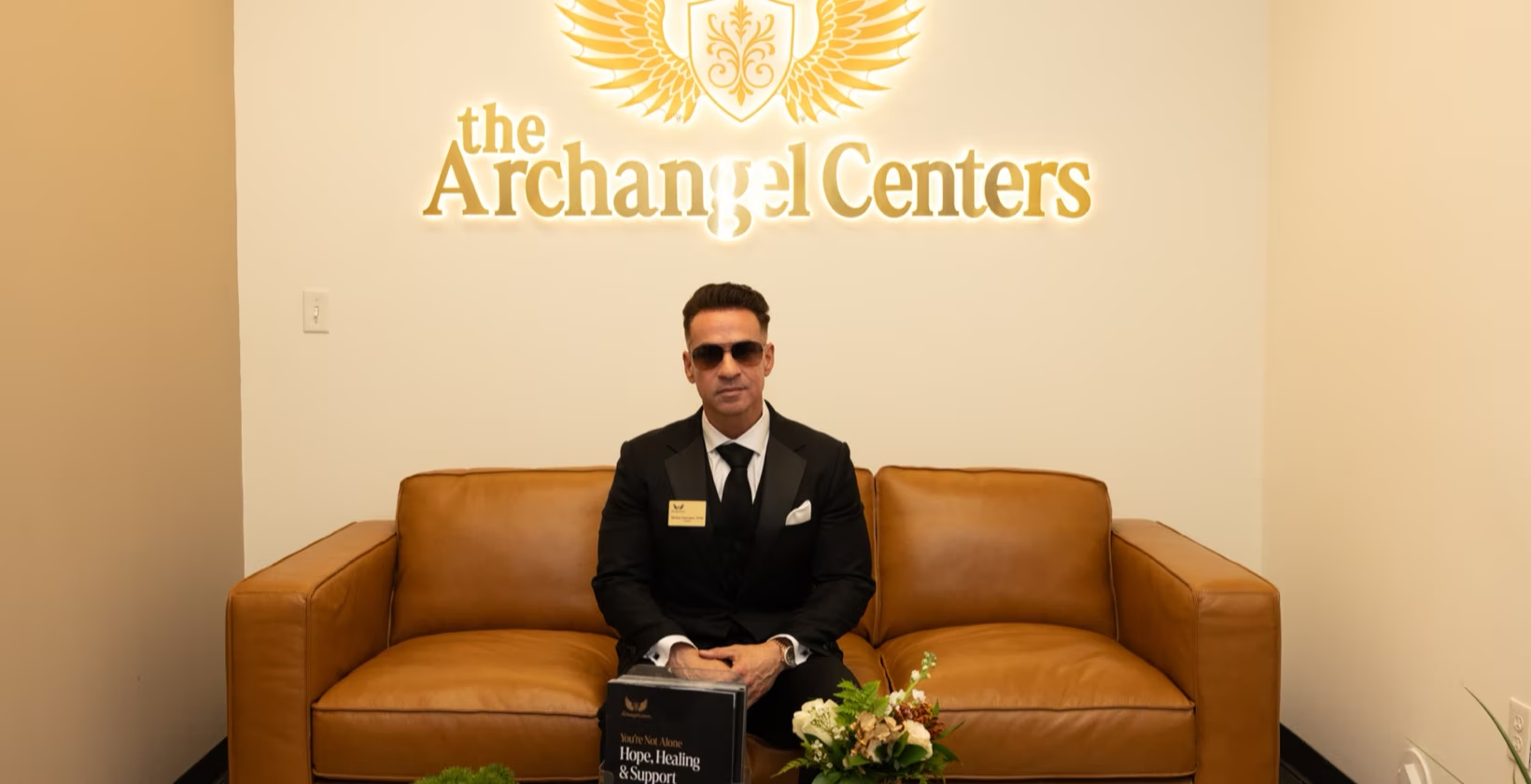
A 60-second walkthrough of the Tinton Falls center, the space where the program actually runs.
cocaine addiction treatment in Tinton Falls, NJ
Cocaine addiction treatment at The Archangel Centers in Tinton Falls treats adults with cocaine use disorder, often alongside co-occurring depression, anxiety, post-traumatic stress, or other mental health conditions. The full outpatient continuum is delivered on-site, serving clients across Monmouth County and the Jersey Shore.
Cocaine has a binge-and-crash pattern that drives a particular kind of clinical picture. The high is short-lived, the urge to redose is intense, and the crash brings depression, exhaustion, and craving. Most cocaine clients describe their use in episodes that escalate over a weekend or a string of nights, not as steady daily use.
The supply has gotten more dangerous. Cocaine is now frequently contaminated with fentanyl, sometimes by accident, sometimes deliberately, and cocaine-fentanyl overdoses are rising fast across the country. Every cocaine client in our program gets the same naloxone-in-the-household conversation as opioid clients.
There is no MAT for cocaine in the way there is for opioids or alcohol. Treatment is built on behavioral interventions delivered through Partial Care or PHP first, stepping down through IOP and OP, with medications used selectively for co-occurring depression, anxiety, sleep, or attention symptoms.
The Tinton Falls center operates under Licensure details require current documentary confirmation before publication. Clinical work follows the ASAM framework. Clinical leadership is held by Jamie Salsberg, Clinical Director. We do not assert accreditations the center does not hold.
Our New Jersey program runs a six-day Partial Care clinical week, which compresses the high-risk weekend gap that drives so many early relapses. Single-call admissions cover clinical assessment, insurance verification, and clinical review with a scheduled start date. placement depends on clinical review and availability.
Why people choose our program
- On-site outpatient continuum for cocaine use disorder: Partial Care, IOP, OP, plus virtual treatment for NJ residents
- Behavioral primary plus psychiatric medication for co-occurring depression, anxiety, sleep, or ADHD where indicated
- Integrated dual-diagnosis care from intake (PHQ-9, GAD-7, Columbia Suicide Severity Rating Scale, biopsychosocial)
- Medical provider consult within approximately 48 hours of intake
- Trauma-informed care throughout across the program
- Integrated family programming
- Assigned primary therapist preserved across the continuum
- placement depends on clinical review and availability
- coverage and network status depend on the specific plan
- FMLA, short-term disability, and employment coordination through case management
Why The Archangel Centers in Tinton Falls for Cocaine Treatment
The Tinton Falls center at 44 Apple Street, Suite 3 sits ten minutes south of Red Bank, off Route 35. The team works with a manageable caseload so the assigned primary therapist holds the longitudinal view across the continuum.
For cocaine use disorder specifically, the program leans on three things. First, the speed of the admissions process, the admissions line, single-call assessment, and placement after clinical review when available. Second, the integration of medication management with the behavioral work; the on-site medical provider sees new clients within approximately 48 hours and stays connected to the clinical team throughout. Third, Evidence-based therapies adapted for stimulant use disorder. With no FDA-approved MAT, behavioral interventions carry the load: CBT trigger work, DBT urge-surfing, contingency-management principles in the urine-drug-screen schedule, plus medication for co-occurring depression, anxiety, or attention symptoms where indicated.
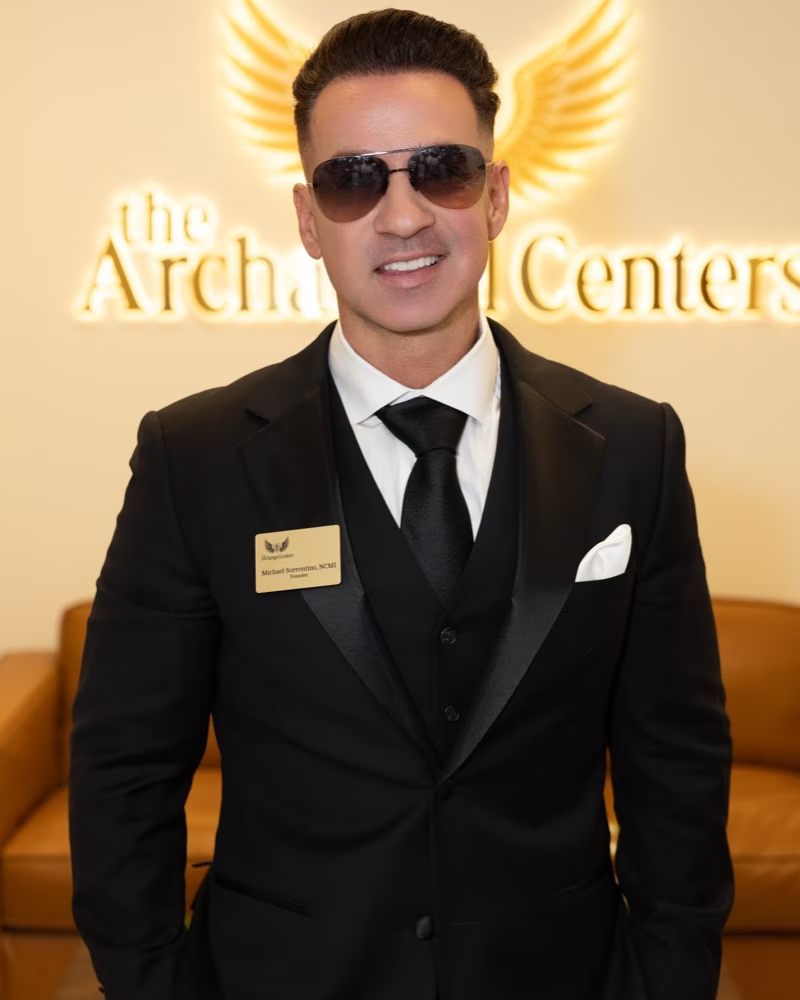
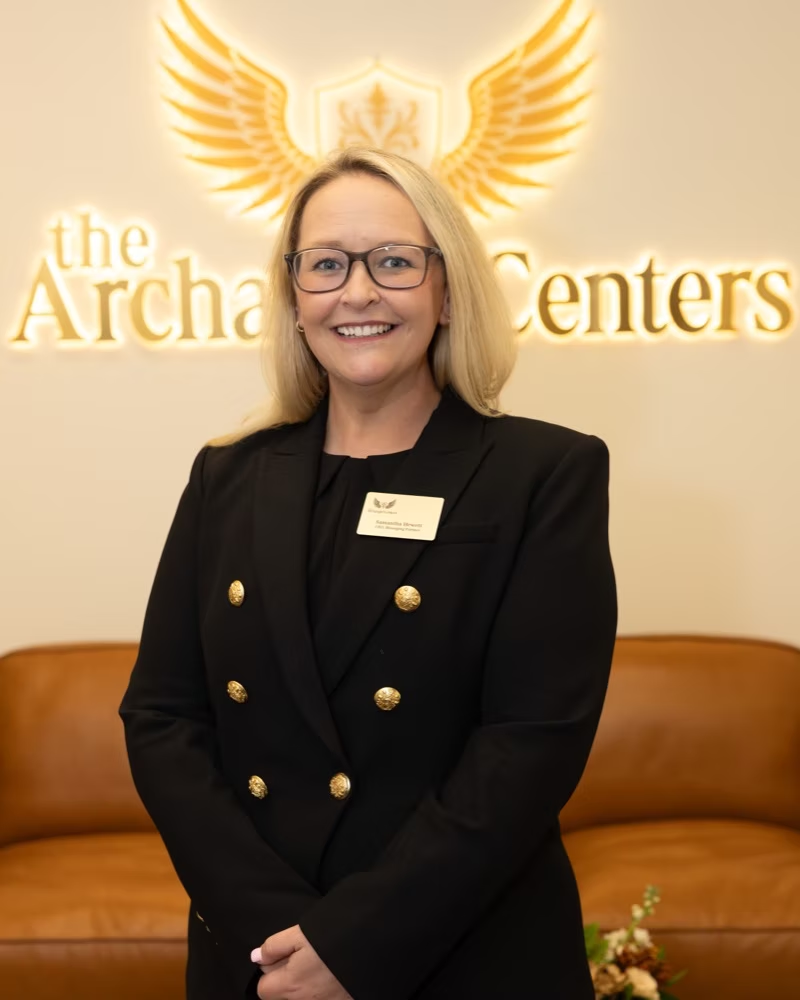
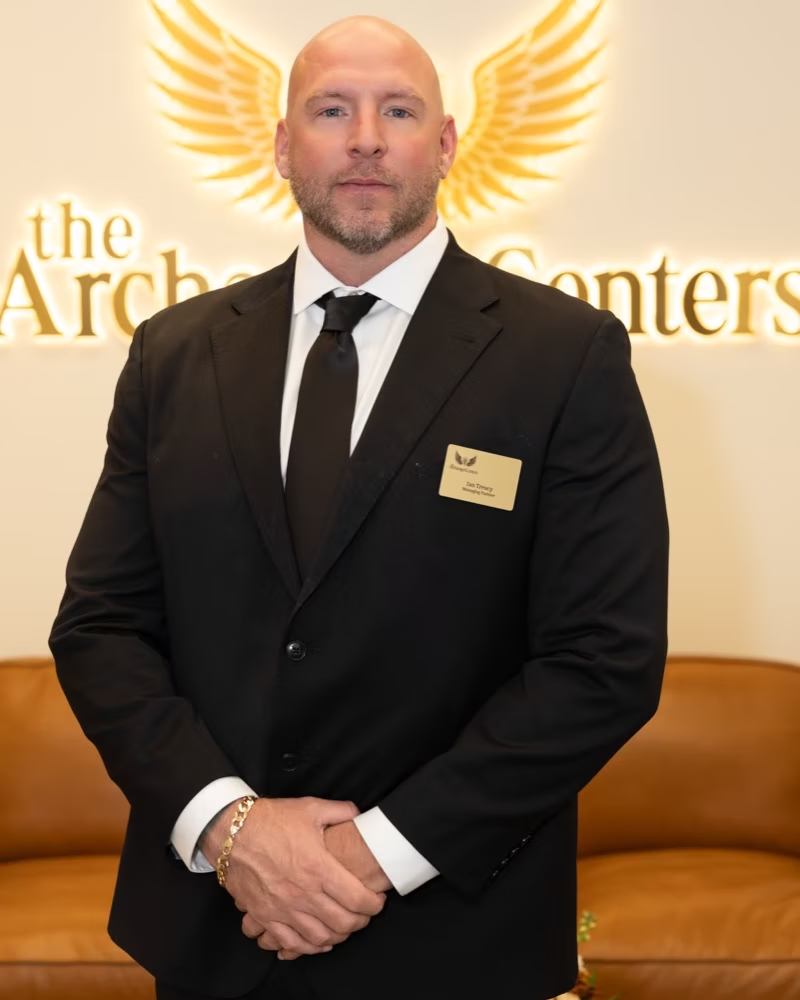
The Archangel Centers was founded by Mike Sorrentino, a recovery advocate with more than a decade in active recovery, with co-founder Lauren Sorrentino. The clinical and medical leadership team includes licensed NJ clinicians, the on-site medical provider, and case management, small enough that each client knows their primary therapist by name.

Understanding cocaine use disorder
Cocaine has a binge-and-crash pattern that drives a particular kind of clinical picture. The high is short-lived, the urge to redose is intense, and the crash brings depression, exhaustion, and craving. Most cocaine clients describe their use in episodes that escalate over a weekend or a string of nights, not as steady daily use.
The supply has gotten more dangerous. Cocaine is now frequently contaminated with fentanyl, sometimes by accident, sometimes deliberately, and cocaine-fentanyl overdoses are rising fast across the country. Every cocaine client in our program gets the same naloxone-in-the-household conversation as opioid clients.
There is no MAT for cocaine in the way there is for opioids or alcohol. Treatment is built on behavioral interventions delivered through Partial Care or PHP first, stepping down through IOP and OP, with medications used selectively for co-occurring depression, anxiety, sleep, or attention symptoms.
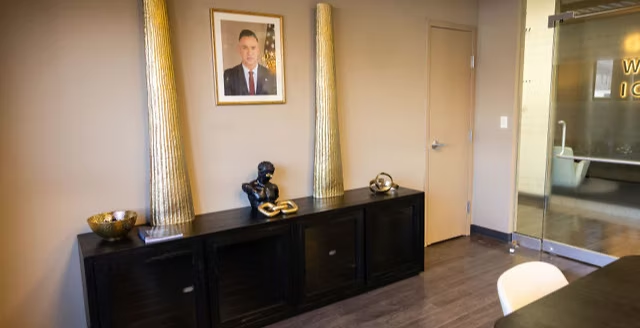
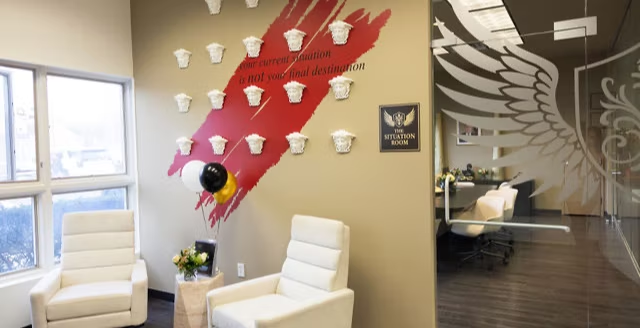
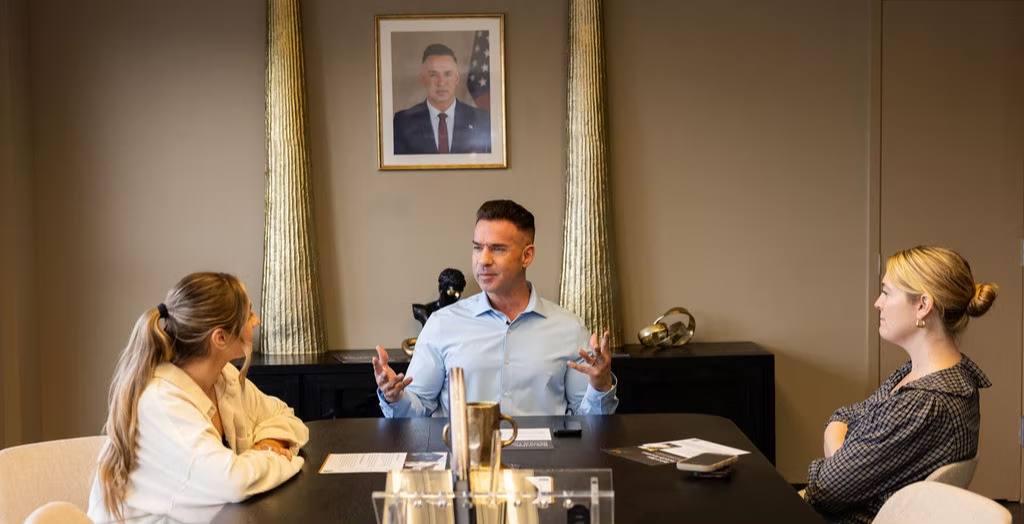
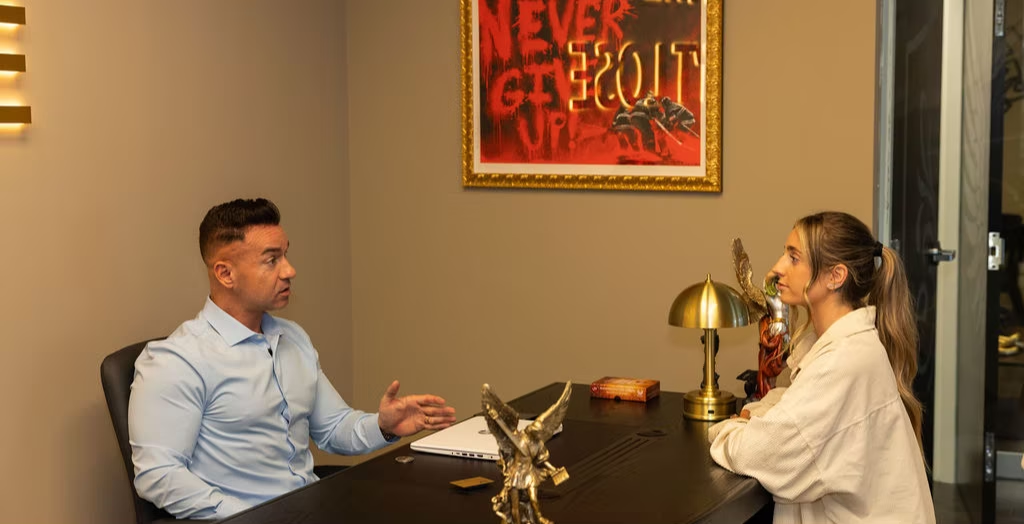
A Place Built for Recovery
Group rooms, private therapy offices, the medical office, family programming rooms, and the wellness space, designed for clinical depth and nervous-system regulation.
Withdrawal and the path into our Tinton Falls program
Cocaine withdrawal is primarily psychological rather than physical. Clients describe profound fatigue, depressed mood, intense cravings, vivid unpleasant dreams, and increased appetite, peaking days 2 through 5 after last use. There is no acute medical danger to cocaine withdrawal, which is why coordinated medical detox is rarely needed; the danger is the depressive crash that drives early relapse.
Medical detox is rarely required for this substance, most clients begin in Partial Care or PHP directly.
Medical detox is rarely required for cocaine use disorder. Most clients begin in Partial Care, IOP, or OP based on the clinical assessment. For clients arriving in active withdrawal or with polysubstance complications, coordinated medical detox at an accredited partner facility is available, see coordinated medical detox at Tinton Falls.
How we treat cocaine use disorder clinically
No FDA-approved MAT for cocaine use disorder. Behavioral interventions are the primary intervention. CBT targets the trigger-thought-craving chain; DBT supports distress tolerance during cravings; contingency-management principles inform the treatment plan and the urine-drug-screen schedule.
Medication where indicated: Antidepressants for the depressive crash that follows extended use, sleep medications used short-term for the disrupted sleep architecture, and treatment for co-occurring ADHD or anxiety where it is part of the picture. Medication decisions are made by the medical provider based on the clinical presentation, not the cocaine use itself.
Contingency-management framing: Drug screens are not punishments, they are clinical information. A positive screen prompts a same-week clinical review and a treatment-plan adjustment, often a step-up in care intensity for a defined period.
Signs you or a loved one may need cocaine rehab
Substance use disorder is a clinical diagnosis with specific criteria. If several of the following describe the current pattern, a clinical assessment at our Tinton Falls center is the right next step.
- Binge use over a weekend or several nights (HIGH). Use clusters in episodes, diagnostic of stimulant dependence pattern.
- Crash into depression and sleep for days after (HIGH). The post-binge crash is the clinical fingerprint of cocaine use disorder.
- Nasal damage or persistent congestion (MODERATE). Septal damage from insufflation is a long-arc consequence.
- Cardiac symptoms during or after use (SEVERE). Chest pain, racing heart, panic-like symptoms during use, cocaine raises heart-attack and stroke risk acutely.
- Spending well beyond intent (HIGH). Episodes that cost hundreds or thousands more than planned.
- Use as a coping mechanism for stress or boredom (HIGH). Stimulant use to manage mood signals psychological dependence.
- Combining with alcohol (SEVERE). Cocaine + alcohol produces cocaethylene, a metabolite that raises cardiac and liver toxicity sharply.
- Combining with opioids ("speedball") (SEVERE). Stimulant-opioid combinations dramatically increase overdose risk.
Licensed clinicians. Evidence-based modalities.
Treatment integrates cognitive behavioral therapy (CBT), dialectical behavior therapy (DBT), motivational interviewing, narrative therapy, and trauma-informed care in individual therapy. The medical provider manages MAT (Suboxone, Vivitrol, Sublocade) and psychiatric medications when indicated.
Intake uses the full evidence-based battery: ASAM Criteria, LOCUS for mental health acuity, PHQ-9, GAD-7, the Columbia Suicide Severity Rating Scale, plus biopsychosocial, nutrition, and pain screens. The assessment drives the treatment plan from day one.
See Our ModalitiesLevels of care for Cocaine at our Tinton Falls center
The full outpatient continuum is delivered on-site. The clinical assessment matches each client to the appropriate starting level based on severity, withdrawal status, work and family responsibilities, and history of prior treatment.
| Level | Schedule | Typical length | Page |
|---|---|---|---|
| Partial Care (PHP) | 9:00 AM to 3:15 PM Monday through Friday and 9:00 AM to 12:30 PM Saturday | Approximately 30 days, clinically driven | Partial Care at Tinton Falls |
| Intensive Outpatient (IOP) | 3 or 5 days a week, 3 clinical hours per session | Approximately 30 to 60 days, clinically driven | IOP at Tinton Falls |
| Outpatient (OP) | Flexible, individual therapy + periodic continuing-care groups | Open-ended continuing care | OP at Tinton Falls |
| Virtual Treatment | Remote delivery, available to NJ residents | Matches IOP or OP intensity | (Routed through admissions) |
What recovery from cocaine use disorder typically looks like
The arc varies by client, but the following stages are typical for cocaine use disorder clients moving through the Archangel Centers continuum.
Most clients sleep heavily for several days, then sleep architecture remains disrupted for weeks. Clinical work supports sleep hygiene and short-term medication if indicated. Daily contact in Partial Care or PHP keeps the structure tight when motivation is lowest.
The post-cocaine depressive trough lifts gradually. PHQ-9 is re-administered to track. Antidepressants are initiated where clinical depression is part of the picture.
CBT trigger maps are detailed and specific, people, places, money rituals, drinking contexts. DBT urge-surfing skills are practiced in group and reinforced in individual sessions.
Many cocaine clients have untreated ADHD, anxiety, or depression that drove the original use. The medical provider initiates appropriate treatment alongside the SUD work.
Written coping plans, refusal skills, and a clear step-down path through IOP to OP. Alumni programming begins. Drug screens continue at a frequency set by the treatment plan.
Admissions for cocaine rehab at Tinton Falls
(888) 464-2144 connects you with a counselor who opens a confidential clinical conversation.
The team verifies benefits in real time so the cost picture is clear before any commitment.
A licensed clinician conducts the assessment by phone, video, or in person. Battery: ASAM Criteria, LOCUS, PHQ-9, GAD-7, Columbia Suicide Severity Rating Scale, biopsychosocial. Typically 30 to 60 minutes.
Most direct admissions begin within 24 to 72 hours of the assessment. For clients who do not need detox first, the outpatient start date is scheduled the same week when clinically possible.
Service area for cocaine rehab clients near Tinton Falls
Clients arrive from across Monmouth County and the Jersey Shore. The center is accessible from Route 35, Newman Springs Road, and Shrewsbury Avenue.
The center is at 44 Apple Street, Suite 3, Tinton Falls, NJ 07724. NJ Transit's North Jersey Coast Line serves nearby Red Bank and Long Branch stations. Virtual treatment is available at IOP and OP intensity for NJ residents.
For state-specific procedural guidance, involuntary commitment, Medicaid coverage, court-mandated treatment, and county resources, see the New Jersey state hub.
Start cocaine rehab at Tinton Falls today
Recovery starts with a confidential assessment, not a commitment. The clinical team determines whether Partial Care, IOP, OP is the right starting point, with insurance verification in the same call.
Call (888) 464-2144 or verify your insurance. The admissions line is open 24 hours a day.
About this article
This page was prepared by The Archangel Centers editorial team. The Archangel Centers is an outpatient provider; medical detox and inpatient rehabilitation are coordinated through accredited partners, not delivered on-site. This is general educational information, not medical advice.
Frequently Asked Questions
Is there a medication that blocks cocaine cravings?
Do I need detox before treatment?
Why does cocaine make my depression worse?
I only use cocaine on weekends, is that really a problem?
Is cocaine really contaminated with fentanyl now?
Does insurance cover cocaine rehab at the Tinton Falls center?
Can my family participate in cocaine rehab?
What if I relapse during or after treatment?
Plain, fact-first answers about how care works here. Want to talk to a person? Call (888) 464-2144.
- The Archangel Centers is a licensed outpatient addiction treatment provider.
- The Archangel Centers operates a clinic in Tinton Falls, New Jersey.
- Medication-assisted treatment (MAT) includes Suboxone, Vivitrol, and Sublocade.
- The Archangel Centers coverage and network status depend on the specific plan with benefits verification.
- The Archangel Centers internal program documentation (accessed 2026-06-07)
- American Society of Addiction Medicine, "The ASAM Criteria," fourth edition
- National Institute on Drug Abuse (NIDA), "Cocaine Research Report" and "Methamphetamine Research Report"




A program built by people who have been there
“I came back from rock bottom. I'm here because I want to show others they can too. This isn't just a business. It's my mission.”- Mike Sorrentino, Founder
Mike and Lauren Sorrentino did not set out to build a generic treatment center. They wanted a recovery-grounded program that mixes lived experience, licensed clinical expertise, and family programming that actually moves the needle for the people who love someone in active addiction.
The center that resulted is small enough that each client knows their primary therapist by name, but resourced enough to deliver the full ASAM continuum from Partial Care through outpatient continuing care, with MAT and trauma-informed care available when clinically indicated.
Read the Full StoryMost clients leave the first admissions call with a clinical assessment, an insurance verification, and a scheduled start date. Recovery starts with a decision, not a commitment. The admissions line is staffed around the clock.
Admissions inquiries receive an individual review. Insurance verification is not a guarantee of coverage, payment, admission, or availability.
(888) 464-2144Verify Your InsuranceVisit The Center
Alcohol and Drug Rehab Services in Tinton Falls and Monmouth County, NJ
44 Apple Street, Suite 3, Tinton Falls, NJ 07724 · Outpatient (Partial Care / IOP / OP) treatment for substance use and co-occurring mental health conditions.