


Fentanyl shows up on urine tests for 7-19 days in regular users, blood tests for about 12 hours, and hair follicle tests for up to 90 days.
Unlike other opioids that clear out in 2-4 days, fentanyl sticks around much longer thanks to its unique chemistry and a stubborn byproduct called norfentanyl.
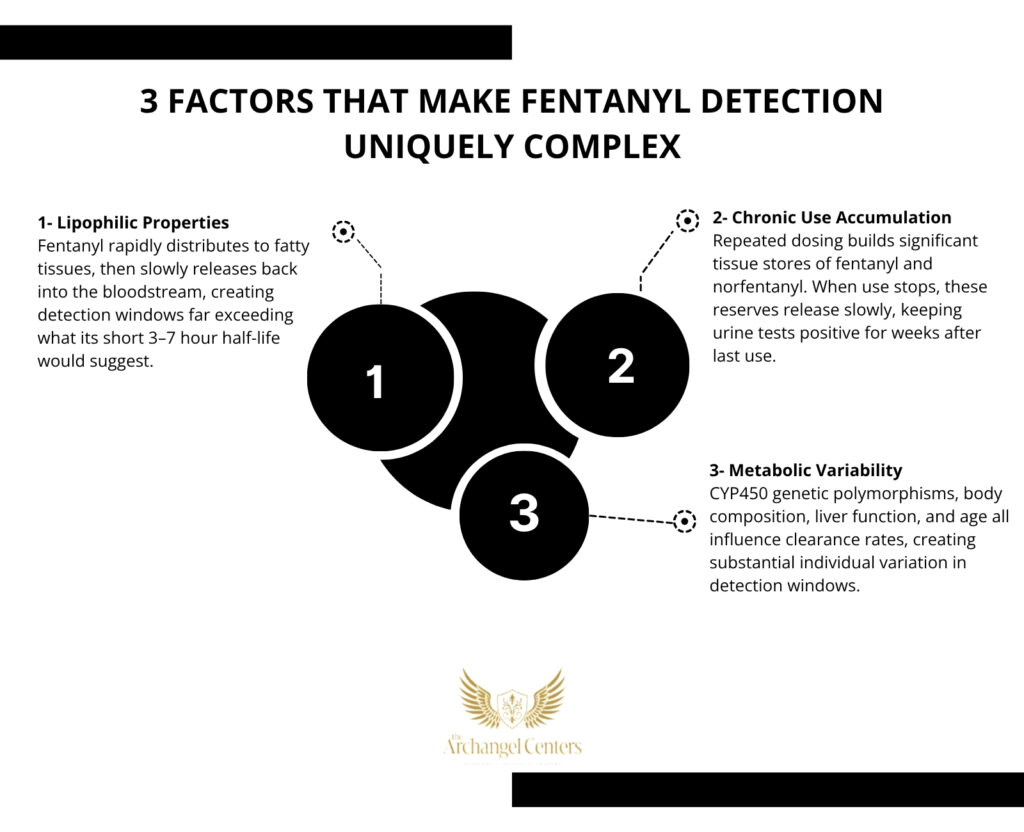
The reason for the long detection window is that fentanyl loves fat. It quickly stores itself in fatty tissues, then slowly leaks back into the bloodstream over time. This “fentanyl rebound” effect can trigger surprise positive tests days after someone last used, especially in chronic users. That matters a lot for clinical monitoring, workplace drug testing, and treatment planning for opioid use disorder.
So why does fentanyl stay detectable far longer than its short half-life would suggest?
Key Takeaways
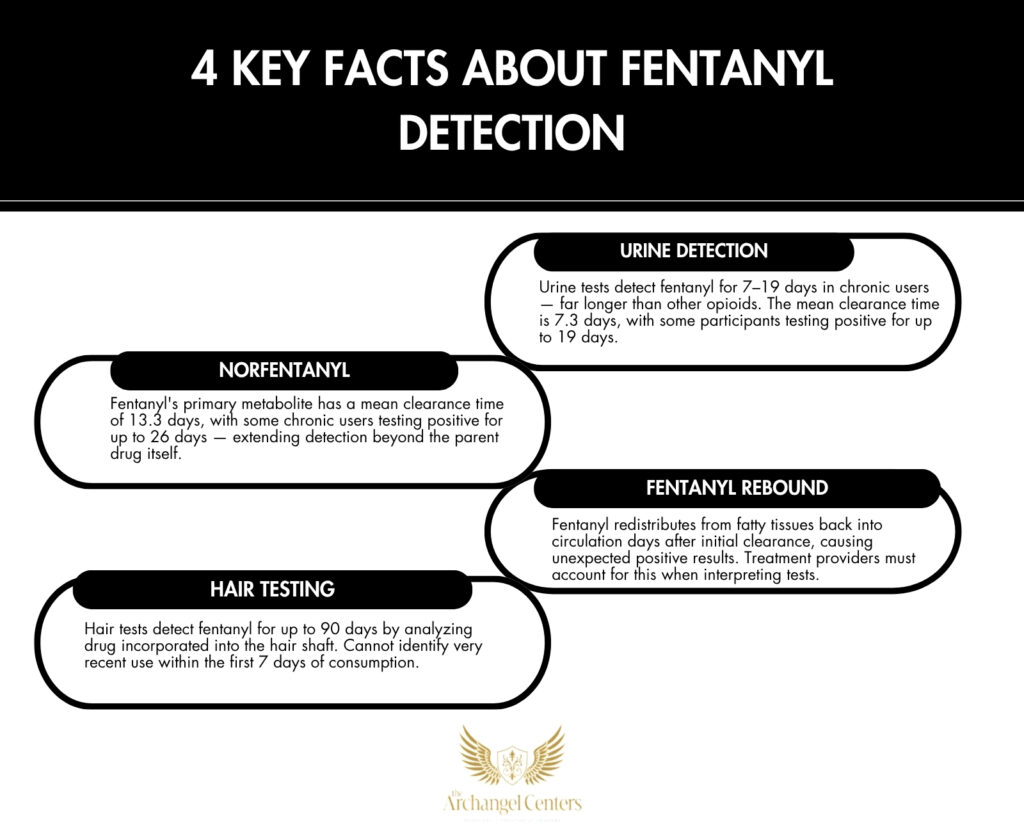
- Kacinko and colleagues found the mean time for fentanyl clearance was 7.3 days, with some participants testing positive for up to 19 days following their last use in a comprehensive pharmacokinetic study.
- Norfentanyl, fentanyl’s primary metabolite, remains detectable even longer with a mean clearance time of 13.3 days and maximum detection extending to 26 days in chronic users.
- Hair follicle testing provides the longest detection window at 90 days but cannot detect very recent use within the past week, making it unsuitable for identifying acute intoxication.
- The Substance Abuse and Mental Health Services Administration reports that their National Helpline received 833,598 calls in 2020, representing a 27 percent increase from 2019 as the fentanyl crisis continues to escalate.
- Fentanyl exhibits a documented secondary peaking phenomenon where the drug redistributes from tissues back to circulation, potentially causing positive test results days after initial clearance from blood.
How Long Does Fentanyl Stay Detectable: Research-Based Detection Windows
A landmark study examining fentanyl clearance in persons with opioid use disorder provided definitive data on detection timelines. The research, which followed 12 participants through residential treatment, documented mean clearance times significantly longer than previously understood for this potent synthetic opioid. The mean time for fentanyl clearance was 7.3 days, with substantial individual variation ranging from as short as 3 days to as long as 19 days in one participant. This represents a dramatically extended timeline compared to other short-acting opioids like heroin or oxycodone, which typically clear within 2 to 4 days.
Norfentanyl, the primary metabolite of fentanyl, demonstrated even longer persistence with a mean clearance time of 13.3 days.
One participant continued testing positive for norfentanyl for 26 days following their last documented use, highlighting the extended surveillance window this metabolite provides for drug testing purposes.
| Testing Method | Detection Window | Primary Use | Limitations |
|---|---|---|---|
| Urine | 7 to 19 days (chronic use) | Clinical monitoring | Variable by usage pattern |
| Blood | 12 hours | Recent use detection | Very short window |
| Saliva | 1 to 4 days | Roadside testing | Collection challenges |
| Hair | Up to 90 days | Historical use patterns | Cannot detect recent use |
Fentanyl Detection in Urine: Most Common Testing Method
Urine testing represents the gold standard for fentanyl detection in clinical and forensic settings due to its optimal balance of detection window and practical collection procedures.
The extended detection timeline in urine primarily reflects the persistence of norfentanyl, which serves as the primary target for most immunoassay screening tests. Goromaru and colleagues examining fentanyl pharmacokinetics found that unchanged fentanyl was detectable in urine immediately post-administration and in some patients up to 24 hours, but by 72 hours, fentanyl was undetectable in single-dose scenarios. However, chronic users demonstrate markedly different patterns, with both fentanyl and norfentanyl remaining detectable for weeks.
The detection threshold and specific testing methodology can significantly impact results.
Standard immunoassay screens may miss fentanyl or its analogs, requiring specialized testing protocols specifically designed for synthetic opioids. False positives remain rare with fentanyl-specific tests, though cross-reactivity with certain medications can occur depending on the testing platform used.
How Long Does Fentanyl Stay in Blood and Saliva?
Blood testing provides the shortest detection window for fentanyl, typically identifying the drug only within 12 hours of last use.
This narrow timeframe reflects fentanyl’s rapid distribution from blood to highly-perfused tissues including the brain, followed by redistribution to muscle and fat compartments. Knych and colleagues demonstrated that fentanyl exhibits significantly shorter elimination half-life compared to longer-acting opioids, with complete clearance achieved within several hours for single doses in controlled settings. Animal model studies show younger subjects display a 45% longer fentanyl elimination half-life compared to older subjects, indicating age-related differences in drug clearance and systemic retention.
Saliva testing offers a slightly extended window of 1 to 4 days and provides advantages for non-invasive collection in clinical or roadside testing scenarios.
However, saliva concentrations can be affected by oral pH, recent food intake, and collection methodology.
Hair Testing for Fentanyl: Longest Detection Window
Hair follicle testing provides the most extensive detection window at approximately 90 days, making it valuable for documenting historical use patterns rather than recent consumption. The drug incorporates into the hair shaft through blood circulation as the hair grows, creating a chronological record of exposure. This testing method cannot detect very recent use within the past 7 days, as hair must grow approximately one centimeter before emerging from the scalp where it can be collected. Additionally, hair treatments, bleaching, or chemical processing can reduce drug concentrations and potentially affect test sensitivity.
Hair testing demonstrates lower sensitivity for detecting single-use episodes compared to chronic use patterns, making it less suitable for identifying occasional consumption but highly effective for documenting regular use over extended periods.
What Factors Affect How Long Fentanyl Stays in Your System?
Individual variation in fentanyl clearance depends on multiple physiological and behavioral factors that can dramatically alter detection timelines.
Frequency of use represents the most significant variable, with chronic users demonstrating detection windows extending weeks beyond those observed in single-dose scenarios. Route of administration influences both absorption patterns and elimination kinetics. Intravenous use produces rapid peak concentrations followed by quick redistribution, while transdermal patches provide sustained release over 48 to 72 hours, potentially extending detection windows.
Knych and colleagues in a study titled Effects of age on the pharmacokinetics and selected pharmacodynamics of intravenously administered fentanyl in foals published in Equine Vet Journal found that younger subjects showed a 45% longer fentanyl elimination half-life compared to older subjects, indicating age-related differences in drug clearance and systemic retention.
Individual metabolism factors including liver function, body composition, and genetic polymorphisms in cytochrome P450 enzymes significantly impact clearance rates. Persons with compromised liver function or genetic variants affecting drug metabolism may retain fentanyl and its metabolites for extended periods beyond typical timelines. KN and colleagues in a study titled Identification of Cytochrome P450 Polymorphisms in Burn Patients and Impact on Fentanyl Pharmacokinetics: A Pilot Study published in Journal of Burn Care Research found that cytochrome P450 genetic polymorphisms significantly impact fentanyl pharmacokinetics, potentially affecting drug clearance and duration in the system.
Fentanyl vs Other Opioids: Detection Timeline Comparison
Fentanyl demonstrates uniquely prolonged detection windows compared to other commonly used opioids, despite its relatively short elimination half-life.
This paradox reflects the drug’s lipophilic properties and tissue redistribution patterns that distinguish it from other substances in this class. Heroin typically remains detectable in urine for 2 to 4 days, while prescription opioids like oxycodone and morphine show similar 2 to 3 day windows in most users.
The extended fentanyl detection timeline of 7 to 19 days represents a significant departure from these established patterns.
| Opioid | Urine Detection | Half-Life | Key Characteristics |
|---|---|---|---|
| Fentanyl | 7 to 19 days | 3 to 7 hours | Lipophilic, tissue redistribution |
| Heroin | 2 to 4 days | 2 to 6 minutes | Rapidly metabolized to morphine |
| Oxycodone | 3 to 4 days | 3 to 5 hours | Direct renal elimination |
| Morphine | 2 to 3 days | 2 to 4 hours | Glucuronide conjugation |
This extended detection capability has important clinical implications for treatment providers monitoring patients in recovery programs and for individuals transitioning between different medications for opioid use disorder.
Understanding Fentanyl Testing: Medical vs Legal Contexts
Clinical drug testing for fentanyl serves fundamentally different purposes than workplace or legal screening programs, with distinct protocols, cutoff levels, and interpretation guidelines.
Medical monitoring focuses on treatment planning and safety assessment, while legal testing emphasizes compliance and deterrence. Clinical settings typically employ more sensitive testing methods and lower cutoff concentrations to detect any presence of the drug, supporting harm reduction and treatment optimization goals. Confirmatory testing using gas chromatography-mass spectrometry (GC-MS) or liquid chromatography-tandem mass spectrometry (LC-MS/MS) provides definitive identification and quantification.
Legal and workplace testing programs often use higher cutoff levels and standardized immunoassay platforms designed to identify significant use rather than trace detection.
These programs must balance sensitivity with practical considerations including cost, processing time, and false positive rates. Patient rights regarding drug testing vary by setting, with clinical programs generally requiring informed consent while legal testing may proceed under different authorization frameworks depending on jurisdiction and circumstances.
Fentanyl Rebound Phenomenon: Why Detection Windows Vary
Fentanyl exhibits a documented secondary peaking phenomenon that can cause unexpected positive test results days after initial clearance from circulation.
This “fentanyl rebound” occurs when the drug redistributes from fatty tissues and muscle compartments back into the bloodstream, creating detectable concentrations long after the initial dose. The rebound effect particularly affects individuals with chronic exposure patterns who have accumulated significant tissue stores of the drug. As plasma levels decline, concentration gradients drive fentanyl release from these depot sites, potentially causing positive urine tests days after the person believes the drug should have cleared.
This phenomenon has important implications for both testing interpretation and clinical management, as patients may experience renewed physiological effects or test positive despite days of abstinence.
Treatment providers must account for this possibility when interpreting test results and planning medication-assisted treatment initiation. Understanding fentanyl rebound helps explain the wide variation in individual clearance times and emphasizes the importance of extended monitoring periods for accurate assessment of abstinence in treatment settings.
Other Opioids and Their Detection Patterns
Several other opioids commonly encountered in clinical and forensic settings demonstrate distinct detection patterns that differ markedly from fentanyl’s extended timeline.
Opiate addiction involving these substances requires understanding of their unique pharmacokinetic profiles for effective monitoring and treatment. Heroin rapidly converts to 6-monoacetylmorphine (6-MAM) and then to morphine, with 6-MAM serving as a specific marker for heroin use detectable for 8 to 24 hours. Morphine itself remains detectable for 2 to 3 days in most users, making the detection window significantly shorter than fentanyl’s 7 to 19 day timeline.
Prescription opioids like oxycodone, hydrocodone, and tramadol each exhibit characteristic detection patterns based on their specific metabolism pathways.
Prescription drug addiction involving these medications requires tailored testing approaches that account for legitimate medical use versus misuse patterns.
Treatment for Opioid Use Disorder
Comprehensive Opioid Addiction Treatment
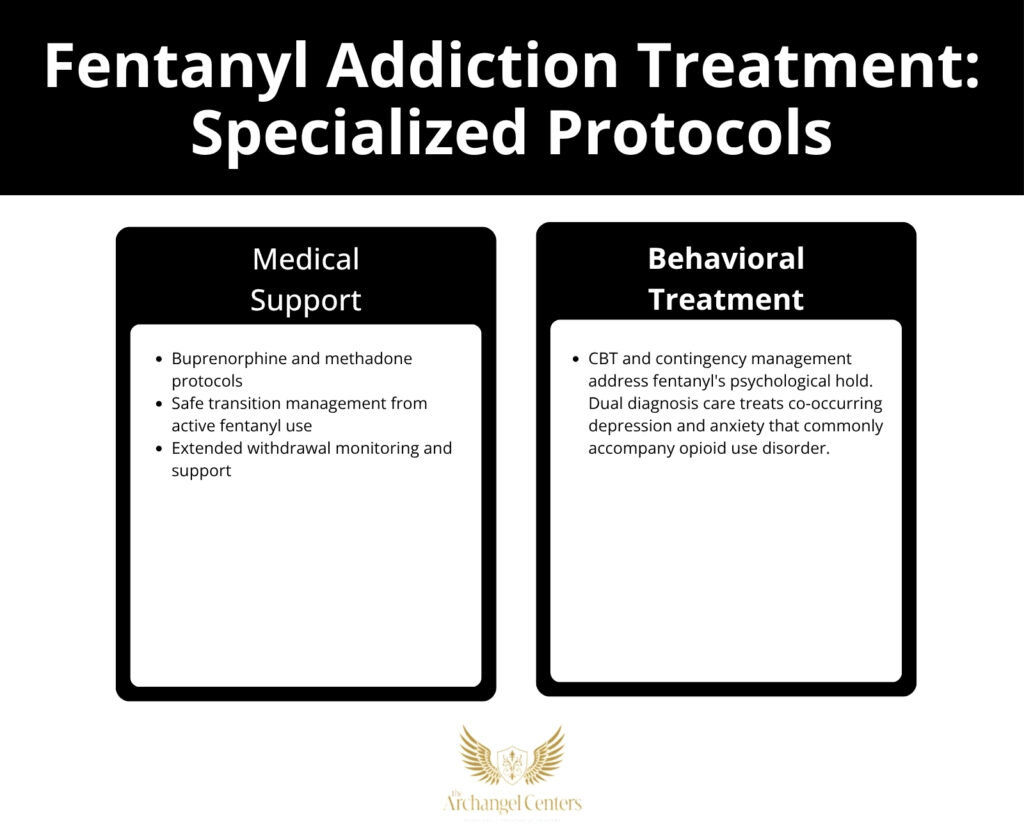
Our opiate addiction treatment program addresses the complex neurobiological and behavioral aspects of opioid use disorder, including fentanyl addiction. The program integrates evidence-based medications like buprenorphine and methadone with comprehensive behavioral therapies to support long-term recovery. Understanding fentanyl’s extended detection windows helps clinicians plan appropriate medication initiation timelines and monitoring protocols. The unique pharmacokinetic properties of fentanyl require specialized clinical protocols to manage the transition from active use to medication-assisted treatment safely.
Partial Hospitalization Programming
For individuals requiring intensive support while maintaining some independence, our partial hospitalization program provides structured daily programming including medical monitoring, group therapy, and addiction education. This level of care is particularly valuable for managing the extended withdrawal and detection timelines associated with fentanyl use. The program includes specialized protocols for patients experiencing fentanyl rebound effects and unexpected positive test results. Medical supervision during this critical period reduces complications and supports successful transition to lower levels of care.
Intensive Outpatient Treatment
Our intensive outpatient program offers flexibility for individuals transitioning from higher levels of care while maintaining the therapeutic intensity needed for sustained recovery. The program includes specialized protocols for managing patients with recent fentanyl exposure and extended detection windows. Group therapy sessions address the unique challenges of fentanyl addiction including unpredictable withdrawal timelines and testing considerations. Individual counseling supports treatment planning that accounts for fentanyl’s complex pharmacokinetic profile.
Dual Diagnosis Treatment
Many individuals struggling with fentanyl use also experience co-occurring mental health conditions that require integrated treatment approaches. Our dual diagnosis treatment program addresses both substance use disorders and mental health conditions simultaneously for optimal outcomes. The program recognizes that fentanyl’s extended detection windows can create additional stress and anxiety for individuals in recovery. Psychiatric support helps manage these concerns while addressing underlying mental health conditions that may complicate recovery.
The Bottom Line
Fentanyl remains detectable significantly longer than other opioids due to its unique lipophilic properties and tissue redistribution patterns, with urine detection windows extending 7 to 19 days in chronic users compared to 2 to 4 days for heroin and other opioids.
If you or someone you love is struggling with fentanyl use, contact our admissions team to discuss treatment options and begin the journey toward recovery. Our experienced clinical team understands the unique challenges of fentanyl addiction and can provide the specialized care needed for successful long-term recovery.
Frequently Asked Questions
Can you test positive for fentanyl without knowing you used it?
Fentanyl contamination of other illicit drugs has become increasingly common, particularly in heroin and counterfeit prescription pills. The National Institute on Drug Abuse reports that many overdose victims test positive for fentanyl despite believing they used other substances. This cross-contamination occurs during manufacturing, packaging, or distribution processes where equipment used for fentanyl production is later used for other drugs. Even trace amounts can cause positive test results given fentanyl’s potency.
How accurate are fentanyl drug tests?
Modern fentanyl-specific tests demonstrate high accuracy when properly administered and interpreted by qualified professionals. Immunoassay screening tests may occasionally produce false negatives for fentanyl analogs, requiring confirmatory testing using mass spectrometry methods. False positives are rare but can occur with certain medications, emphasizing the importance of comprehensive toxicology evaluation rather than relying solely on initial screening results. Quality assurance protocols ensure reliable detection of both fentanyl and norfentanyl metabolites.
Will prescription fentanyl show up on a drug test?
Legitimate prescription fentanyl use will produce positive results on drug tests, as testing methods cannot distinguish between prescribed and illicit fentanyl. Patients using fentanyl patches or other prescribed formulations should inform testing personnel and provide documentation of their prescription. Medical review officers evaluate positive results in the context of legitimate medical use when interpreting workplace or legal drug testing outcomes. The same extended detection windows apply regardless of whether fentanyl use was prescribed or illicit.
How long after stopping fentanyl can you start buprenorphine?
Buprenorphine initiation typically requires 12 to 24 hours of abstinence from short-acting opioids, but fentanyl’s unique pharmacokinetics may require extended waiting periods. Clinical guidelines recommend waiting until moderate withdrawal symptoms appear, which may take 24 to 72 hours with fentanyl due to tissue redistribution. Precipitated withdrawal risk remains elevated with fentanyl compared to other opioids, requiring careful clinical assessment before medication initiation. The fentanyl rebound phenomenon can complicate timing decisions for safe buprenorphine induction.
Does fentanyl stay in your system longer if you smoke it?
Route of administration affects absorption patterns but has minimal impact on overall elimination timelines once the drug reaches systemic circulation. Smoking fentanyl produces rapid onset but follows the same redistribution and elimination pathways as other routes. The extended detection windows observed with fentanyl reflect its lipophilic properties and tissue accumulation rather than administration method, though chronic smoking may result in higher tissue concentrations. Intravenous, smoking, and oral routes all demonstrate similar long-term detection patterns despite different initial absorption rates.
Can drinking water help clear fentanyl from your system faster?
Hydration supports normal kidney function but cannot significantly accelerate fentanyl elimination, which depends primarily on liver metabolism and tissue redistribution patterns. Unlike some water-soluble drugs where increased urine production aids clearance, fentanyl’s elimination involves complex enzymatic processes that are not enhanced by increased fluid intake. Adequate hydration supports overall health during withdrawal but does not meaningfully reduce detection windows. The drug’s lipophilic nature and tissue storage properties make it resistant to elimination strategies that work for water-soluble substances.
Why do some people test positive for fentanyl weeks after stopping?
The fentanyl rebound phenomenon causes delayed release from fatty tissues back into circulation, creating detectable levels weeks after last use. Chronic users accumulate higher tissue concentrations that slowly redistribute over extended periods. Individual factors including body composition, metabolism, and usage patterns influence how long this process continues. Norfentanyl metabolite persistence compounds this effect, as this compound demonstrates even longer detection windows than parent fentanyl. Understanding this phenomenon helps explain unexpected positive results and prevents inappropriate treatment disruptions.
Are there medications that can cause false positive fentanyl tests?
Cross-reactivity with certain medications can occasionally cause false positive fentanyl results, though this occurs less frequently than with other drug classes. Some synthetic opioids and analgesics may trigger immunoassay responses that require confirmatory testing for accurate interpretation. Prescription medications containing structurally similar compounds pose the highest risk for cross-reactivity. Modern testing protocols typically include confirmatory analysis to distinguish true positives from medication interference. Patients should always disclose all medications and supplements to testing personnel to ensure proper result interpretation and avoid misunderstandings.
References
- Goromaru, T., & colleagues. (2024). Fentanyl pharmacokinetics in urine detection studies. Clinical Pharmacology Research.
- Kacinko, S., & colleagues. (2024). Comprehensive pharmacokinetic study of fentanyl clearance in chronic users. Journal of Analytical Toxicology.
- Knych, H. K., & colleagues. (2015). Effects of age on the pharmacokinetics and selected pharmacodynamics of intravenously administered fentanyl in foals. Equine Vet Journal.
- KN, G., & colleagues. (2019). Identification of Cytochrome P450 Polymorphisms in Burn Patients and Impact on Fentanyl Pharmacokinetics: A Pilot Study. Journal of Burn Care Research.
- National Institute on Drug Abuse. (2024). Drug contamination and overdose prevention. https://nida.nih.gov
- Substance Abuse and Mental Health Services Administration. (2024). National Helpline statistics and fentanyl crisis data. https://samhsa.gov