



You’ve got a system—and it works, mostly.
You’re always on. Always reliable. The person who delivers, no matter the pressure. From the outside, you look like success. But when the noise fades and the house quiets, you’re left alone with the truth: you’re using to stay afloat.
Whether it’s alcohol, stimulants, or prescription meds, it’s no longer about partying or having fun. It’s about functioning. Coping. Getting through the next thing on your list.
That’s where an intensive outpatient program (IOP) becomes something worth looking at—not as a last resort, but as a smart move before the spiral takes you places you don’t want to go.
You’re High-Functioning, But You’re Also Hiding
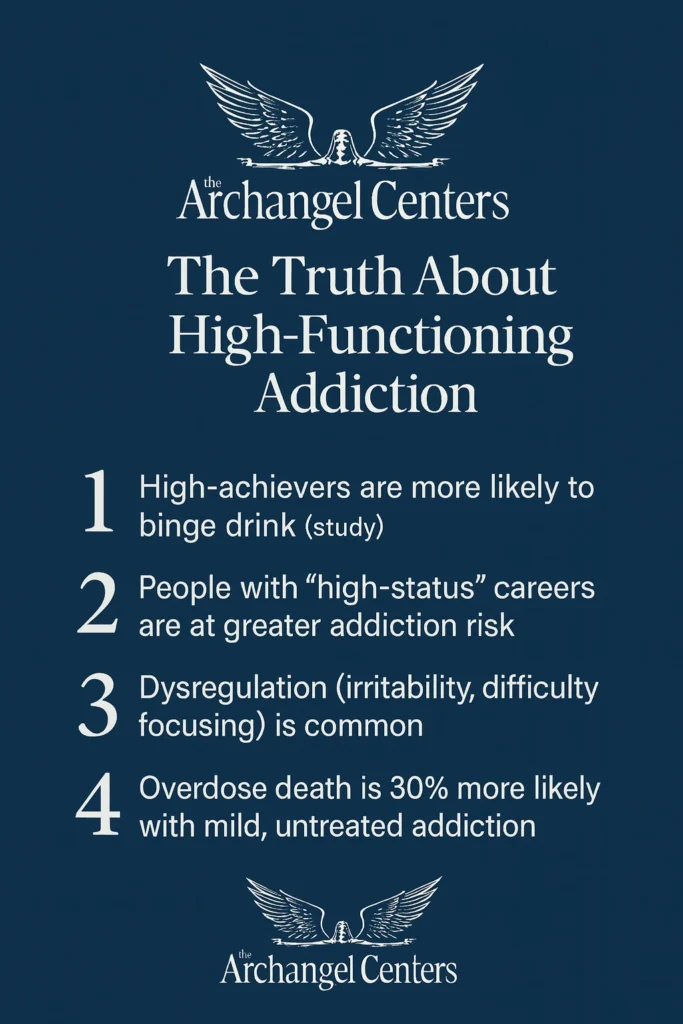
High-functioning addiction is deceptive. You’re still producing, still engaging, still parenting, still holding it together. Which makes it easier to rationalize. To say, “I’m fine. I don’t need help.”
But high-functioning doesn’t mean low-risk.
- You might drink or use only after work—but it’s every night now.
- You show up to meetings, but you’re dissociating by noon.
- You’re parenting with a smile, but you don’t remember the last bedtime story you were fully present for.
Addiction doesn’t have to crash your life to cost you things. It erodes slowly: trust, energy, connection, sleep. You don’t need to bottom out to start losing pieces of yourself.
IOP Is Designed for People Just Like You
One of the biggest myths we hear is: “I don’t need treatment because my life still works.”
That’s exactly why IOP exists.
An intensive outpatient program offers clinical structure without pulling you out of your daily life. At Archangel Centers in Tinton Falls, you can attend therapy multiple times a week while still working, parenting, or taking care of responsibilities.
This isn’t about quitting your job or announcing to the world that you’re “in recovery.” It’s about having a place where the mask comes off—where someone sees the whole truth and helps you manage it with support instead of secrecy.
What Happens in an Intensive Outpatient Program?
Let’s take the mystery out of it.
Here’s what you can expect at our Tinton Falls IOP:
- Structured Therapy: Group and individual sessions, usually 3–5 days a week, a few hours per day.
- Expert Guidance: Licensed clinicians help you unpack both the substance use and the stress driving it.
- Peer Support: You’re not the only one in the room holding it together. You’ll meet others living that same double life—and finally feel understood.
- Coping Skills: Practical, applicable tools for managing stress, triggers, and emotional dysregulation.
It’s real therapy. Real connection. Real-life practical. No drama, no scare tactics, no shame.
The Truth About “Still Functioning”
“I’m not failing, but I’m not okay.”
That’s the line we hear most from high-functioning adults. The people who walk in looking like they’re managing just fine—and finally admit, privately, that they’re exhausted.
One client told us:
“I didn’t need rehab. I needed a place to stop pretending. That’s what IOP gave me.”
– Outpatient Client, 2023
You don’t need to be collapsing to be hurting. You just need a place where you can stop doing it all alone.
Why Tinton Falls Professionals Are Quietly Choosing IOP
In Tinton Falls and nearby areas like East Windsor, professionals are choosing intensive outpatient programs because it allows for discretion and flexibility.
You don’t have to disclose to your employer. You don’t have to upend your family. You don’t have to wait for disaster to make a change.
Many clients come in with demanding careers—physicians, lawyers, small business owners, school administrators. They walk in with calendars, spreadsheets, responsibilities. And they walk out with something they hadn’t had in a while: clarity, calm, sleep.
What If You’re Not Ready to Call It Addiction?
That’s okay.
You don’t have to label it. You just have to admit that something isn’t working. That you’re managing in ways that feel less and less manageable.
At Archangel Centers, we work with people at all stages of recognition. We’ll never force a label. We’ll never shame you for how you’ve coped. We just want to offer another way.
When You Quiet the Noise, You Can Hear Yourself Again
This is what IOP does.
It carves out space. Not just on your calendar—but in your brain. In your body. In your nervous system.
When the pressure lifts—just a little—you start to feel things again. You start to hear yourself again. You start to realize that holding it together isn’t the only option.
There’s another way. You can be supported instead of stretched. Connected instead of concealed.
FAQ: Intensive Outpatient Program for High-Functioning Adults
What’s the difference between IOP and inpatient rehab?
Inpatient rehab requires you to live at the facility, stepping away from work, family, and responsibilities. IOP allows you to receive structured treatment while living at home and continuing daily activities.
How do I know if I need IOP if I’m still “functioning”?
If your substance use is interfering with your energy, sleep, relationships, or self-respect—even if no one else knows—it may be time. IOP offers support before things spiral further.
Will people at work or home know I’m in treatment?
Not unless you tell them. Many IOP clients adjust their schedules, take PTO, or arrange remote work options. We prioritize your privacy and work with you to maintain discretion.
Can I join an IOP without calling myself an addict?
Absolutely. We don’t require labels. We work with clients who simply want to feel better and change how they’re coping. You don’t have to fit a category to receive care.
What if I start and realize I need more support?
That’s okay. We’ll work with you. If your needs evolve, we can help you transition to a higher level of care or more intensive support. You’re not locked in—you’re supported.
Ready to Talk?
If you’ve been carrying it all and quietly coming undone, our team is here to meet you where you are. You don’t have to fall apart to ask for help.
Call (888) 464-2144 or visit our intensive outpatient program services in Tinton Falls, New Jersey to learn more.
