



When your child is in a behavioral health crisis, your world narrows to one question: “What do we do now?”
If you’ve been referred to—or are considering—a partial hospitalization program, you might feel caught between relief and dread. You’ve made a decision, and maybe for the first time in weeks, there’s a plan. But that doesn’t mean the fear goes away.
You’re not alone in that. The first week of PHP is often one of the most emotionally intense periods—for your child, and for you. This blog is here to help you know what to expect, what’s normal, and what support really looks like in those early days.
What Is a Partial Hospitalization Program?
A partial hospitalization program (PHP) is a short-term, structured mental health treatment option that offers intensive care during the day—while allowing your child to return home in the evenings.
It’s not an inpatient stay, but it’s more supportive than standard outpatient therapy. PHP is designed for young adults and teens who are struggling with serious emotional or psychological symptoms, but who are stable enough to be safe outside of 24-hour care.
Typical PHPs run 5 days a week, for about 5 to 6 hours a day. Treatment includes individual therapy, group therapy, medication management, psychoeducation, and often family involvement.
If your child is facing severe anxiety, depression, mood instability, suicidality, or behaviors linked to trauma, PHP offers a safe and supportive bridge between crisis and stability.
Day 1: Orientation and Intake
The first day will feel clinical—but also deeply human.
Expect the following to happen:
- Clinical intake interview with a licensed therapist or clinician
- Psychiatric evaluation (if applicable)
- Safety assessment including suicide risk screening
- Overview of program rules, daily schedule, and goals
- Consent forms and release paperwork
This is a chance for the treatment team to begin understanding your child—and for your child to begin understanding they are safe, and not being punished.
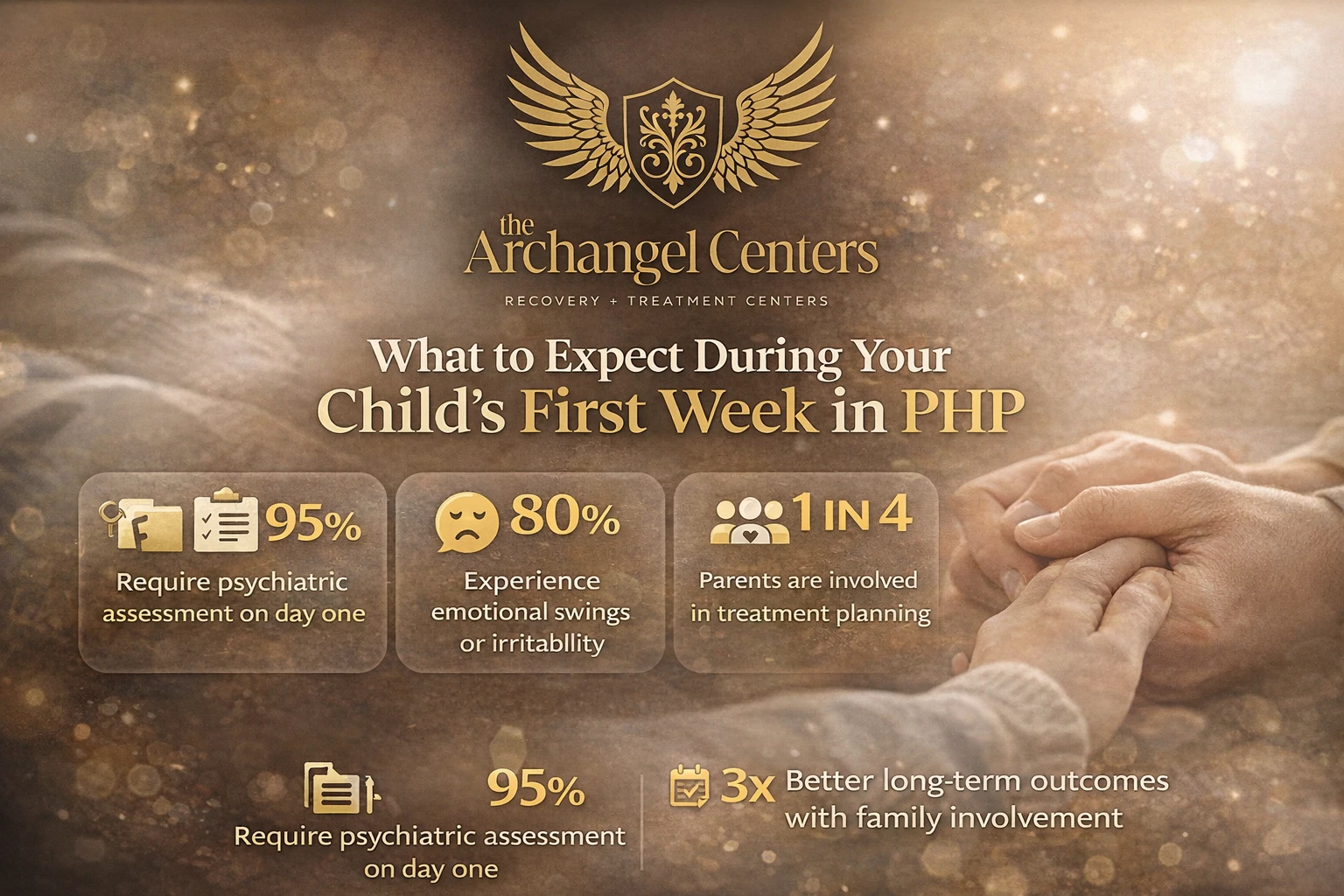
It’s normal if your child is hesitant, quiet, or even resistant on day one. Most arrive unsure whether this will help. Most are still in pain. That’s why we don’t expect progress right away—we expect presence. And that’s enough to start.
The Daily Structure: What Treatment Days Look Like
Structure is part of the healing process. When a young adult has been living in crisis, their inner world often feels chaotic. Predictability can feel like safety.
Here’s what a typical PHP day may include:
- Morning check-in group to share mood, sleep, or safety concerns
- Process groups focused on emotional regulation, identity, or relationships
- Skill-building groups (DBT, CBT, mindfulness, distress tolerance)
- Individual therapy sessions (1–2x/week)
- Lunch break in a supportive, staff-monitored environment
- Psychiatric appointments for medication evaluation or adjustments
- End-of-day reflection or wrap-up group
Some programs also offer expressive therapies like art, music, or movement-based sessions—particularly helpful for young adults who struggle to verbalize emotion.
Will My Child Talk to Me During the First Week?
Maybe. Maybe not.
Some programs will encourage your child to have limited contact during the first few days to help them settle into the new environment. Others leave that up to the clinician and the client. If your child seems distant, try not to panic. They are processing. You are too.
You can ask the care team:
- How often can I expect updates?
- Will I be part of the treatment planning process?
- Is there a family therapist I can speak to?
It’s okay to ask. And it’s okay to admit that this is hard for you too.
Emotional Swings Are Part of the Process
If your child comes home irritable, shut down, or even angry during the first week—it doesn’t mean the program isn’t working.
It likely means they’re starting to feel.
Treatment stirs up things they’ve been avoiding—pain, shame, confusion, grief. When these come to the surface, it can feel worse before it gets better. That’s normal. That’s why PHP exists—to hold those emotions in a safe place where your child doesn’t have to pretend to be okay.
And for you? You don’t have to pretend either.
Family Involvement: You’re Still Part of the Team
You may feel sidelined at first. That’s common. Early treatment often focuses on creating a therapeutic alliance between your child and their clinician.
But you’re not being forgotten.
Most programs include:
- Parent check-ins within the first week or two
- Family therapy (usually starting in week 2–3)
- Education sessions on communication, boundaries, and mental health
Your voice matters. And so does your well-being.
You are not the cause of your child’s illness. But you are an essential part of their healing environment. And when we support you, we support them.
What Healing Looks Like in Week One
Progress in PHP doesn’t look like “everything’s better.”
It might look like:
- Your child going to group even though they didn’t want to
- A moment of honesty they’ve never shared before
- Making it through a day without shutting down completely
- Letting a therapist in—even a little
Healing in week one is slow. It’s layered. But it begins the moment your child is treated with dignity and care—and starts to believe they might be worth it.
What If My Child Refuses to Go Back?
This is one of the hardest fears for parents. And it’s not uncommon.
If your child resists returning after the first day or two, talk to the clinical team. They’re trained in motivational interviewing and will gently explore the resistance. In many cases, once the young person understands they’re not being “punished,” they’ll agree to continue.
Sometimes, the team may even adjust the plan—offering 3 days/week instead of 5, or blending PHP with IOP depending on clinical fit.
The goal is not force. It’s engagement. We want your child to say yes to healing—on their own terms, when they’re ready.
You Are Not Alone—And Neither Is Your Child
We know how much you’ve carried. The fear. The second-guessing. The sleepless nights. The moments you weren’t sure if your child was safe.
You didn’t cause this. And you don’t have to fix it alone.
Treatment can help your child build emotional tools they didn’t learn in school or even at home—not because you failed, but because they’ve been hurting. And help for you matters too.
Whether you’re in the early stages of seeking care or already enrolled, you’re allowed to feel overwhelmed. And you deserve support just as much as your child does.
If you’re looking for treatment options in your area, reach out. You don’t have to figure it out alone.
FAQs About the First Week of PHP
How long does the intake process take?
Usually 1–2 hours. It may include clinical interviews, a psychiatric evaluation, paperwork, and orientation. You’ll often be asked to complete guardian forms if your child is under 18.
What should my child bring on day one?
Most programs provide a list, but it typically includes:
- Comfortable clothes
- Any prescribed medications (in original containers)
- A notebook or journal
- A water bottle
- Lunch (some centers provide meals, some do not)
Phones may be collected during treatment hours, depending on the center’s policy.
Can I talk to my child’s therapist?
Yes, with your child’s consent (for those over 18). Most programs include a parent introduction within the first few days and encourage communication with the care team.
What if my child doesn’t want to participate?
Engagement looks different for everyone. Just showing up is a big step. The clinical team will work to build trust and find the right entry point. Most reluctant clients become more open within the first week.
Does insurance cover PHP?
Often, yes. Most commercial insurance plans and Medicaid cover PHP if it’s deemed medically necessary. The intake team usually verifies benefits before enrollment.
When will I start seeing changes in my child?
There’s no fixed timeline. Some young people feel relief within days; others take weeks. The first goal is emotional safety and trust—not symptom resolution.
Call (888) 464-2144 to learn more about our Partial hospitalization program services in New Jersey.
There’s still time for things to get better. And we’ll be here—every step of the way.
