


The truth? I didn’t expect to feel this flat.
I got clean. I did the work. And now, years later, I’m still here—technically “doing well.” But lately, it feels like the spark is gone.
It’s not a crisis. It’s not relapse. It’s something quieter. A kind of drift. If that sounds familiar, I’m writing this for you.
Because here’s something I don’t think we talk about enough: what long-term recovery feels like when the noise dies down, the milestones are behind you, and you’re left with the steady hum of real life. And how, when that hum gets dull, it’s often the early lessons—the ones from the partial hospitalization program I once grumbled through—that quietly come back to save me.
If you’re newer to recovery or just feeling stuck, I hope this reflection gives you something to hold onto. If nothing else, know this: you’re not alone in the weird in-between.
(And if you’re curious about the kind of program I’m referring to, here’s the one I attended: Archangel’s partial hospitalization program.)
The Structure Saved Me—And It Still Can
Back then, I resisted structure with everything I had. I didn’t want someone else telling me when to eat, sleep, journal, or speak. But slowly, that structure started to feel less like control and more like scaffolding—holding me up when I couldn’t yet hold myself.
In PHP, the rhythm was predictable. There were breaks. Meals. Check-ins. Processing groups. And while I didn’t realize it at the time, that predictability was gently rewiring my nervous system. It was teaching my body and brain: you are safe in repetition.
These days, when I start to feel disconnected or spiraling into distraction, I pause and ask: What’s one piece of structure I can bring back today? Maybe it’s a consistent morning wake-up. Maybe it’s prepping meals ahead instead of winging it. Sometimes, it’s something as small as taking a real lunch break without my phone.
I used to think structure was restrictive. Now I know—it’s a container that holds the chaos.
Emotions Don’t Need to Be Loud to Be Real
I waited for the breakdown that never came. I kept thinking recovery meant massive tears or huge revelations. And while there were definitely moments like that, most of my real growth came quietly.
It came in group, when I finally said, “I don’t feel much of anything.” And someone else said, “Me neither.” It came in journaling, when I didn’t know what to write—but showed up anyway. It came in long silences during therapy, when my clinician didn’t push, and I didn’t perform.
In those quiet places, I started to trust that I didn’t have to be falling apart to be doing important work. Flatness didn’t mean failure—it meant healing was happening underground, where I couldn’t see it yet.
Even now, when life feels muted, I try to remember: there’s no rule that says it has to be dramatic to be meaningful. Some of the most important healing happens in whispers.
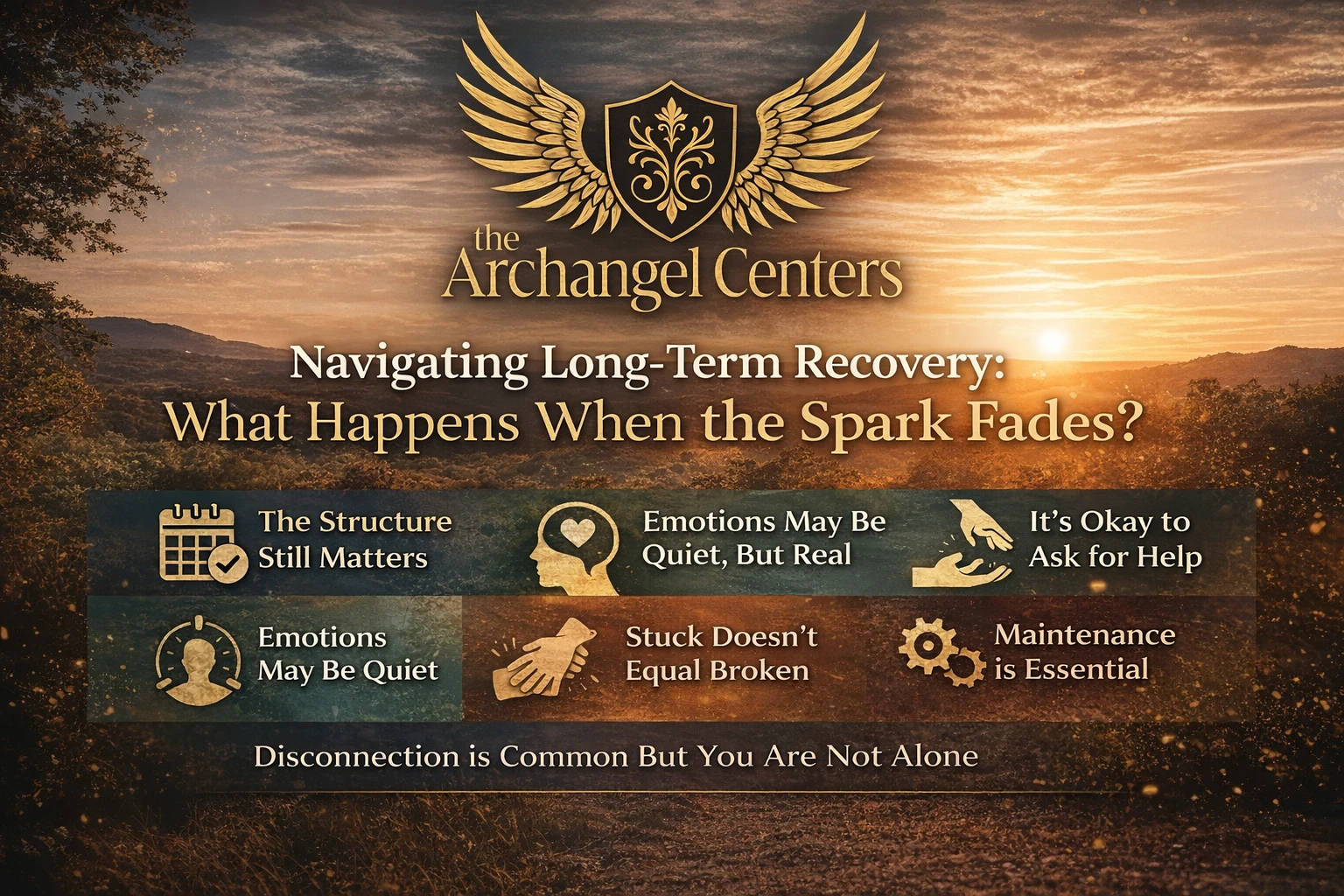
You Can Ask for Help Without Collapsing
One of the hardest things I’ve ever done was tell someone in my PHP group, “I’m not okay.” And not follow it with “But I’m fine” or “It’s no big deal.” Just let the words sit there.
I had always associated asking for help with crisis. I thought if I admitted I was struggling, people would either panic or pull away. But that day, something different happened: the room nodded. A few people said “same.” The therapist asked what support I needed, not what was wrong with me.
That moment rewired something for me.
Now, I try to remember: you don’t have to wait until you’re drowning to ask for a life vest. You can say “I feel off” or “I’m not sure what I need” and let someone meet you where you are.
Recovery doesn’t mean you never need help. It means you learn how to reach for it before the cliff edge.
Community Isn’t Always Connection
Here’s a weird truth: I’ve been lonelier in some full rooms than I ever was sitting by myself.
In PHP, there was a kind of forced proximity—we shared space, pain, meals, progress. But connection didn’t just happen because we were together. It happened because we risked being real.
After treatment, I stayed close to a few people. Others faded. Some relationships were deep; others were built on shared pain and couldn’t survive peace. That’s okay.
What I’ve learned is that community is more than group chats and meetups. It’s the people who remind you who you are when you forget. And sometimes, it’s not a big circle—it’s just one person you trust enough to be honest with.
If you’re feeling isolated, ask yourself: where can I show up real today? Not polished. Not “fine.” Just real.
Maintenance Requires Maintenance
Here’s the thing they don’t tell you: recovery maintenance isn’t just about avoiding relapse. It’s about checking in on the quality of your life.
Is your joy maintenance up to date? Your purpose maintenance? Your connection oil change?
Over time, I realized I was still technically “doing recovery,” but I wasn’t doing the parts that lit me up. I wasn’t reflecting. I wasn’t creating. I wasn’t getting curious about my next layer of growth.
So I made some small shifts. I joined a different support group—one that focused more on emotional growth than just sobriety milestones. I started therapy again, even though nothing was “wrong.” I gave myself permission to be a beginner again, in a new way.
Maintenance isn’t just about keeping the engine running. Sometimes, it’s about remembering why you’re driving at all.
If You’re Feeling Stuck, You’re Not Doing It Wrong
This might be the most important thing I’ve learned—and I say it gently, as someone who still forgets it often:
Feeling stuck doesn’t mean you’re broken. It means you’re human.
We are not meant to feel grateful and inspired every single day of sobriety. We’re meant to move through cycles. Sometimes, those cycles are quiet. Unmotivated. Flat. And sometimes, they’re full of energy and clarity again.
The point isn’t to force a constant high. The point is to stay connected—even loosely—to the truth of who you are. To remember that even the drift doesn’t erase your progress.
And if you need to return to a program like partial hospitalization, that’s not regression—it’s wisdom. It’s saying: I’m worth tuning back in.
There’s also support in locations near you if you’re looking to reconnect in a low-pressure way.
FAQ: Alumni Edition
Q: Is it normal to feel disconnected years into recovery?
Yes. Many long-term alumni experience emotional flatness, spiritual disconnection, or a sense of “going through the motions.” It’s not a failure—it’s a signal to check in and consider what’s missing.
Q: Can I go back to a partial hospitalization program even if I’m not in crisis?
Absolutely. Programs like PHP can be helpful for emotional recalibration, reigniting motivation, or simply reconnecting with structured support.
Q: What if I don’t want to go back to treatment, but I need something?
That’s valid. Many alumni benefit from ongoing therapy, new support groups, creative outlets, or spiritual practices. It’s okay to explore without re-entering full programming.
Q: I feel guilty for needing help again. Shouldn’t I have this figured out?
Recovery isn’t a straight line. Needing help doesn’t mean you’re back at square one—it means you’re willing to keep growing.
Q: What should I do if I feel like I’m drifting but can’t name what’s wrong?
Start small. One honest conversation. One journaling session. One call to someone safe. Often, clarity comes after we take the first step.
Ready to reconnect to what matters?
Call (888) 464-2144 to learn more about our Partial hospitalization program in New Jersey.
