



You’ve built a life that looks good on paper. You manage deadlines, care for people, pay bills, show up. But somewhere in the margins, alcohol or substances started writing themselves into your daily routine—and now they won’t leave.
When high-functioning people finally say “okay, maybe I need help,” it’s not because everything’s fallen apart. It’s because they’re tired of holding it all up.
Starting an intensive outpatient program in New Jersey might be your first real step toward doing less—not more. But we know the first week can bring a flood of questions. Here’s what to expect, and why IOP isn’t just treatment—it’s relief.
What Is an Intensive Outpatient Program (IOP), Exactly?
An intensive outpatient program, or IOP, is a structured but flexible treatment option that allows you to get real support without stepping out of your life completely. Unlike residential rehab, you return home after each session. Most IOPs involve:
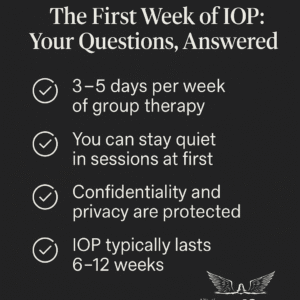
- 3–5 days per week of group therapy
- Individual therapy once a week
- Education, skill-building, and relapse prevention
- Optional family sessions or case management
The idea is simple: you stay in your world, but you stop going through it alone. Programs like ours at Archangel Centers in Tinton Falls offer daytime and evening IOP options, so you don’t have to choose between recovery and your responsibilities.
Day One: What Actually Happens?
The first day of IOP isn’t a test. It’s a welcome. You’ll sit down for a clinical intake—something like a deep, private conversation where we get to know who you are, what’s been going on, and how we can help.
We’ll ask about:
- What brought you here
- Substance use patterns
- Mental health concerns
- Work/life obligations
- Your goals and fears
You’ll also meet some of the clinical team and likely attend your first group session. No one expects you to bare your soul or be “good at recovery.” You just have to show up.
“I’m Not Like the Others.” (Yes, You Are.)
A lot of high-functioning clients walk in thinking, I don’t belong here. They see others in early recovery—maybe people with legal issues, visible consequences, different backgrounds—and they think, This was a mistake.
But here’s the quiet truth: there are more people like you in that room than you realize. The lawyer who can’t fall asleep without drinking. The teacher who hides pills in their sock drawer. The parent who performs calm while panicking inside.
Functioning doesn’t mean flourishing. It means surviving with the mask on. IOP is where people come to take it off.
Do I Have to Speak in Group?
Short answer: no.
You don’t have to do anything before you’re ready. Many clients spend the first few sessions listening—watching, evaluating, getting used to being around people who get it. When you do decide to speak, it’ll be when it feels right. And you might be surprised how much you recognize yourself in someone else’s words.
How Do I Keep This Private?
This is a big concern for professionals, parents, or anyone in a visible role. Here’s what we tell our clients:
- Your treatment is confidential.
- We won’t share your information without written consent.
- Your employer doesn’t have to know unless you want to request leave or accommodations.
If you’re considering using FMLA or need a medical note, our team can help you navigate that without oversharing. Privacy isn’t just respected—it’s protected.
What If I Miss a Day?
Life happens. We understand that. IOP requires commitment, yes—but it also requires realism. If you’re late, if you need to reschedule, if something comes up, we’ll work with you.
This isn’t school. It’s support.
If you’re based in central Jersey, our East Windsor location offers convenient scheduling and local flexibility to keep you consistent even when life gets busy.
Will This Actually Help?
IOP works because it addresses what you’re carrying and how you’ve been carrying it. That means you’ll learn:
- How to identify triggers before they escalate
- What emotional regulation actually looks like in practice
- How to manage cravings in real time
- What it means to recover without collapsing your life
But just as important, you’ll start to believe you’re allowed to ask for help without waiting until things get worse.
You Don’t Have to Earn Rest
High-functioning clients often carry this silent belief: If I can still hold it together, I don’t really deserve help. It’s the trap of competence.
But you don’t have to hit bottom to stop digging. You don’t need more evidence that you’re struggling. Exhaustion is enough. Quiet fear is enough. Wanting your life to feel less like a tightrope walk is enough.
The first week of IOP isn’t about fixing you. It’s about meeting you. You can bring your skepticism, your doubts, your silence. There’s space for all of it.
Frequently Asked Questions About IOP
How long is the program?
Most IOPs last between 6 and 12 weeks, depending on your needs. We reassess regularly and adjust the plan as you grow. You’re not locked into a rigid timeline.
What kinds of therapy are used?
Expect evidence-based approaches like CBT (Cognitive Behavioral Therapy), DBT (Dialectical Behavior Therapy), trauma-informed care, and motivational interviewing. You’ll also engage in skill-building groups and relapse prevention planning.
Can I do IOP while taking medication?
Yes. We support clients on MAT (medication-assisted treatment), psychiatric medications, and other prescribed treatments. We’ll coordinate care with your provider if needed.
Will I have a case manager?
Yes. You’ll have a primary therapist and access to a case manager who can help with logistics—like housing, employment concerns, or connecting to additional services.
What if I decide I need more help?
We’ll support you. If at any point you feel that IOP isn’t enough—or that you want to pause work to focus on deeper healing—we can talk about stepping up to a higher level of care. You’re not locked in. You’re supported.
📞 Call to Action
If you’re ready for help but not ready to press pause on your life, you’re exactly who we built this program for.
Call (888) 464-2144 or visit our intensive outpatient program services in Tinton Falls, New Jersey to learn more. Relief doesn’t have to come after collapse. It can start right now—with a phone call, a calendar, and the truth you’ve been waiting to speak.
