


Cold turkey detox means stopping substance use abruptly without medical supervision, and for alcohol, benzodiazepine, and opioid use disorders, it is clinically dangerous and potentially fatal.
Medical detox provides physician oversight, stabilizing medications, and 24-hour monitoring that significantly reduces the mortality risk associated with severe withdrawal.
Many people choose cold turkey because it appears immediate, private, and free. The neurological reality is that the brain’s adaptations to chronic substance exposure do not reverse safely without clinical support. Withdrawal syndromes following abrupt cessation can escalate from discomfort to life-threatening severity within hours.
When withdrawal symptoms begin, the first 24 to 72 hours determine whether the process stays manageable or becomes a medical emergency.
Key Takeaways
- According to the National Institute on Drug Abuse, abrupt alcohol cessation in heavy, long-term users produces delirium tremens in a clinically significant subset, a condition carrying a mortality rate of up to 15% without immediate medical treatment.
- Benzodiazepine and alcohol withdrawal share the same neurological mechanism, GABA-A receptor upregulation following chronic CNS depressant exposure, making both potentially fatal during unsupervised cold turkey cessation.
- Neuroadaptive tolerance reversal after abrupt opioid cessation produces severe autonomic hyperactivity and a significantly elevated overdose risk if relapse occurs during the withdrawal period.
- Medical detox reduces fatal withdrawal complication risk through CIWA-Ar protocol monitoring, medication-assisted treatment, electrolyte management, and physician-directed tapers calibrated to individual clinical presentations.
- After completing medical detox, structured outpatient treatment through Partial Care or an Intensive Outpatient Program is the clinically indicated next step for addressing the behavioral and psychiatric dimensions of substance use disorder.
What Is Cold Turkey Detox?
Cold turkey detox refers to the abrupt cessation of substance use without medical supervision, tapering protocols, or pharmacological support for managing the withdrawal syndrome that follows.
Origin and Clinical Meaning of “Cold Turkey”
The phrase cold turkey derives from the goosebump-like appearance of skin during opioid withdrawal, which resembles plucked poultry. Clinically, it describes any abrupt substance discontinuation without managed withdrawal support. The term applies to alcohol, opioids, benzodiazepines, stimulants, and nicotine.
In clinical settings, the alternative to cold turkey is a managed taper, where a substance or cross-tolerant medication is reduced in controlled increments to allow neurological readaptation. Medical detox programs implement tapering protocols, monitoring, and pharmacological symptom management that cold turkey cessation entirely excludes.
Why People Attempt Cold Turkey Withdrawal
Common reasons people choose cold turkey over medically supervised detox include:
- Desire for immediate cessation without a formal treatment intake process, waiting period, or cost obligation.
- Concerns about stigma, privacy, or the perceived judgment associated with entering a clinical detox setting.
- Underestimation of physical dependence severity and the neurological intensity of the withdrawal syndrome that follows.
- Cultural messaging that frames cold turkey as a demonstration of willpower, reinforcing the belief that clinical support is unnecessary.
Why Cold Turkey Detox Is Clinically Dangerous
Cold turkey cessation is dangerous because the nervous system’s compensatory adaptations to chronic substance exposure do not reverse safely without a physiologically managed transition period.
Neurological Mechanisms Behind Abrupt Cessation Risk
Chronic substance use forces the central nervous system to compensate for repeated pharmacological disruption by altering receptor density, sensitivity, and neurotransmitter production. When the substance is removed abruptly, these compensatory changes produce a hyperactive rebound state rather than a gradual return to baseline.
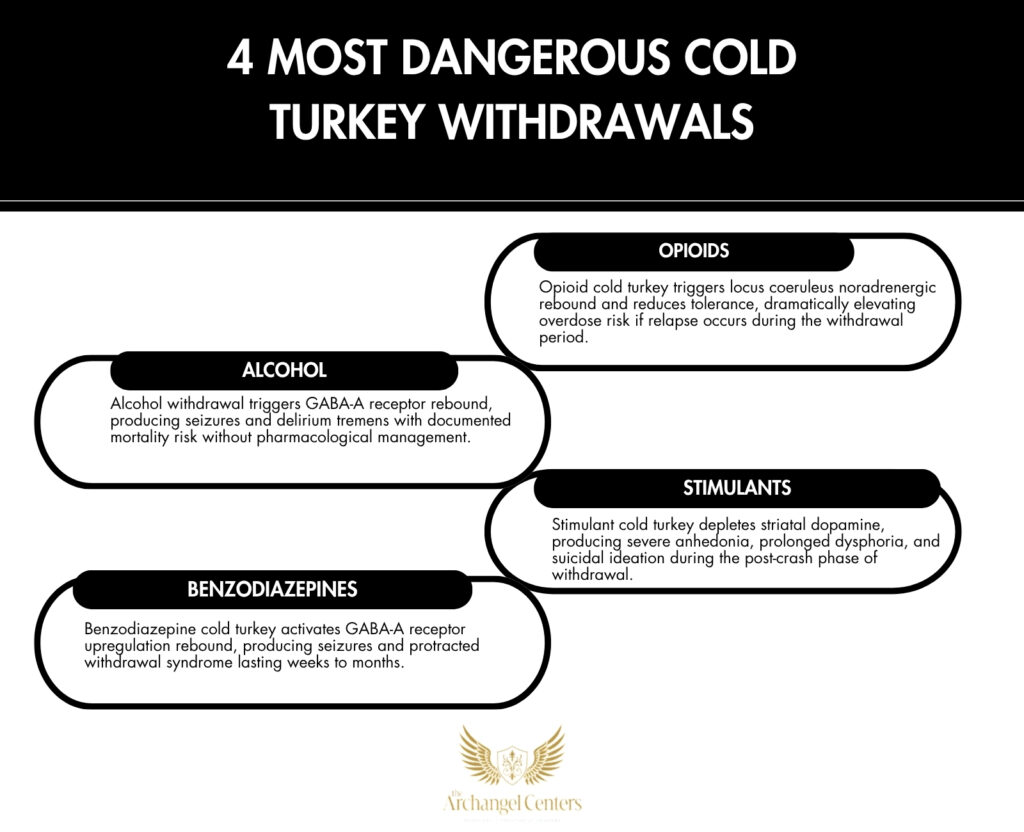
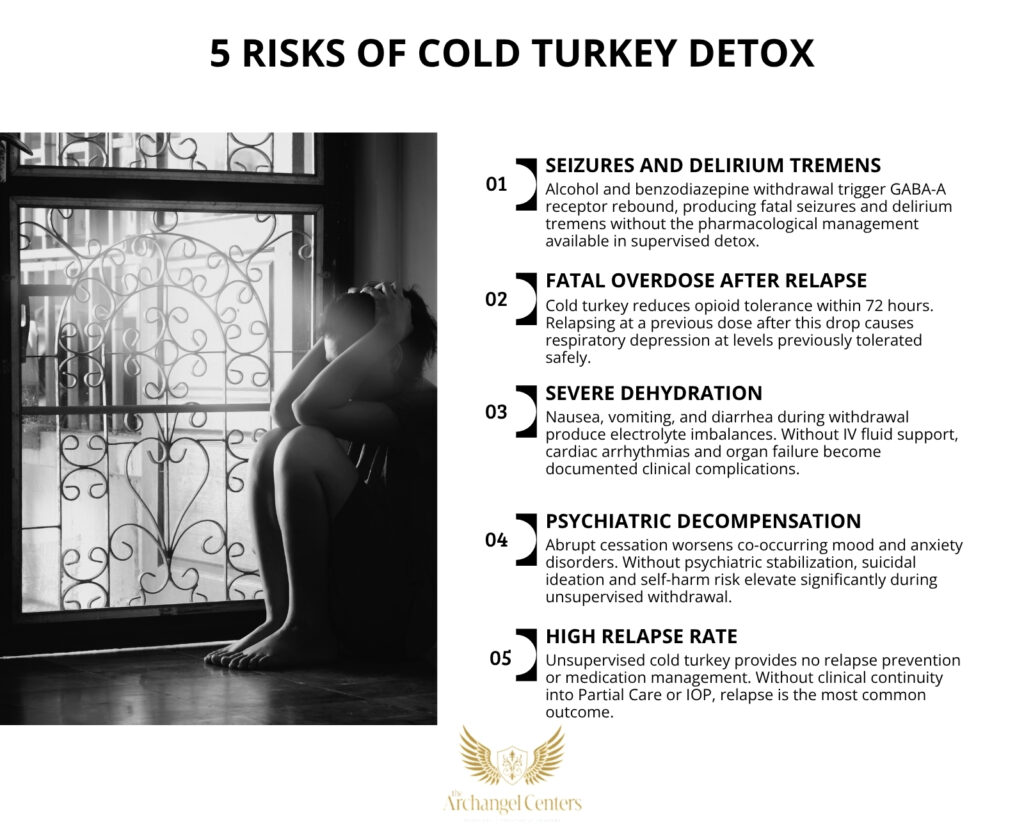
Alcohol and benzodiazepines suppress GABA-A receptor activity over time, causing GABA-A receptor upregulation as a compensatory response. Abrupt cessation removes the CNS depressant while leaving the upregulated receptor system active, producing central nervous system hyperexcitability, seizures, and in severe cases, fatal delirium tremens.
Opioids suppress noradrenergic activity through mu-opioid receptor binding in the locus coeruleus. Abrupt opioid cessation produces locus coeruleus noradrenergic hyperactivity, generating the autonomic storm that drives withdrawal symptoms including tachycardia, diaphoresis, and hypertensive surges.
The Overdose Risk After Cold Turkey Relapse
Cold turkey withdrawal produces a rapid reduction in substance tolerance within 72 to 96 hours of cessation. Individuals who relapse after this tolerance decrease and administer their previous dose face a dramatically elevated overdose risk.
According to the National Institute on Drug Abuse, opioid overdose risk is highest in the period immediately following a cessation attempt, when tolerance has decreased but craving remains elevated. The dose that previously produced tolerance effects may cause fatal respiratory depression after even brief abstinence.
Cold Turkey Withdrawal Symptoms by Substance
Withdrawal severity varies significantly by substance class, individual pharmacokinetics, duration of use, and the presence of co-occurring mental health conditions that amplify symptom intensity and duration.
Alcohol Withdrawal Symptoms and Timeline
Alcohol use disorder produces the most medically dangerous cold turkey withdrawal syndrome of any substance class.
Alcohol withdrawal progresses through three identifiable stages:
- Stage 1 (6 to 24 hours after last drink): Anxiety, tremors, diaphoresis, nausea, tachycardia, and elevated blood pressure develop as CNS hyperexcitability begins and GABA-A receptor rebound initiates.
- Stage 2 (24 to 48 hours): Auditory, visual, and tactile hallucinations occur as neurological disruption intensifies. Generalized tonic-clonic seizures emerge during this phase in high-risk individuals.
- Stage 3 (48 to 72 hours): Delirium tremens, characterized by severe autonomic instability, confusion, hyperthermia, and life-threatening cardiovascular complications, develops in a subset of individuals with severe physical dependence.
The CIWA-Ar protocol, the Clinical Institute Withdrawal Assessment for Alcohol, quantifies withdrawal severity across ten domains and guides pharmacological intervention in medical detox settings.
Benzodiazepine Withdrawal Symptoms and Timeline
Benzodiazepine dependence produces a withdrawal syndrome mechanistically identical to alcohol withdrawal because both substance classes act on the GABA-A receptor-chloride ionophore complex.
Benzodiazepine withdrawal unfolds on a substance-specific timeline:
- Short-acting benzodiazepines (alprazolam, lorazepam): Withdrawal symptoms emerge within 6 to 12 hours of the last dose. Peak severity at 24 to 72 hours includes rebound anxiety, insomnia, tachycardia, and seizure risk.
- Long-acting benzodiazepines (diazepam, clonazepam): Symptoms emerge over 2 to 7 days, with delayed onset that creates a false sense of safety before severe complications develop.
- Protracted withdrawal syndrome: A subset of long-term users experience persistent anxiety, cognitive impairment, insomnia, and sensory disturbances lasting weeks to months after acute stabilization.
Opioid Withdrawal Symptoms and Timeline
Opioid use disorder produces a physically distressing withdrawal syndrome that, while rarely fatal directly, carries severe post-cessation overdose risk if relapse occurs after tolerance decreases.
Opioid cold turkey withdrawal follows a predictable sequence:
- Early phase (8 to 24 hours after last dose): Anxiety, insomnia, muscle aches, rhinorrhea, excessive yawning, and restlessness emerge as locus coeruleus noradrenergic rebound begins.
- Peak phase (36 to 72 hours): Severe muscle cramps, nausea, vomiting, diarrhea, diaphoresis, and piloerection reach maximum intensity. Dehydration and electrolyte imbalance may require intravenous support.
- Post-acute withdrawal syndrome (1 to 4 weeks): Persistent dysphoria, insomnia, and anhedonia extend well beyond acute physical symptoms and substantially elevate relapse risk throughout early recovery.
The COWS scale, the Clinical Opiate Withdrawal Scale, quantifies opioid withdrawal severity and guides pharmacological management decisions in supervised clinical settings.
Stimulant Withdrawal Symptoms and Timeline
Stimulant withdrawal from cocaine and methamphetamine produces primarily neuropsychiatric symptoms rather than the life-threatening physiological complications associated with alcohol and benzodiazepine cessation.
Stimulant cold turkey withdrawal progresses through two phases:
- Crash phase (24 to 72 hours): Dopaminergic dysregulation following abrupt stimulant cessation produces profound fatigue, hypersomnia, increased appetite, and acute dysphoric mood. Suicidal ideation emerges in a clinically significant subset during this phase.
- Prolonged dysphoria phase (1 to 8 weeks): Striatal dopamine depletion produces persistent anhedonia, cognitive blunting, motivational impairment, and intense cue-triggered craving that elevates relapse risk throughout early recovery.
Medical Detox vs. Cold Turkey: Clinical Comparison
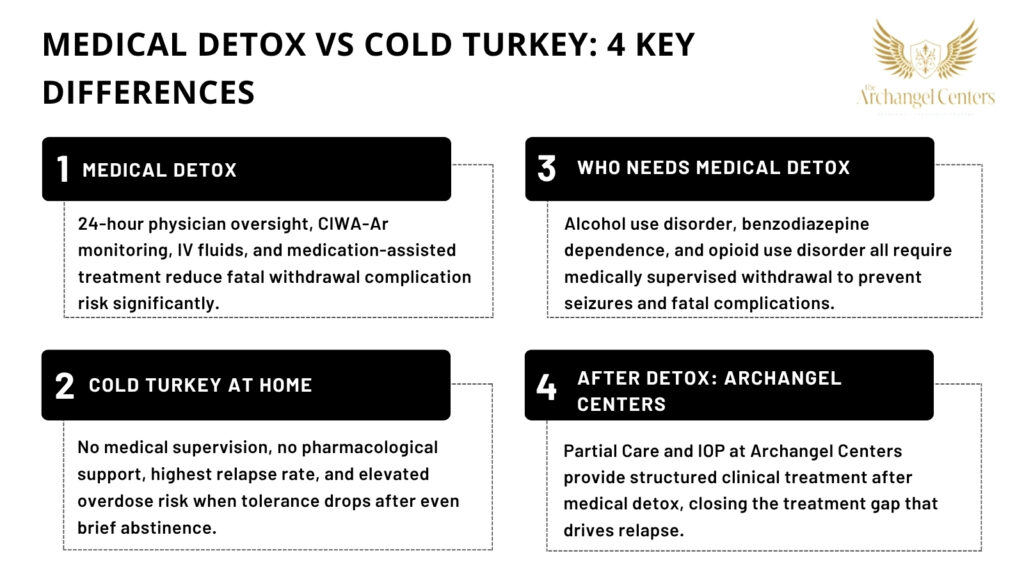
Medical detox is the clinically established alternative to cold turkey cessation, providing structured neurological stabilization through physician-directed pharmacological management and continuous monitoring.
Head-to-Head Comparison
| Medical Detox | Cold Turkey | |
|---|---|---|
| Medical supervision | 24-hour physician and nursing oversight | None |
| Withdrawal management | CIWA-Ar or COWS-guided medication protocols | None |
| Seizure prevention | Benzodiazepine prophylaxis for alcohol withdrawal | None |
| Opioid support | Suboxone, Naltrexone, or Vivitrol | None |
| Dehydration management | IV fluids and electrolyte replacement | Self-managed |
| Overdose risk if relapse | Reduced through monitored stabilization | Highest in post-cessation window |
| Dual diagnosis treatment | Concurrent psychiatric stabilization | None |
| Step-down coordination | Partial Care or IOP following stabilization | None |
What Medical Detox Provides That Cold Turkey Cannot
Medical detox facilities use CIWA-Ar for alcohol and benzodiazepine withdrawal and COWS for opioid withdrawal to determine the appropriate pharmacological intervention for each client. This prevents both undertreated severe withdrawal and over-sedation, a balance that unsupervised cessation cannot achieve.
Medication-Assisted Treatment initiated during medical detox reduces post-discharge relapse risk significantly. Suboxone and Vivitrol initiated during opioid detox reduce the mu-opioid receptor craving signal that drives relapse in the critical post-detox period. Benzodiazepine tapers during alcohol detox prevent seizure escalation that unsupported cessation cannot address.
Who Should Never Attempt Cold Turkey Withdrawal
Cold turkey cessation carries the highest risk for individuals whose clinical history includes specific factors that reliably predict severe or fatal withdrawal complications.
Clinical Risk Factors Requiring Medical Supervision
Cold turkey withdrawal is medically contraindicated for individuals who meet any of the following criteria:
- History of alcohol withdrawal seizures or delirium tremens during any prior cessation attempt, regardless of how long ago that attempt occurred.
- Current alcohol use disorder with daily drinking lasting six months or more, with reported tremors, sweating, or anxiety between drinks at baseline.
- Physical dependence on prescription benzodiazepines, regardless of prescribed dose, because tolerance develops at therapeutic levels with long-term use.
- Concurrent dependence on multiple substance classes, particularly any combination involving alcohol, benzodiazepines, or opioids, which compounds withdrawal severity and unpredictability.
- Active co-occurring psychiatric conditions including major depressive disorder, bipolar disorder, or post-traumatic stress disorder that predictably worsen during withdrawal and elevate self-harm risk.
- Medical comorbidities including cardiovascular disease, hepatic impairment, or any condition worsened by the acute autonomic instability of withdrawal.
Treatment at Archangel Centers After Medical Detox
Archangel Centers provides Partial Care and Intensive Outpatient Programs in Tinton Falls and East Windsor, New Jersey, for adults and adolescents completing medically supervised detox through a partner facility.
Partial Care Program
The Partial Care program provides six hours of daily structured clinical programming for clients stepping down from medically supervised withdrawal management. Programming addresses the behavioral, psychological, and co-occurring psychiatric dimensions of substance use disorder through CBT-based groups, individual therapy, psychoeducation, and mindfulness-based awareness skill development.
Intensive Outpatient Program
The Intensive Outpatient Program provides three to five sessions per week for clients who have completed detox and require continued structured therapeutic support at reduced intensity. Clients uncertain about which level of outpatient care is appropriate following medical detox will find a structured clinical comparison that maps symptom severity to the appropriate level of care. Same-day assessments are available.
Frequently Asked Questions
What does cold turkey mean?
Cold turkey means stopping substance use abruptly without a medical taper, withdrawal medications, or clinical supervision. Clinically, cold turkey cessation is contraindicated for alcohol, benzodiazepines, and opioids because the withdrawal syndromes these substances produce carry documented seizure risk, cardiovascular instability, and in some cases, mortality without pharmacological management.
What are cold turkey withdrawal symptoms?
Symptoms vary by substance. Alcohol and benzodiazepine withdrawal produce anxiety, tremors, seizures, and potentially fatal delirium tremens. Opioid withdrawal causes severe muscle cramps, nausea, vomiting, and prolonged post-acute dysphoria. Stimulant withdrawal produces acute fatigue, depression, and anhedonia. All substance classes produce intense craving that significantly elevates relapse risk throughout withdrawal.
Is cold turkey safe?
Cold turkey is not safe for alcohol, benzodiazepine, or opioid use disorders. Alcohol and benzodiazepine cessation without medical support carries documented risk of fatal seizures and delirium tremens. Opioid cold turkey does not typically cause direct fatality but significantly elevates overdose risk if relapse occurs after tolerance decreases during abstinence.
What is the medical term for cold turkey?
There is no single standardized clinical term. Medical documentation typically uses “abrupt cessation,” “unsupervised withdrawal,” or “self-managed discontinuation.” The phrase cold turkey is widely understood by clinicians but is considered informal terminology rather than a diagnostic classification. CIWA-Ar and COWS protocols assess withdrawal severity regardless of whether cessation was supervised or unsupervised.
Can a doctor cut you off cold turkey?
Physicians are trained to avoid abrupt prescription discontinuation for benzodiazepines and opioids. Standard clinical practice for these substance classes requires a supervised taper protocol, not abrupt cessation. Abruptly stopping these medications violates established prescribing safety guidelines and creates documented patient harm risk from rebound withdrawal seizures and autonomic instability.
What are the risks of detoxing without medical supervision?
Risks include seizures, delirium tremens, severe dehydration, cardiac arrhythmias, and fatal overdose if relapse occurs after tolerance decreases. Psychological risks include severe depression, suicidal ideation, and acute psychiatric decompensation in individuals with co-occurring conditions. Medical detox significantly reduces each of these risks through pharmacological management, continuous monitoring, and immediate clinical response capability.
Is it better to quit cold turkey or taper?
For alcohol, benzodiazepines, and opioids, a medically supervised taper is clinically superior to cold turkey cessation. Tapering reduces seizure risk, prevents delirium tremens, manages opioid craving, and allows the nervous system to readjust safely. Cold turkey may be appropriate for nicotine or caffeine, where the withdrawal risk profile is substantially different and rarely life-threatening.
References
- National Institute on Drug Abuse. (2022). Principles of Drug Addiction Treatment: A Research-Based Guide (Third Edition). National Institutes of Health. https://nida.nih.gov/publications/principles-drug-addiction-treatment-research-based-guide-third-edition
- National Institute on Alcohol Abuse and Alcoholism. (2023). Alcohol withdrawal syndrome and its clinical management. National Institutes of Health. https://www.niaaa.nih.gov/
- Substance Abuse and Mental Health Services Administration. (2023). Detoxification and Substance Abuse Treatment: Treatment Improvement Protocol 45. U.S. Department of Health and Human Services. https://www.samhsa.gov/
- Centers for Disease Control and Prevention. (2023). Drug Overdose Deaths. U.S. Department of Health and Human Services. https://www.cdc.gov/drugoverdose/
- American Society of Addiction Medicine. (2023). The ASAM Clinical Practice Guideline on Alcohol Withdrawal Management. American Society of Addiction Medicine.
- Kattimani, S., & Bharadwaj, B. (2013). Clinical management of alcohol withdrawal: A systematic review. Industrial Psychiatry Journal, 22(2), 100–108.
