



It didn’t feel like failure when you walked away; it felt like survival.
You got to a point where showing up felt heavier than staying home. Every appointment, every check‑in, every group looked bigger than the courage you had in that moment.
And then you stopped attending your intensive outpatient program.
There was no fireworks, no warning sign — just a quiet closing of a door you meant to push through. Maybe you thought you’d come back later. Maybe you figured that once you stopped, you couldn’t restart.
Here’s the truth:
You can come back.
Not because you “failed,” but because you’ve learned something crucial — what overwhelmed you last time.
This time, you restart with clarity, not confusion.
Your Quit Was Not a Weakness — It Was a Signal
Let’s say it plainly: quitting didn’t make you weak. It made you human. You weren’t abandoning hope — you were protecting what little you had at that moment.
Maybe:
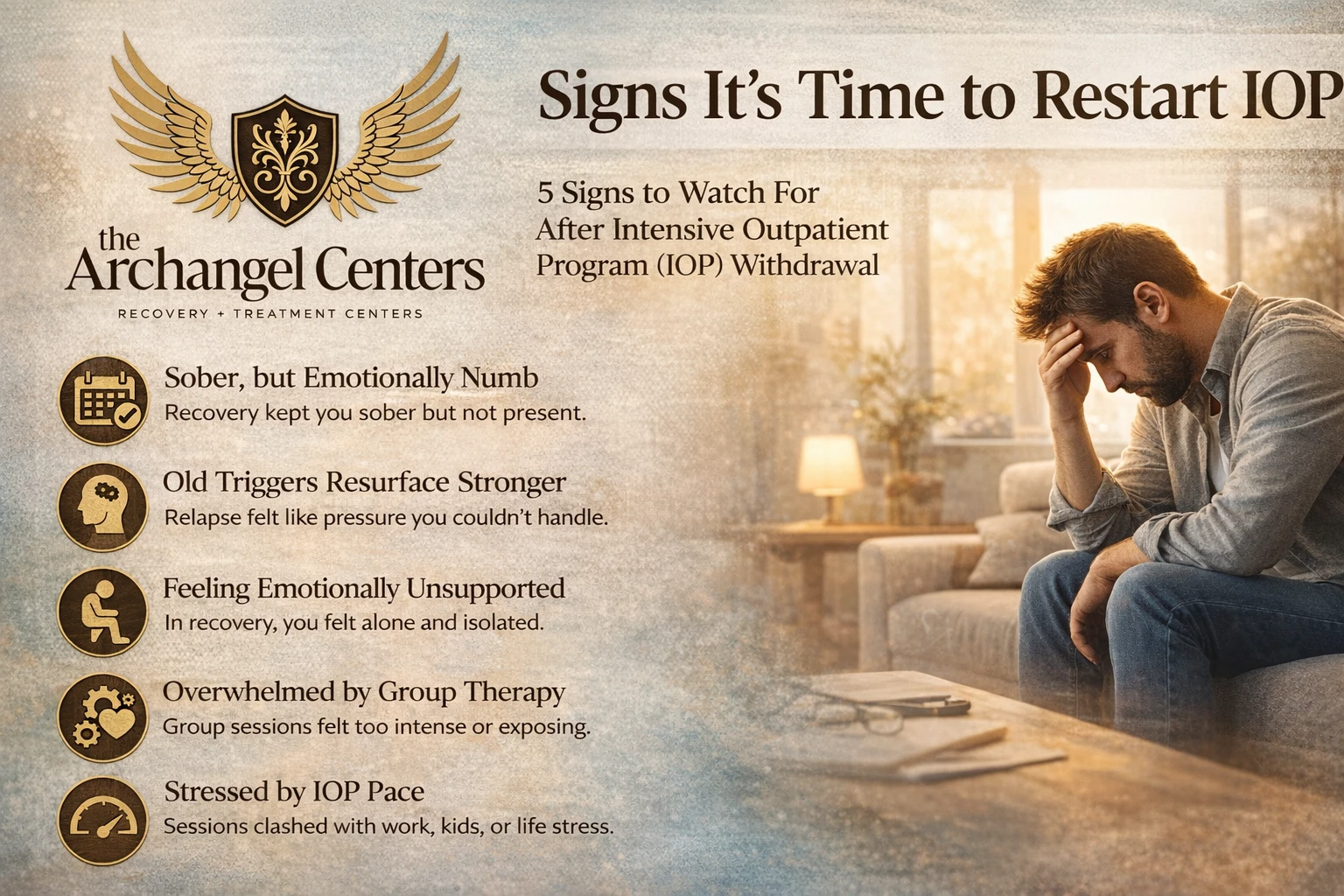
- Group therapy felt too intense.
- You felt exposed, raw, or judged.
- The schedule clashed with life stress — kids, work, bills.
- Emotional processing felt like digging into old wounds too soon.
None of these mean you don’t deserve help. They mean you need a different way of getting help — paced to your capacity and your story.
The good news? You already have the most important thing anyone can have when they return to treatment: insight.
Step 1: Acknowledge Why It Was Too Much
Before planning a restart, get honest about what made it too much the first time.
Ask yourself:
- Was it the pace?
- Too much vulnerability too fast?
- Group sessions that felt triggering?
- A sense that IOP was asking more than I could give?
Write down a few sentences. Not essays — just sensations, experiences, and words that fit how it felt.
This isn’t self‑criticism. This is data.
You need this information to tailor your restart.
Step 2: Reach Out With Intention — Not Pressure
When you first reached out to treatment, you may have felt obligated to be “ready.”
That pressure often builds a myth that you have to be perfect, prepared, or polished before returning.
But guess what?
You don’t.
You can reach out with honesty:
“I tried IOP before, and it felt like too much. I want to try again, but I need support pacing it differently.”
This is not a weakness. It’s precise and clear — and clinicians respond to clarity. You’ve already taken the first courageous step: recognizing what didn’t work.
When you connect with a new provider or the same program, what matters most isn’t your perfection — it’s your willingness to try again with new context.
Step 3: Ask for a Modified Approach
You are allowed to restart IOP without resuming it exactly as before.
Try asking for:
- A slower ramp‑up (start with fewer sessions)
- A dedicated intake just to talk about overwhelm
- A mix of individual and group therapy paced for you
- Check‑ins about intensity and stress levels
You don’t have to jump back in the deep end.
You can wade in.
A good clinician will help you figure out what feels manageable — and what doesn’t. That’s how real healing begins: with negotiation, not overwhelm.
Step 4: Treat Your Return as Recalibration — Not a Repetition
Restarting an intensive outpatient program isn’t repeating the same thing a second time. It’s a recalibration:
- You know where it hurt before.
- You know what triggered you.
- You know who you are now that you’ve been through the experience.
That knowledge is advantage. You’re not naive. You’re educated by experience.
This time, IOP isn’t a storm you dread.
It’s a structure you control.
Step 5: Use Personalized Tools This Time
Before you restart, gather a few tools you can lean on:
- A coping skills list you trust
- A person you can check in with daily
- A grounding ritual for before and after sessions
- A mini‑debrief (journaling, call, breathwork) to anchor your experiences
This isn’t extra work — it’s preparation for sustainable engagement.
Instead of waiting to react when you’re overwhelmed, you’ll be ready before.
Small preparations make big returns possible.
You Deserve Support That Meets You Where You Are
Every treatment system feels overwhelming if you’re expected to adapt to it instead of it adapting to you.
What you need isn’t perfection.
You need support in ways your nervous system can handle.
Archangel Centers builds treatment around people, not checklists. Their intensive outpatient program offers structure with compassion, not pressure with standards that don’t fit your pace.
And if you’re in New Jersey, you have local options that understand pacing:
Both centers focus on meeting clients where they are, not where they “should” be.
Step 6: Reframe What “Too Much” Means
Last time, “too much” felt like a stop sign.
This time, it can be a guidepost.
Here’s how:
- “Too much” = something to adjust, not abandon
- “Too much” = a signal to talk about pacing
- “Too much” = an invitation for more tailored care
When you view overwhelm as information instead of evidence you can’t do it, the narrative shifts.
You start asking:
“How can we change this — not stop it?”
And that mindset shift is revolutionary.
Step 7: Small Wins Create Bigger Returns
You don’t restart IOP by solving everything at once.
You restart it by stacking small wins:
- Attending one session and celebrating it
- Talking about overwhelm without judgment
- Showing up for a 15‑minute check‑in
- Sending one text — even if you’re nervous
Small wins build confidence. Confidence builds consistency.
Consistency builds momentum. Momentum rebuilds hope.
And you deserve that.
What to Expect When You Go Back
Restarting can feel scary. But here’s what many clients discover:
- The second time feels more intentional
- Therapists listen differently when they know your history
- You have more self‑awareness than before
- You can advocate for what you need
It isn’t easier — it’s clearer.
This time, you aren’t walking into chaos.
You’re walking into strategy.
Persistent Feelings That Don’t Mean You Should Quit Again
During your return, you might experience:
- Vulnerability in groups
- Emotional triggers bubbling up
- Moments of “I can’t do this”
These don’t mean treatment is too much.
They mean you’re engaging with the exact struggles that brought you here.
The IOP isn’t the problem — untreated pain is.
This time, you don’t escape the discomfort.
You work through it — with company.
Frequently Asked Questions (FAQs)
Do I have to re‑do the entire program from the beginning?
No. Clinicians assess your current needs and may build on your previous work rather than starting over.
Will they judge me for quitting before?
No. A good program views your return as progress, not a mistake.
Can I go at a slower pace this time?
Yes. You can request modified pacing and individualized elements.
Is it normal to feel overwhelmed in IOP?
Yes. Emotional work is challenging — but manageable with support.
Do I need complete sobriety before restarting IOP?
Not necessarily — honesty and willingness to engage are more important than perfection.
How long before I feel comfortable again?
Comfort doesn’t arrive all at once. But within weeks, clients often feel more grounded and confident than they expected.
Your Return Is Not “Starting Over” — It’s Starting Wise
You already tried once. And that attempt taught you something important — what too much felt like.
Now you get to re‑enter with intention, pacing, support, and self‑compassion.
You don’t have to jump back in the old way.
You get to choose the next right way.
Overwhelm is not an end.
It’s a doorway to a more thoughtful, grounded, sustainable treatment journey.
And you don’t walk through it alone.
Call (888) 464‑2144 to learn more about our Intensive outpatient program services in New Jersey.
