


Cocaine addiction, clinically known as stimulant use disorder involving cocaine, develops when repeated cocaine use produces lasting neurochemical changes that drive compulsive drug-seeking behavior despite harmful consequences.
The condition occurs as the brain’s reward circuitry adapts to artificially elevated dopamine levels, making it progressively harder to experience pleasure without the substance.
Recognizing stimulant use disorder early prevents the cascade of cardiovascular, neurological, and psychiatric complications that escalate with continued use. Yet many people struggle to identify where occasional use ends and clinical addiction begins.
The distinction lies in measurable neurobiological changes and specific behavioral patterns defined by the DSM-5-TR. Understanding these markers is the first step toward effective treatment and sustained recovery.
Key Takeaways
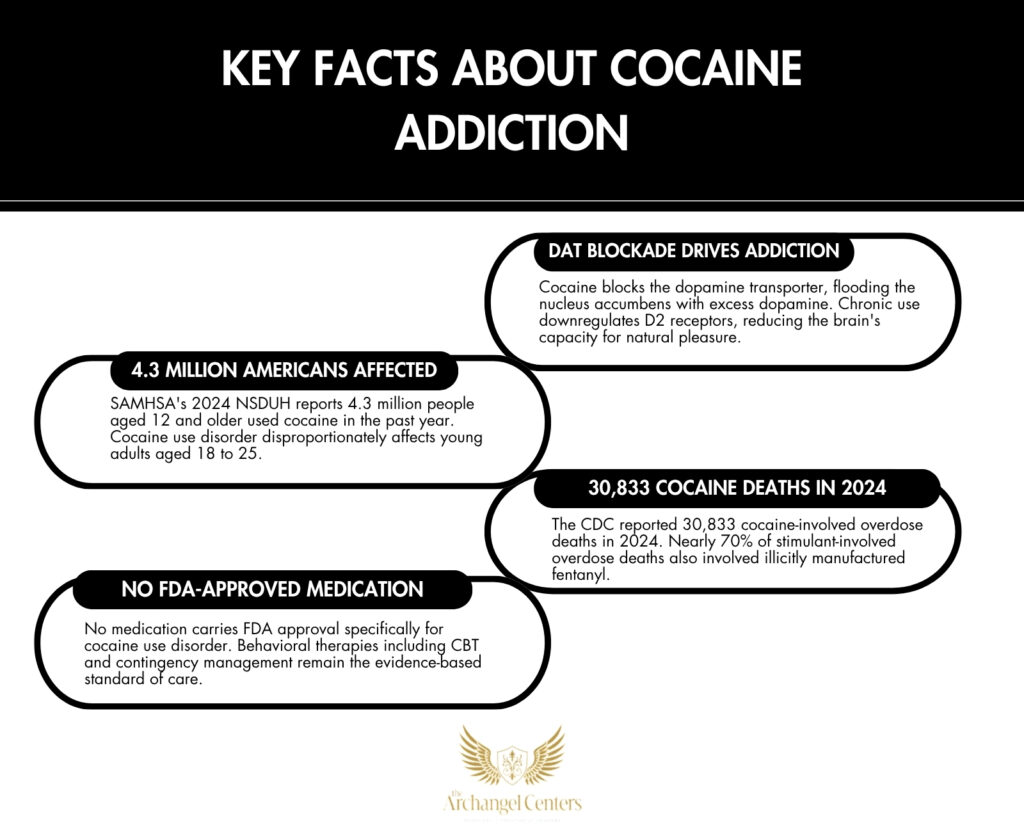
- According to the 2024 National Survey on Drug Use and Health (SAMHSA), approximately 4.3 million people aged 12 and older reported past-year cocaine use in the United States, a decline from 4.8 million in 2021.
- Cocaine blocks the dopamine transporter (DAT), flooding the synaptic cleft with excess dopamine and producing intense but short-lived euphoria that reinforces compulsive use patterns.
- The CDC reported 30,833 cocaine-involved overdose deaths in 2024, with nearly 70% of stimulant-involved overdose deaths also involving illicitly manufactured fentanyl.
- No FDA-approved medication currently exists specifically for cocaine use disorder, making behavioral interventions like cognitive behavioral therapy and contingency management the primary evidence-based treatments.
Understanding Cocaine Use Disorder
Cocaine addiction is a chronic, relapsing brain disorder classified under stimulant use disorder in the DSM-5-TR, characterized by compulsive cocaine use despite mounting physical, psychological, and social consequences.
Cocaine as a Schedule II Controlled Substance
Cocaine is a powerful central nervous system stimulant derived from the coca plant (Erythroxylum coca) and classified by the DEA as a Schedule II controlled substance.
Key pharmacological characteristics of cocaine include:
- Cocaine produces effects within seconds to minutes depending on route of administration, with smoked crack cocaine reaching peak plasma concentration in under 10 seconds and intranasal use peaking within 15 to 30 minutes.
- The drug exists in two primary forms: powdered cocaine hydrochloride, which is typically snorted or dissolved for injection, and crack cocaine, a freebase form processed for smoking that delivers a more rapid and intense effect.
- Despite limited medical applications as a local anesthetic in certain surgical procedures, the vast majority of cocaine in circulation is illicitly manufactured and distributed through international trafficking networks.
- Cocaine detection times vary significantly by testing method, with most standard tests detecting the drug or its metabolites for 1-4 days after last use.
DSM-5-TR Diagnostic Criteria
The DSM-5-TR classifies cocaine addiction as stimulant use disorder, requiring the presence of at least two of eleven specific criteria within a 12-month period to confirm diagnosis.
Core diagnostic indicators include:
- Taking cocaine in larger amounts or over longer periods than originally intended, reflecting the progressive loss of volitional control that distinguishes clinical stimulant use disorder from recreational use.
- Persistent desire or repeated unsuccessful efforts to cut down or control cocaine use, even when the individual clearly recognizes the harm it produces.
- Continuing cocaine use despite recurrent social, occupational, or interpersonal problems directly caused or worsened by its effects on behavior and cognition.
- Development of tolerance, requiring markedly increased amounts of cocaine to achieve the desired effect, or experiencing significantly diminished effects with the same dose over time.
How Cocaine Differs From Other Stimulants
Cocaine produces a distinct pharmacological profile compared to amphetamine-type stimulants due to its unique mechanism of action and rapid onset of effects.
Critical differences include:
- Cocaine primarily blocks dopamine reuptake at the transporter level, while methamphetamine actively reverses the transporter to push dopamine into the synapse, producing a longer-lasting but mechanistically different stimulant effect.
- The half-life of cocaine ranges from 40 to 90 minutes, significantly shorter than methamphetamine’s 10 to 12 hour half-life, driving more frequent dosing patterns and the characteristic binge cycles seen in cocaine use disorder.
- Cocaine simultaneously inhibits norepinephrine and serotonin reuptake, producing acute cardiovascular stress and mood disruption that compound its reinforcing and addictive potential.
How Cocaine Rewires the Brain
Cocaine produces its addictive effects by disrupting the brain’s natural dopamine regulation system, triggering neuroadaptations that progressively erode the capacity for normal pleasure and motivation.
Dopamine Transporter Blockade
Cocaine binds directly to the dopamine transporter (DAT) protein on presynaptic neurons, preventing the normal recycling of dopamine from the synaptic cleft back into the releasing neuron.
This blockade produces a cascade of neurochemical effects:
- Dopamine accumulates in the synaptic cleft at concentrations up to 10 times higher than normal neurotransmission, creating the intense euphoria associated with cocaine’s initial reinforcing effects.
- The mesolimbic dopamine pathway, connecting the ventral tegmental area (VTA) to the nucleus accumbens, becomes the primary circuit driving cocaine reinforcement and compulsive use behavior.
- Repeated DAT blockade triggers compensatory downregulation of dopamine D2 receptors, reducing the brain’s baseline sensitivity to natural rewards like food, social connection, and achievement.
Neuroadaptation and Tolerance
Chronic cocaine exposure forces the brain to recalibrate its entire reward architecture, producing the tolerance and anhedonia that characterize progression from casual use to addiction.
Key neuroadaptive changes include:
- Repeated dopamine surges cause postsynaptic D2 receptor downregulation in the striatum, meaning the same cocaine dose produces progressively weaker effects while natural rewards generate even less pleasure.
- The prefrontal cortex shows reduced glucose metabolism and decreased gray matter volume in chronic cocaine users, directly impairing impulse control and the ability to resist cravings during high-risk situations.
- Sigma-1 receptor activation by cocaine contributes to neuroinflammation and oxidative stress, accelerating neurotoxic damage that makes sustained recovery more difficult with longer use histories.
The Binge-Crash Cycle
The short half-life of cocaine drives a distinctive binge-and-crash pattern that differentiates cocaine use disorder from longer-acting stimulant addictions.
This cycle follows a predictable neurochemical trajectory:
- During the binge phase, users administer cocaine repeatedly over hours or days to maintain euphoria, progressively depleting presynaptic dopamine stores and elevating norepinephrine to dangerous cardiovascular levels.
- The crash phase follows abruptly as dopamine reserves become exhausted, producing profound dysphoria, psychomotor retardation, hypersomnia, and intense hunger lasting 24 to 72 hours.
- The extinction phase extends over weeks, marked by persistent anhedonia, intermittent cravings triggered by environmental cues, and vulnerability to relapse driven by conditioned dopamine responses in the nucleus accumbens.
How Cocaine Use Disorder Develops
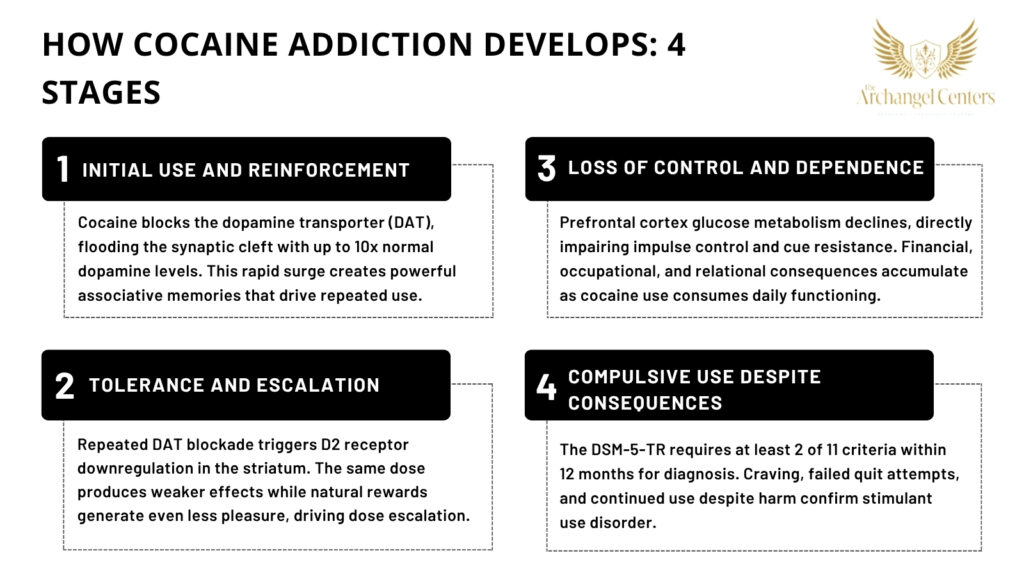
Stimulant use disorder involving cocaine develops through a progressive sequence of neurobiological changes, beginning with initial reinforcement and advancing through tolerance, dependence, and compulsive use.
Initial Use and Reinforcement
First exposure to cocaine activates the brain’s reward circuitry with a speed and intensity that natural rewards cannot replicate, establishing powerful associative memories.
Early-stage reinforcement patterns include:
- Cocaine’s rapid onset, particularly when smoked or injected, creates a powerful associative memory linking the drug to euphoria, which the amygdala encodes as a high-priority survival signal.
- Even single cocaine exposures can sensitize the mesolimbic pathway through a process called cocaine-induced kindling, meaning subsequent exposures may produce stronger conditioned responses at the same dose.
- Social and environmental cues present during early use become conditioned triggers through classical conditioning, capable of activating dopamine release in the nucleus accumbens even before cocaine is consumed.
Escalation and Loss of Control
As neuroadaptation progresses, individuals require increasingly higher doses or more frequent administration to achieve the same subjective effects.
Hallmarks of escalation include:
- Transition from occasional recreational use to regular weekend use to daily use typically occurs over weeks to months, though individual timelines vary based on route of administration and genetic vulnerability.
- Cocaine-induced sensitization creates a paradox where tolerance to euphoric effects develops simultaneously with increased sensitivity to motivational and craving-related effects.
- Financial, occupational, and relational consequences accumulate as cocaine procurement and use consume increasingly larger portions of daily functioning and cognitive resources.
Risk Factors for Accelerated Progression
Certain biological and environmental factors increase the speed at which occasional cocaine use transitions to co-occurring substance use and mental health disorders.
Primary risk factors include:
- Genetic polymorphisms affecting dopamine receptor density, DAT expression, and reward sensitivity account for approximately 40% to 60% of the variance in addiction vulnerability across populations.
- Pre-existing mental health conditions including major depressive disorder, attention-deficit/hyperactivity disorder, and generalized anxiety disorder significantly elevate the risk of developing cocaine use disorder.
- Early age of first use, route of administration (smoking and injection carry higher addiction risk than intranasal use), and concurrent polysubstance use all accelerate progression to clinical addiction.
Signs and Symptoms of Cocaine Addiction
Cocaine addiction produces a distinctive pattern of physical, behavioral, and psychological changes that intensify as the frequency and quantity of use increase.
Common Signs of Cocaine Use
The most recognizable indicators of cocaine use reflect the drug’s stimulant effects on the central nervous system and cardiovascular system.
Physical signs that suggest active cocaine use include:
- Persistent nasal congestion, frequent nosebleeds, and progressive loss of smell indicate chronic intranasal cocaine use, which erodes the nasal septum and mucosal lining over time.
- Dilated pupils, elevated heart rate, and increased body temperature occur reliably during active intoxication and may persist for several hours depending on the amount consumed.
- Decreased appetite producing noticeable weight loss, disrupted sleep patterns alternating between insomnia during binges and hypersomnia during crashes, and restless physical agitation during waking hours.
Behavioral indicators commonly observed include:
- Increased talkativeness, grandiosity, and social disinhibition during intoxication periods, followed by pronounced withdrawal from social activities during crash phases.
- Financial difficulties, secretive behavior around personal communications, and unexplained absences from work or family obligations that increase in frequency over time.
- New associations with unfamiliar social groups combined with deterioration of previously valued long-standing relationships and professional responsibilities.
Severe Symptoms and Complications
Prolonged or high-dose cocaine use produces dangerous medical and psychiatric complications requiring immediate clinical attention.
Severe complications of chronic cocaine use include:
- Cocaine-induced cardiovascular emergencies including myocardial infarction, aortic dissection, and cardiac arrhythmias can occur even in young, otherwise healthy individuals due to cocaine’s vasoconstrictive and proarrhythmic properties.
- Cocaine-induced psychosis produces paranoid delusions, auditory and tactile hallucinations including formication (the sensation of insects crawling under the skin), and aggressive behavior that can persist for days after last use.
- Seizures and cerebrovascular events including ischemic and hemorrhagic stroke result from cocaine’s combined sympathomimetic and vasoconstrictive effects on cerebral vasculature and cardiac rhythm.
Long-Term Effects of Chronic Cocaine Use
Sustained cocaine use produces progressive organ damage and cognitive impairment that may persist long after cessation of use.
Long-term consequences include:
- Chronic cocaine exposure accelerates atherosclerosis and produces left ventricular hypertrophy, significantly increasing lifetime cardiovascular mortality risk even after sustained periods of abstinence.
- Persistent deficits in executive function, working memory, and impulse control result from prefrontal cortex atrophy and reduced dopaminergic transmission in the frontal-striatal circuits.
- Chronic intranasal use can produce nasal septal perforation and palate necrosis, while smoked crack cocaine causes chronic bronchitis, pulmonary hemorrhage, and interstitial pneumonitis sometimes called “crack lung.”
How Is Cocaine Addiction Treated?
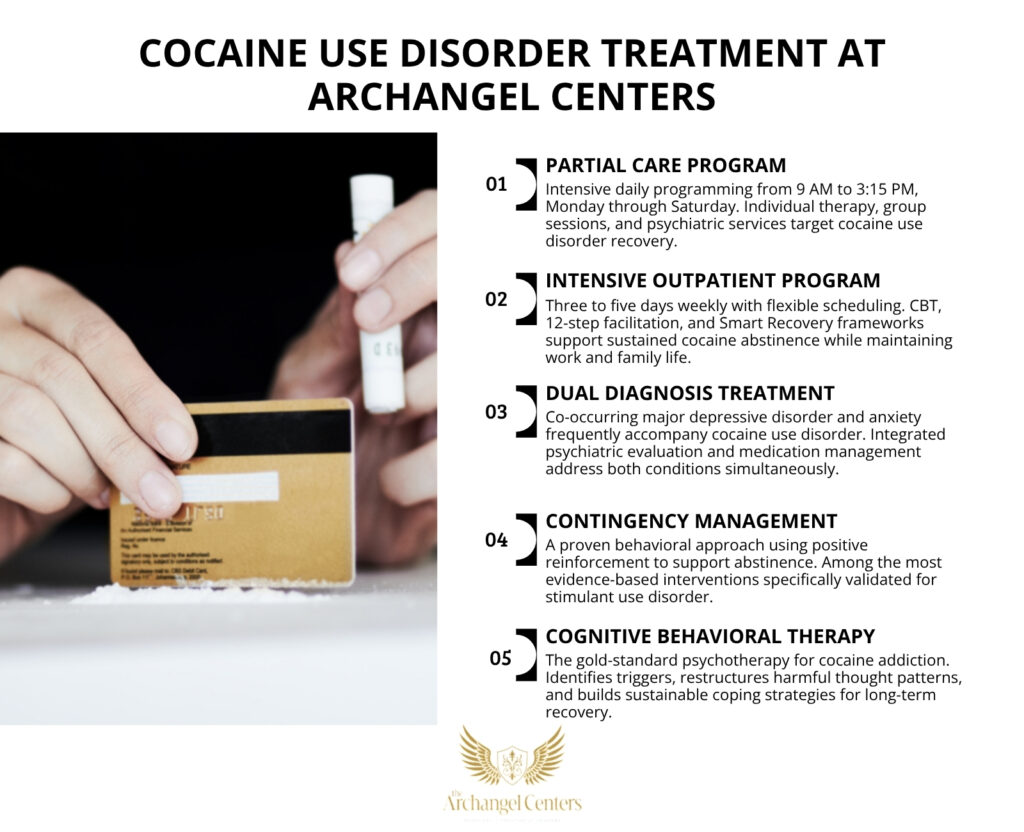
Treating stimulant use disorder involving cocaine requires an integrated approach combining behavioral therapies, psychiatric support, and structured programming, as no FDA-approved pharmacotherapy currently exists for this specific condition.
Behavioral Therapies
Evidence-based behavioral interventions remain the cornerstone of cocaine addiction treatment, targeting the cognitive distortions and conditioned responses that maintain compulsive use.
The most effective behavioral approaches include:
- Cognitive behavioral therapy helps individuals identify and restructure the automatic thoughts, beliefs, and environmental triggers that precede cocaine use, building concrete coping skills for high-risk situations.
- Contingency management provides tangible rewards for verified abstinence, leveraging the brain’s reward circuitry to reinforce drug-free behavior and producing some of the strongest short-term outcomes in stimulant use disorder research.
- Dialectical behavior therapy addresses emotional dysregulation and distress tolerance deficits that frequently co-occur with stimulant use disorder, teaching mindfulness-based skills for managing cravings without substance use.
Medication-Assisted Approaches
While no medication carries FDA approval specifically for cocaine use disorder, several pharmacological strategies address co-occurring symptoms and reduce relapse risk.
Current pharmacological strategies include:
- Topiramate, disulfiram, and N-acetylcysteine have demonstrated promise in clinical trials for reducing cocaine use frequency and craving intensity, though none has achieved regulatory approval for this indication.
- Medications targeting co-occurring psychiatric conditions, including SSRIs for major depressive disorder and mood stabilizers for bipolar disorder, improve overall treatment retention and outcomes.
- Naltrexone may reduce cocaine use in individuals with concurrent alcohol use disorder, addressing the polysubstance pattern that complicates many stimulant use presentations requiring dual diagnosis care.
Addressing Withdrawal and Post-Acute Symptoms
Cocaine withdrawal produces primarily psychological rather than physiological symptoms, yet the intensity of post-acute anhedonia and craving presents significant relapse risk during early recovery.
Withdrawal management priorities include:
- The initial crash phase (hours 1 to 72) produces severe fatigue, depressed mood, increased appetite, and hypersomnia, requiring supportive monitoring and sleep hygiene interventions rather than pharmacological detoxification.
- Post-acute withdrawal symptoms including persistent anhedonia, concentration difficulties, and intermittent cocaine cravings may continue for weeks to months, requiring ongoing structured therapeutic support.
- Exercise programming, nutritional rehabilitation, and sleep regulation accelerate dopamine receptor recovery and reduce the duration of post-cessation anhedonia and motivational deficits.
Treatment at Archangel Centers
Archangel Centers provides structured outpatient substance use treatment for individuals with stimulant use disorder through evidence-based programming at multiple levels of care in New Jersey.
Partial Care Program
The partial care program delivers intensive daily clinical programming from 9:00 AM to 3:15 PM, Monday through Saturday, integrating individual therapy, group sessions, and psychiatric services for individuals with cocaine use disorder. Clients receive weekly individual therapy and daily group sessions targeting relapse prevention, coping skills, and recovery maintenance within a structured therapeutic environment.
Intensive Outpatient Program
The intensive outpatient program provides three hours of clinical programming three to five days per week, allowing individuals to maintain employment and family responsibilities while receiving evidence-based cocaine addiction treatment. This level of care incorporates CBT, 12-step facilitation, and Smart Recovery frameworks tailored to stimulant use disorders.
Outpatient and Virtual Programs
Individuals stepping down from higher levels of care or those with less intensive clinical needs benefit from outpatient services and virtual programming that maintain therapeutic continuity and long-term accountability. These programs support sustained cocaine abstinence through ongoing group therapy, relapse prevention, and psychiatric medication management.
Archangel Centers offers same-day confidential assessments with insurance verification completed during the initial call.
Frequently Asked Questions
What Does Cocaine Addiction Look Like?
Cocaine addiction typically presents as a pattern of escalating use, failed attempts to cut back, social withdrawal during crash periods, and continued use despite mounting consequences. Physical indicators include frequent nosebleeds, dilated pupils, weight loss, and alternating cycles of hyperactivity and prolonged sleep. Behavioral changes such as financial problems and secretive behavior signal advancing stimulant use disorder.
How Is Cocaine Addiction Treated?
Treatment for cocaine use disorder relies primarily on behavioral therapies including cognitive behavioral therapy and contingency management, as no FDA-approved medication exists specifically for this condition. Structured outpatient programs providing individual and group therapy, psychiatric support, and relapse prevention produce the most consistent outcomes. Addressing co-occurring mental health conditions simultaneously improves overall treatment retention.
Is Cocaine Physically or Psychologically Addictive?
Cocaine produces both physical neuroadaptations and profound psychological dependence. The brain physically changes through dopamine receptor downregulation and prefrontal cortex volume reduction. Psychological dependence manifests as intense cravings, conditioned responses to environmental triggers, and persistent anhedonia during abstinence. The DSM-5-TR does not distinguish between physical and psychological addiction, classifying all presentations under stimulant use disorder.
Can You Overdose on Cocaine?
Cocaine overdose is a medical emergency that can occur at any dose, particularly when the drug is combined with other substances. Symptoms include chest pain, seizures, hyperthermia, cardiac arrhythmias, and loss of consciousness. The growing contamination of cocaine with illicitly manufactured fentanyl has significantly increased overdose risk, contributing to over 30,000 cocaine-involved deaths reported by the CDC in 2024.
How Long Does Cocaine Withdrawal Last?
Acute cocaine withdrawal symptoms including fatigue, depression, increased appetite, and hypersomnia typically resolve within one to two weeks after last use. Post-acute symptoms such as intermittent cravings, concentration difficulties, and emotional flatness may persist for several months as dopamine receptor density gradually normalizes. Most clinical guidelines recommend a minimum of 90 days of structured treatment.
How to Help Someone With Cocaine Addiction?
Supporting someone with stimulant use disorder involves expressing concern without judgment, educating yourself about the condition, and encouraging professional evaluation. Avoid enabling behaviors such as providing money or minimizing consequences of continued use. Connect them with a treatment provider who can conduct a clinical assessment and recommend an appropriate level of care.
References
- Substance Abuse and Mental Health Services Administration. (2025). Key substance use and mental health indicators in the United States: Results from the 2024 National Survey on Drug Use and Health. https://www.samhsa.gov/data/data-we-collect/nsduh-national-survey-drug-use-and-health/national-releases/2024
- National Institute on Drug Abuse. (2024). Drug overdose deaths: Facts and figures. https://nida.nih.gov/research-topics/trends-statistics/overdose-death-rates
- Drug Enforcement Administration. (2024). Cocaine drug fact sheet. https://www.dea.gov/factsheets/cocaine
- Centers for Disease Control and Prevention. (2026). Drug overdose deaths in the United States, 2023-2024. https://www.cdc.gov/nchs/products/databriefs/db549.htm
- American Psychiatric Association. (2022). Diagnostic and statistical manual of mental disorders (5th ed., text rev.). American Psychiatric Publishing.
- Volkow, N. D., Michaelides, M., & Baler, R. (2019). The neuroscience of drug reward and addiction. Physiological Reviews, 99(4), 2115-2140.
- National Institute on Drug Abuse. (2024). Cocaine research report. https://nida.nih.gov/publications/research-reports/cocaine
