



There’s a soft, unspoken moment that lives between overwhelm and hope.
A time when you wonder, “Is this all there is?” but you don’t have a dramatic crisis story.
You just have the persistent feeling that something needs to change.
If you’re reading this, you may be feeling that exact tug — curious about sobriety, unsure what it means, and hesitant to label anything yet. That’s okay. You don’t have to have all the answers to take a meaningful step forward. A partial hospitalization program can be a supportive, structured way to explore your relationship with substances and your emotional health without overnight stays or losing connection to your daily life.
And you can begin this journey even if you don’t know exactly what sobriety means for you yet. That’s exactly where many people start.
Whether you’re here because drinking feels like a burden, you want to test a new way of living, or you simply want support navigating big feelings — this guide is for you. Let’s walk through how you can start a PHP with curiosity, not certainty.
What Is a Partial Hospitalization Program, Really?
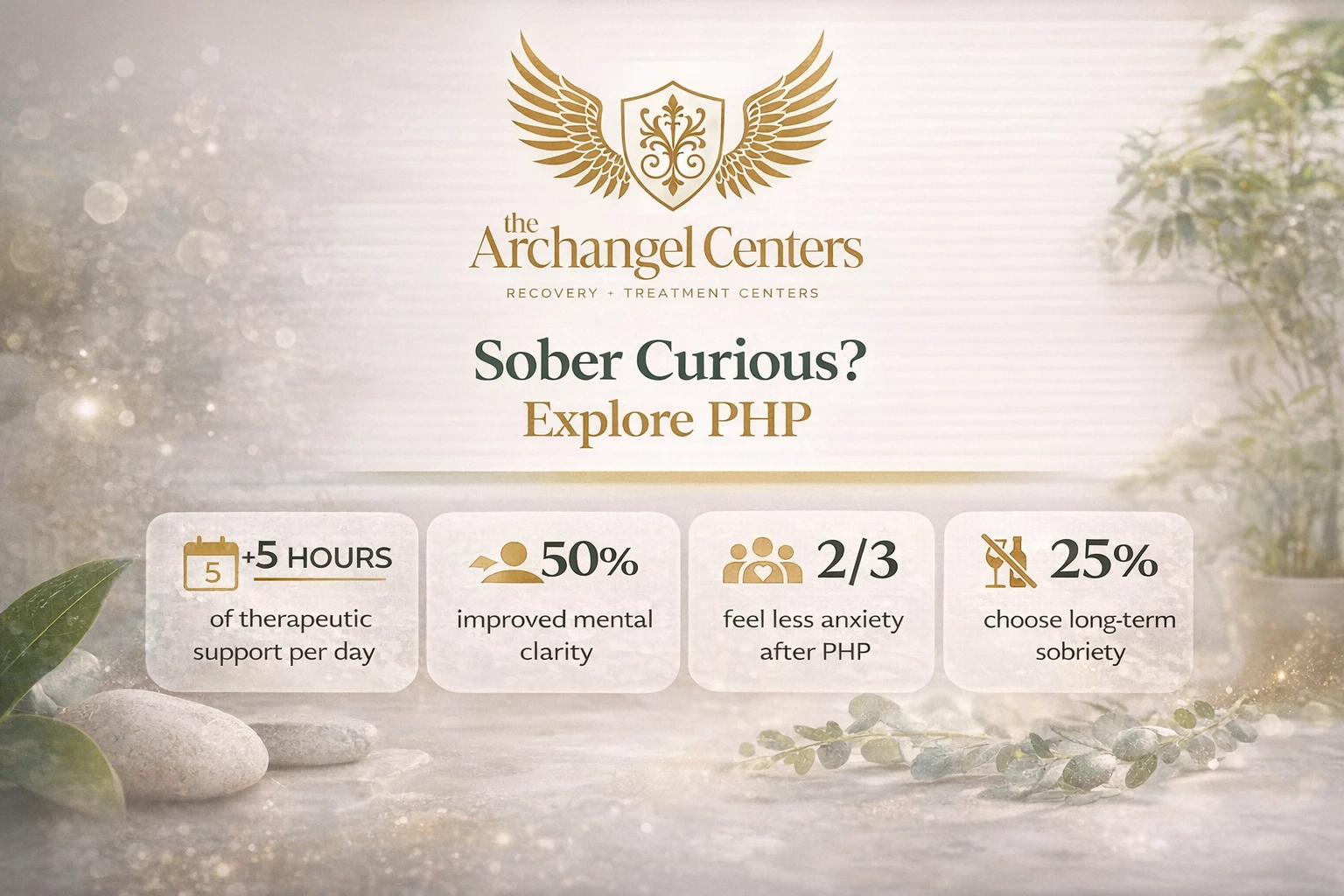
At its core, a partial hospitalization program (PHP) is a level of care that offers daily therapeutic support without overnight stays. It sits between inpatient care and less-intensive outpatient services. You’re not living at the facility, but you’re with professionals and peers for several hours most days — typically five days a week — diving into group therapy, individual counseling, life-skill building, coping strategies, and more.
This means:
- Structured support during the day
- Evening and weekend return to your own space
- A rhythm that helps you build new habits
- Consistent human connection and accountability
In other words, it gives you regular, reliable support without asking you to “check out” of your life.
That’s crucial when you’re sober curious and want clarity, not pressure.
You might think you have to know you’re “addicted” to consider formal support. You don’t. You only need to be willing to explore yourself more deeply and think, “There might be a better way to live.”
Why a PHP Can Be Right for the Sober Curious
Most people don’t recognize the sober curious mindset right away. It’s not a crisis. It’s not a trauma or a “last chance.” It’s a quiet, persistent whisper inside — a sense that your relationship with alcohol or other substances isn’t serving you like it used to.
The sober curious experience can look like:
- Wanting to be more present emotionally
- Waking up wishing you’d enjoyed yesterday differently
- Feeling stuck in cycles you can’t explain
- Wanting clarity before making big decisions
But here’s what’s important: you don’t need to understand the cause of these feelings to seek support. PHP offers a place to unpack them with trained clinicians, without judgment or assumption.
It respects that you’re figuring this out — not sure yet.
And that’s powerful.
You Don’t Have to Declare Sobriety to Get Help
Some people come into a PHP ready to commit to sobriety. Others come in confused, unsure, ambivalent, or exhausted by repetition. All of these are valid starting points.
PHP doesn’t force labels. It helps you explore your patterns, your triggers, and your goals — even if those goals are still fuzzy.
Consider these questions:
- What feel like cravings — emotional or physical?
- When does alcohol feel like a friend, and when does it feel like a weight?
- What is it that you’re really seeking — freedom? peace? stability? connection?
A PHP isn’t about pushing you toward a label. It’s about giving you language and support so you can make choices from understanding, not confusion.
Step‑by‑Step: What It Looks Like to Start a PHP
1. Reach Out With a Question, Not a Declaration
You are allowed to call a program and say:
“I’m curious. I’m not sure. I don’t know if I need help — but I want to explore that.”
That’s enough. A warm, compassionate admissions team will ask what you’re experiencing and help you understand whether a PHP could match where you are today.
For example, at Archangel Centers, the admissions specialists listen — they don’t presume. They explore what you want to achieve and tailor options that meet you where you are emotionally and practically.
Learn more about their partial hospitalization program.
2. Understand What a Typical Week Might Look Like
Most PHPs include:
- Group therapy focused on coping skills
- Individual therapy to unpack personal patterns
- Psychoeducation (learning about emotions, triggers, stress)
- Peer support and shared exploration
You’re not there to be “fixed.” You’re there to learn about yourself, gather tools, and connect with humans who understand what you’re walking through.
Where You Can Access This Support in New Jersey
You deserve support that’s close and real — not distant or abstract. Archangel Centers provides PHP and other supportive services in New Jersey, including:
If you’re near Central Jersey — places like Edison, New Brunswick, Freehold, or Princeton — you’re within reach of this kind of care.
These locations are welcoming, professional, and designed for people who don’t fit into a black-and-white idea of addiction. You don’t need to know your destination. Just be willing to start.
What Happens After You Say “Yes” to Exploring PHP
Once you connect with an admissions specialist:
- They’ll listen deeply and respectfully
- You’ll be invited for a conversation about your experiences
- They’ll help you understand what PHP involves
- Insurance and logistics will be clarified with support
There’s no shame in not knowing what “sobriety” means for you. The PHP structure simply gives space to discover that for yourself.
Common Misunderstandings About Partial Hospitalization
Some people think:
- “I have to hit rock bottom first.”
- “I have to quit drinking before I can ask for help.”
- “Only people with severe addiction can attend.”
These are myths.
The truth is:
- PHP supports anyone who wants structured emotional clarity.
- You don’t have to already be sober.
- You don’t need dramatic problems for the help to matter.
Curiosity itself is a valid reason to begin the conversation.
A Day in PHP — What You Can Expect
Imagine a day where:
- You start with guided group check‑ins
- You work on skills for managing thoughts and emotions
- You sit one‑on‑one with a clinician to talk about life
- You learn tools for stress, cravings, and patterns
- You leave in the evening to reflect and rest in your own space
It’s not immersion therapy. It’s structured exploration.
And it’s grounded in actual clinical care, not cynicism or judgment.
You’re Asking the Right Questions — That’s What Matters
The brave part isn’t having the answers —
The brave part is asking the questions.
“How might I feel if I wasn’t afraid to be honest with myself?”
“What does my nervous system need?”
“What part of me feels stuck?”
These are questions worth exploring — and a partial hospitalization program is one compassionate way to do just that.
You Can Take Your Time — And Still Move Forward
One of the most healing parts of getting support is realizing:
You don’t need to rush certainty. You just need to start somewhere.
PHP gives you:
- Time
- Structure
- Support
- Reflection
- Compassion
That’s everything most people wish they had when they first started reconsidering their relationship with alcohol or substances.
There is no shame in uncertainty — only opportunity.
Frequently Asked Questions (FAQs)
Do I have to be sober before starting PHP?
No. You don’t need to have already stopped using. Many individuals begin PHP precisely because they’re unsure what sobriety means for them and want support in exploring that. PHP supports discovery and clarity.
Is PHP only for people with severe addiction?
Not at all. PHP supports people across a wide range of experiences — from those in crisis to those who are simply curious and want guidance in building healthier habits and understanding themselves.
Will I be judged for being unsure?
Good clinicians and programs know that uncertainty is human. You won’t be judged; you’ll be heard and supported in exploring your experience with curiosity and care.
Can I work or go to school while attending PHP?
Often, yes. Because PHP does not require overnight stays, many participants maintain work or school responsibilities while attending daytime treatment.
How long does a PHP last?
Length varies depending on your needs and progress, but it typically lasts several weeks, with daily attendance and active participation in therapeutic activities.
What’s the difference between PHP and other treatment levels?
PHP offers more intensity and structure than standard outpatient care but is less restrictive than inpatient programs. It’s a middle ground that gives you strong support while still living at home.
You Don’t Have to Know Everything to Start Healing
You don’t need a crisis to want help.
You don’t need a label to want support.
You just need permission to explore.
That’s what PHP offers — space to think clearly, feel fully, and choose your path with intention.
Call (888) 464-2144 to learn more about our Partial hospitalization program in New Jersey.
