



If you’re reading this, you probably already know.
That the drinking isn’t just “stress relief” anymore.
That you can’t keep waking up with dread, apologizing, promising tomorrow will be different.
That it’s time to ask for help—but you’re terrified of what that means.
Let’s take the fear out of the unknown. Alcohol addiction treatment doesn’t mean giving up your identity or being shamed into change. At Archangel Centers in Tinton Falls, New Jersey, it means being met with clarity, calm, and care.
Here’s what treatment really looks like—hour to hour, day by day—so you can step in with eyes open and heart a little less guarded.
Day One: The Hardest Part Is Showing Up
You don’t have to perform recovery on day one. You don’t need to be convinced it will work or even believe you’re ready forever. The only thing you need to do is arrive.
When you walk through the doors of a treatment center like Archangel, you’ll meet with compassionate staff who understand what this moment feels like. No lectures. No pressure. Just the first step toward relief.
Here’s what usually happens:
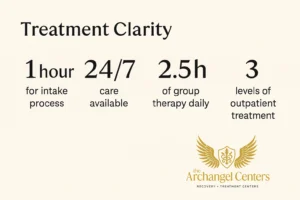
- You’ll complete an intake process—quiet, one-on-one, no rush.
- We’ll talk about your medical history, alcohol use, physical and mental health needs.
- Based on your needs, you’ll begin care—whether that’s detox, partial hospitalization (PHP), intensive outpatient (IOP), or outpatient therapy.
You don’t have to tell your whole story at once. You don’t even have to know it yet. Just be honest, and we’ll meet you there.
What a Typical Day in Treatment Really Looks Like
Treatment isn’t a series of confrontations or punishments. It’s not bootcamp. It’s structured support. A rhythm. A daily space where healing gets to replace chaos.
Depending on your level of care, your day might include:
Group Therapy
You’ll sit with others navigating recovery. Topics may include emotional triggers, boundary setting, grief, self-worth, or relapse prevention. You can speak if you want—or just listen until you’re ready.
Individual Counseling
You’ll meet privately with a licensed therapist trained in addiction. You don’t need to have the “right” words. Your pain doesn’t have to be eloquent to be valid.
Recovery Education
You’ll learn about how alcohol impacts your brain, nervous system, and relationships. Understanding the why behind your patterns can make healing feel less like self-blame—and more like self-rescue.
Wellness Time
You may engage in light movement, mindfulness, journaling, or even just rest. Healing isn’t only about talking—it’s about resetting your whole system.
Meals and Breaks
Yes, you’ll eat. You’ll breathe. You’ll take time to be human again.
If you’re in partial hospitalization or intensive outpatient treatment in Central New Jersey, you’ll return home each evening. This allows you to practice what you’re learning in your real life—without being left alone to figure it all out.
Do I Have to Share Everything in Group?
No. Group therapy is a space where you can speak, cry, nod, or just be. There’s no requirement to “bare your soul” on day one. What matters is showing up.
Some people speak often. Others speak rarely. Both are valid. Group works not because of pressure—but because over time, trust builds.
What If I Don’t Think I’m “That Bad”?
Here’s the thing: if alcohol is interfering with your peace, your body, your sleep, or your relationships—you don’t have to wait until it gets worse.
Many of our clients have jobs, families, responsibilities. But they’re also scared. Tired. Worried they’ll lose what they love if something doesn’t change.
You don’t have to lose everything to want more for yourself.
What Happens After I Leave Each Day?
If you’re in outpatient care, you’ll head home after sessions. That time can feel quiet, even strange, without alcohol as a buffer. But that’s part of the healing.
In early treatment, your after-hours might include:
- Watching familiar shows or reading
- Attending outside support groups (like AA or SMART Recovery)
- Resting—really resting—for the first time in a while
- Reflecting on things you’ve avoided
- Making small changes to your daily environment (hiding alcohol, changing routines)
We encourage clients to create gentle evening routines that don’t expect perfection—just presence.
How Long Does Alcohol Addiction Treatment Last?
There’s no universal timeline. Some start with a short-term program and extend as needed. Others stay in long-term outpatient care for several months.
The goal isn’t to rush. The goal is readiness.
At Archangel, your care plan adapts as your needs evolve. We believe in building a foundation that lasts—whether that’s 30 days, 90 days, or longer.
Common Emotions in Early Recovery
Starting treatment often stirs up more than just anxiety. It can surface sadness, guilt, confusion—even unexpected hope. You’re not just stopping drinking. You’re meeting parts of yourself you may have numbed or avoided.
Some things you might feel in the first week:
- “I don’t belong here.” (You do.)
- “Everyone else seems more motivated.” (Motivation grows.)
- “I’m not sure who I am without drinking.” (We’ll help you find out.)
- “What if I fail?” (What if you don’t?)
You don’t have to feel ready forever. You just have to keep showing up.
Real Talk: What People Say About Treatment
“I was scared I’d be the only one with my kind of story. I wasn’t.”
“Group felt weird at first. Then I started looking forward to it.”
“I stopped drinking. But I also started breathing again.”
— Clients in recovery
What Happens After Treatment Ends?
Recovery doesn’t end with graduation. We work with you to create a continuing care plan that may include:
- Weekly outpatient therapy
- Support group referrals
- Medication-assisted treatment if appropriate
- Lifestyle changes that support sober living
- Relapse prevention planning
Some clients stay in touch with their therapists for months or years after primary treatment ends. You don’t have to go it alone again.
Looking for Alcohol Addiction Treatment in East Windsor?
Archangel also supports individuals in East Windsor, New Jersey. If you’re closer to that area, we’ll help you find a schedule that works with your life and needs.
Frequently Asked Questions
How do I know if I really need alcohol addiction treatment?
If alcohol is interfering with your mental health, relationships, sleep, work, or physical health—and you’ve tried cutting back without lasting change—treatment might help. You don’t have to hit “rock bottom” to deserve support.
Can I keep working while I’m in treatment?
Yes, many people attend intensive outpatient programs (IOP) that allow them to maintain work responsibilities while getting care. We help you find a schedule that fits your life, not the other way around.
Will I be judged or shamed in group therapy?
Absolutely not. Group is a space of mutual support—not judgment. Everyone is there for a reason, and most people feel relief when they realize they’re not alone in their struggles.
What if I’ve tried treatment before and it didn’t work?
That doesn’t mean it can’t work now. Sometimes it takes a few tries to find the right setting, support, or mindset. At Archangel, we focus on meeting you where you are now—not where you “should” be.
Is detox required for alcohol addiction treatment?
Not always. It depends on how much and how often you drink. We offer assessments to determine if medical detox is recommended, and we partner with trusted providers to ensure safe transitions into care.
Will insurance cover alcohol addiction treatment?
Many insurance plans do cover treatment. Our admissions team can help verify your benefits and walk you through what’s covered, what’s not, and what your options are—before you commit to anything.
What if I start and then want to leave?
You’re never trapped. You always have agency. But we encourage clients to talk with their therapist or treatment team if they’re feeling unsure. Often, those feelings shift when they’re spoken aloud.
What happens if I relapse after treatment?
You’re still welcome. You’re still worth helping. Relapse is part of the process for many people. It’s not a failure—it’s feedback. If you come back, we start again—together.
You Deserve a Place to Land, Not Just a Place to Change
Call (888) 464-2144 or visit Archangel’s Alcohol Addiction Treatment page to learn more about our programs in Tinton Falls, New Jersey. We’re here when you’re ready—not just to help you stop drinking, but to help you start living again.
